Deep brain stimulation
We offer advanced surgical treatment options, including deep brain stimulation (DBS), to people with movement disorders in the Commonwealth of Virginia. With innovative treatments like these, our highly skilled team can more effectively treat symptoms — and improve the quality of life for many.
Our team consists of multiple DBS specialists with over 40 years of collective experience. As nationally recognized leaders in DBS research, we are always working to give our patients the best results. We use a wide variety of tools and approaches to give you the best care. In addition to our expert surgeons, our team brings together providers from multiple specialties to support you throughout the entire process.
Make an appointment
Contact VCU Health Neurosurgery at 804-828-9165 to schedule an evaluation with our care team.
What is deep brain stimulation?
Deep brain stimulation (DBS) is an advanced surgical treatment option for people with movement disorders. It may be an option if other treatments, including medication, are no longer as effective in controlling the motor symptoms of Parkinson’s disease, essential tremor or dystonia.
What to expect from deep brain stimulation
If DBS is right for you, our team will work with you to create a personalized treatment plan that meets your unique needs, including deciding whether to clip or preserve your hair and whether the surgery requires testing while awake.
During the DBS procedure, a neurosurgeon will place an adjustable “on/off” device that’s similar to a pacemaker. The wire or DBS lead is placed within a specific location in the brain and a battery pack or generator is placed just under the skin on the chest. The DBS system delivers an electrical current that disrupts the brain signals responsible for abnormal movements. It is adjustable and reversible so the system can be turned off or even removed. If the motor symptoms get worse over time, the stimulation can be adjusted to continue to treat symptoms.
Getting evaluated for deep brain stimulation
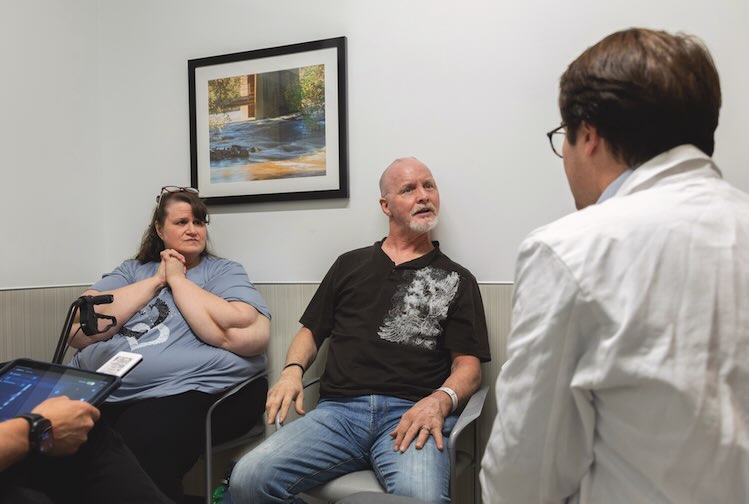
If you’re interested in DBS, the next step is to schedule an evaluation with our care team to determine if you are a good candidate for surgery.
The evaluation may include:
- An evaluation of your mood and memory
- An appointment with a physical and speech therapist to evaluate your gait, balance and speech
- MRI and CT scans
- Specific examinations to characterize your movement disorder
- Discussion of alternatives to DBS, such as focused ultrasound
Your neurosurgeon will coordinate with your neurologist and other specialists to create the best treatment plan for you. This careful evaluation process for DBS can take a couple of months to complete.
Your deep brain stimulation surgery
DBS surgery can be performed under sedation that is paused for awake testing or under general anesthesia without the need for test stimulation. Your surgeon will help you decide which option is best for you.
Our surgeons use a wide variety of tools and techniques for DBS surgery, including:
- Stereotactic frame-based DBS
- Frameless DBS (for example, Nexframe, StarFix or ClearPoint)
- Robotic DBS
- Awake intra-operative testing
- Asleep DBS under general anesthesia
- Microelectrode recordings
- Intraoperative local field potential (LFP) recordings
- Intraoperative O-arm CT imaging
After your deep brain stimulation surgery
The surgery requires one or two nights in the hospital on average, though some patients will require a second procedure for battery placement as an outpatient procedure.
Before you go home, we’ll make sure you have care instructions and information on any limitations after surgery.
About two weeks after surgery, you will see your surgeon again. Your surgeon will check how you are healing, perform a head CT and activate your DBS. Then, an additional appointment is scheduled approximately one month later for further optimization of your DBS.
Your neurosurgeon will communicate with your neurologist about next steps, so your whole care team is informed at every step of your surgery and recovery.
Conditions treated with deep brain stimulation
We treat several different movement disorders with DBS, including these common conditions.
Essential tremor
We perform DBS as part of essential tremor treatment to stimulate the ventral intermediate nucleus of your thalamus (VIM), which is part of the tremor circuit in your brain. You will be sedated during this procedure, but we will wake you up to test the tremor and check for side effects.
Parkinson's disease
DBS can be an effective Parkinson’s disease treatment since it can help improve tremor, slowness, stiffness and walking, and reduce dyskinesia, the extra movements that can occur as a medication side effect. During DBS, we target the globus pallidus (GPI) or the subthalamic nucleus (STN).
Dystonia and Meige syndrome
We use DBS to target the globus pallidus (GPI), which can ease the symptoms of dystonia.
Other conditions treated with deep brain stimulation
DBS can also be used to treat Tourette’s syndrome, epilepsy, and other conditions.
Deep brain stimulation patient stories
Dr. Holloway performed my deep brain stimulation surgery, and I still remember—through my preop haze—a team of more than 12 professionals gathered in a futuristic operating room under her direction, all focused on one purpose: helping me. When the device was activated, my shaking stopped immediately. It felt like a miracle. — Chal, VCU Health Patient
I think it's truly remarkable what DBS surgery at VCU Health has done for me. No more tremor and I can do so many tasks that were so frustrating before. Now it's been almost two years since I had the DBS surgery, and I'm still enjoying the freedom from the problematic symptoms of Parkinson's disease. — Patrick, VCU Health Patient
Meet our deep brain stimulation team
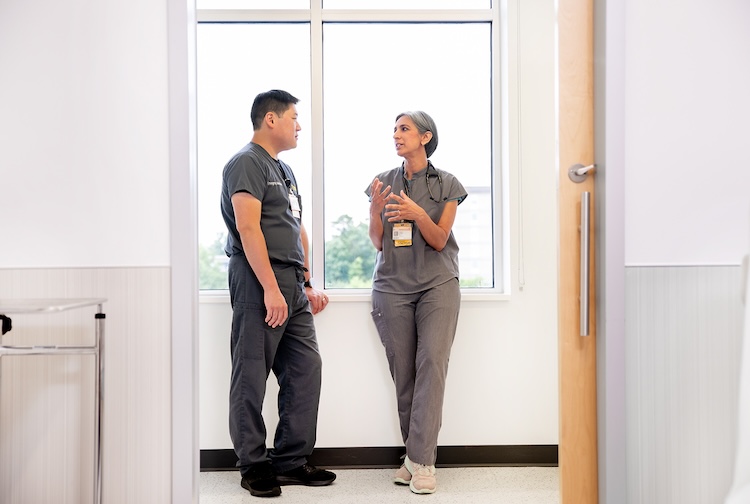
We are one of the few health systems in the nation with multiple DBS specialists in one place. Our specialists are nationally recognized experts and have over 40 years of collective experience treating patients with movement disorders.
Our team takes a multidisciplinary approach to DBS and will collaborate with other providers to give you follow-up care and support. Your care team may also include:
- Neurosurgeons
- Neurologists
- Nurse specialists and care coordinators
- Deep brain stimulation programmers
- Neuropsychologists and psychologists
- Occupational therapists
- Physical therapists
- Speech therapists
Make an appointment
Contact VCU Health Neurosurgery at 804-828-9165 to schedule an evaluation with our care team.