Pauley Heart Center's Cardio-Oncology Program Recognized as IC-OS Gold Center of Excellence
Pauley ‘s cardio-oncology program is the only one in the state to hold this distinction.
January 28, 2026.png)
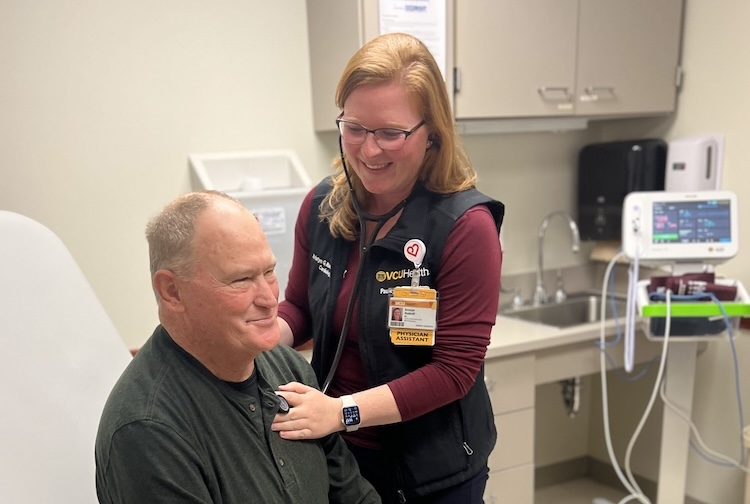
VCU Health Pauley Heart Center is pleased to announce that its Cardio-Oncology Program has been recertified as a Gold Center of Excellence from the International Cardio-Oncology Society (IC-OS). Pauley ‘s cardio-oncology program is the only one in the state to hold this distinction.
Cardio‑oncology is a subspeciality of cardiology that provides heart health care specifically to patients before, during, and after cancer treatment. Many cancer therapies can damage the heart, and conversely, some cancer patients need to strengthen their heart health before undergoing cancer treatment. Cardio-oncologists work to prevent, detect, and treat the negative cardiovascular side effects of cancer, and to make it possible for cancer patients with preexisting heart conditions to receive the best possible therapies for their cancer.
The International Cardio-Oncology Society (IC-OS) is a global professional organization that works to advance the field of cardio-oncology through education, research, and clinical collaboration. To earn the Gold Center of Excellence certification from IC-OS, a cardio-oncology program must demonstrate superior expertise in the care and treatment of cardio-oncology patients, and meet rigorous standards across six areas: patient volume, research and publications, interdisciplinary care, education, committee participation, and program development.
“This is an honor for VCU Health’s cardio-oncology program that recognizes our achievements in patient care, research, education, and program development. It acknowledges the work of Michael Hess, MD, who started the cardio-oncology service at VCU in 2013, and our continued commitment to our patients,” said cardio-oncology program medical director Wendy Bottinor, MD, MSCI, who led the recertification effort. “As cancer treatment improves, rates of cancer survivorship go up, which means more patients need to take care of their hearts after they receive potentially cardiotoxic treatments. We’re seeing more patients than ever, so maintaining high standards as we grow is essential.”
The Center of Excellence certification is also a recognition of a cardio-oncology program’s contributions to advancing the field through research and innovation. Pauley’s recent cardio-oncology research includes the STEPS‑BC trial, which examines whether tailored exercise can reduce the heart‑related side effects of chemotherapy; the CROWN study, which examines how certain breast cancer treatments affect blood flow to the heart in women who haven't gone through menopause yet; and the TREATHF trial, which is testing whether a heart medication called sacubitril-valsartan can help young cancer survivors who have early heart damage from their cancer treatments.
There’s also UPBEAT, a trial funded by a $3.2 million grant from the National Cancer Institute. The multicenter trial seeks to understand and predict fatigue, cardiovascular decline, and cardiac events after breast cancer treatment.
The trial, which has been active for nine years, has served as a strong foundation for more recent cardio-oncology research happening at Pauley. In the last three years alone, Pauley Heart Center faculty have published more than 65 cardio-oncology research articles and abstracts.
“We are very excited to perform cardio-oncology research within the Pauley Heart Center at VCU and VCU Health,” said Greg Hundley, MD, director of the Pauley Heart Center and principal investigator on several of Pauley’s cardio-oncology grants. “The UPBEAT, STEPS‑BC, CROWN, and TREATHF trials are just a few examples of how we’re working to give patients practical tools to stay heart‑healthy during treatment. These efforts are helping us understand how cancer and its treatment impact the cardiovascular system.”
Hundley said the Gold certification affirms Pauley’s long‑term commitment to building a comprehensive cardio‑oncology program. “This designation reinforces the importance of participating in a young but rapidly advancing field,” he continued. “It motivates us to keep expanding our services, strengthening our collaborations, and developing programs that support patients at every stage of cancer treatment.”