Giving together: One Virginia couple’s journey through living organ donation
Moved to help strangers in need, Rick and Tracey Ridpath became living organ donors – giving multiple people a second chance at life.
April 15, 2026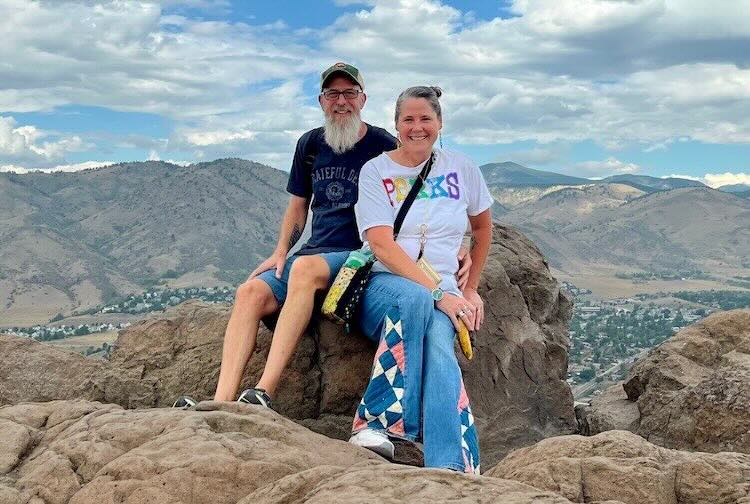 Despite the several weeks of recovery that followed their respective organ donations, the Ridpaths have resumed their lives as normal, frequently enjoying the outdoors. (Contributed photo)
By John Battiston
For more than three decades, Rick and Tracey Ridpath have dedicated their lives to service. The Colonial Heights couple have long taught in local public schools and are active members of Wesley United Methodist Church.
But in 2016, the Ridpath's commitment to helping others took on new meaning when they both became living organ donors through VCU Health Hume-Lee Transplant Center.
Tracey was the first to feel called to donation. After the death of a good friend and beloved community member, she found herself reflecting on what it meant to help someone else live.
“I was just walking one morning and thought, I couldn’t have saved [him] because he had cancer,” Tracey said. “But I thought, in his memory, maybe I can help save somebody else.”
At the time, she knew little about living donation, aside from the fact that kidneys were in high demand. After researching living donor kidney transplantation and contacting Hume-Lee Transplant Center, she felt unmistakably led to give one of her own.
Altruistic living organ donation: Why some people say ‘yes’
Living organ donation allows a healthy person to donate one of their kidneys to someone needing a transplant, often significantly reducing the recipient’s wait time and improving outcomes. With national wait times for deceased donor kidneys running on average 3 to 5 years, and sometimes longer, living donors play a critical role in helping patients receive transplants sooner.
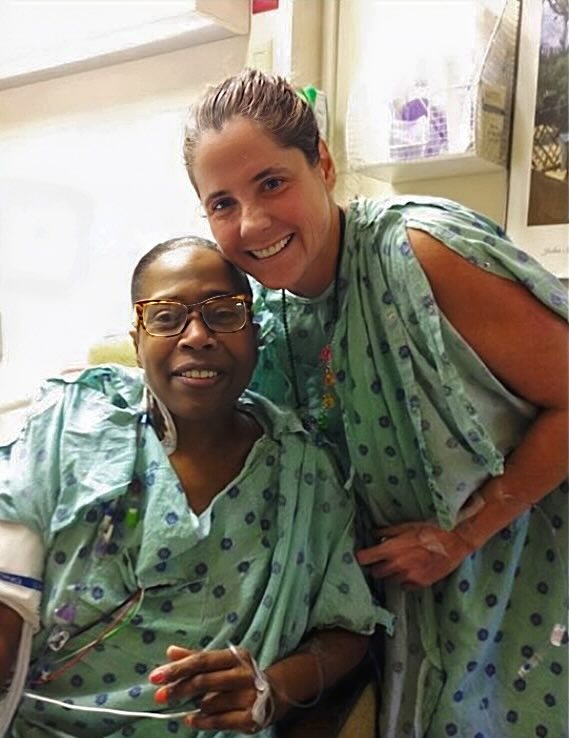 Tracey Ridpath (left) donated her kidney to Djuna Paige (right) in 2016. (Contributed photo)
“It’s the quickest, safest way for a recipient to get a kidney transplant,” said Maureen Bell, a living donor transplant coordinator at Hume-Lee Transplant Center.
Rick remembers being surprised — but not shocked — when Tracey shared her decision to become a living donor herself.
“It caught me off guard, but it was completely in Tracey’s nature to want to donate,” he said. “I immediately said, ‘Okay, well, I’m on board.’”
On the morning of Tracey’s kidney removal surgery, or nephrectomy, she and Rick were in the hospital parking deck and saw a car speed by. After the surgery, the Ridpaths found out the car belonged to the woman who received Tracey’s kidney.
“I walked around the hospital floor and found her, and said, ‘I’m just here to visit my kidney,’” Tracey recalled. “We just hugged; it was really amazing.”
Tracey’s donation was altruistic, meaning she did not know her recipient prior to donating. When both the donor and recipient agree, they are often given the opportunity to communicate with one another and, in some cases, meet in person.
“That was a pretty magical experience,” Rick said of the meeting. “We’re Christians, and there was this feeling of the Holy Spirit filling the room.”
Tracey had scheduled the surgery to align with spring break, ensuring she could see her first-grade students as soon as possible.
Most kidney donors stay in the hospital an average of two to three days after the donation procedure and have an additional two to four weeks of recovery time. Part of why Tracey’s recovery may have been faster than average was due to her donation being performed using robotic-assisted surgery. This minimally invasive approach is associated with less bleeding, smaller incisions and, therefore, less scarring, allowing for a smoother recovery. Tracey even shared that by her first day post-op, she was managing her pain with Tylenol alone.
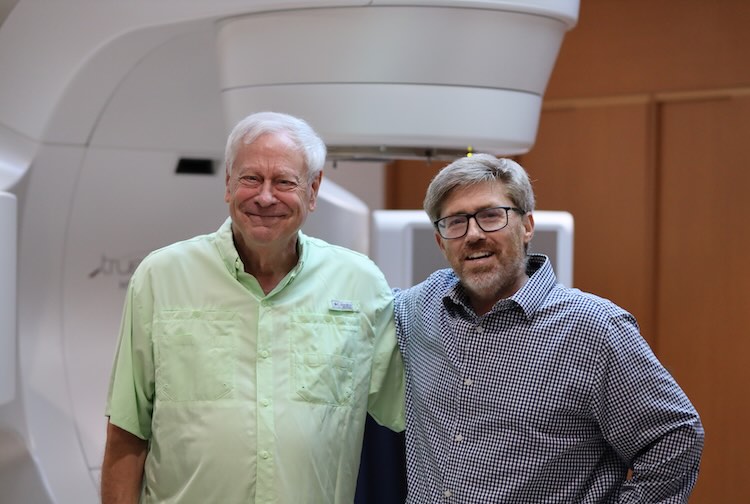
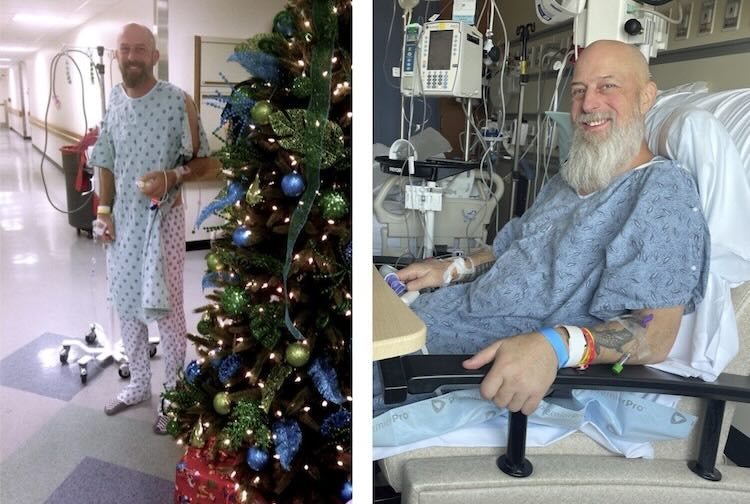 Rick Ridpath donated his kidney in 2016 (left) at VCU Health Hume-Lee Transplant Center. In 2025, he felt called to donate part of his liver (right). (Contributed photos)
The emotional and medical journey of living organ donation
Inspired by Tracey’s experience, Rick soon began his own journey as an altruistic living kidney donor. Like Tracey, Rick’s donation was also completed using minimally invasive robotic surgery.
Years later, Rick felt called to give again, this time as a living liver donor.
“People with liver disease are seriously sick,” Rick remembered thinking. “They look like they are close to death. So, I thought I might be able to help one of these people.”
In early 2025, he donated part of his liver to Quanda Jordan, a Roanoke woman suffering from a one-in-a-million autoimmune disease. Rick’s recovery was more challenging than after his kidney donation.
“It’s hard to see your spouse suffering like that,” Tracey said. “Of course, we were worried for each other, but we never had any doubt that we had done what we were supposed to do.”
The Ridpaths represent the very best of humanity: Individuals willing to sacrifice parts of themselves so someone else can have a future.
Vinay Kumaran, M.D., surgical director of living liver donor transplant at VCU Health Hume-Lee Transplant Center
The emotional and physical vulnerability of preparation, surgery and recovery — for both Tracey and Rick — strengthened their marriage and deepened their bond.
“You kind of need someone with you during recovery,” Rick said. “You’re really not 100% in your right mind. I don’t remember a lot of it. I was very dependent on her those first few days, and it built a deeper level of trust.”
“Everything has really just made us stronger,” Tracey added. “We each picked the right partner.”
How stories of living organ donors, like the Ridpaths, are changing the conversation
To Vinay Kumaran, M.D., who led Rick’s liver extraction surgery and is Hume-Lee’s surgical director of living liver donor transplant, living donors like Rick and Tracey exemplify the heart of transplant medicine.
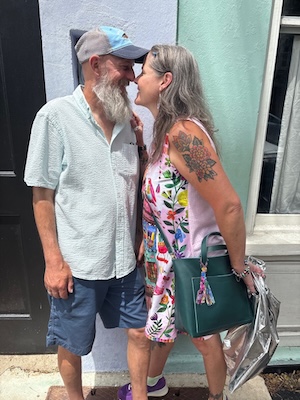 Rick and Tracey Ridpath say that going through the process of becoming living organ donors brought them closer. (Contributed photo)“The Ridpaths represent the very best of humanity: Individuals willing to sacrifice parts of themselves so someone else can have a future,” he said.
The implantation of Rick’s liver into Quanda, led by Seung Duk Lee, M.D., Ph.D., surgical director of liver transplant, was the first fully robotic living-donor liver transplant in the United States. However, he insists that the innovation involved should not overshadow the generosity required to make the surgery possible.
“What makes these stories powerful isn’t just the technology,” Lee said. “It’s the people who step forward to give others a second chance.”
Today, both Rick and Tracey are passionate advocates for organ donation, especially education and awareness. Along with the lifesaving benefits for recipients, they often highlight the existence of grant programs to ensure living donors aren’t financially affected by the travel or time off work required to donate.
“One gentleman who donated altruistically through us came via a referral from the Ridpaths, as well as someone else who heard their story,” said Teresa Crenshaw, a living liver donor transplant coordinator at Hume-Lee. “They’re always talking about living donation.”
“Tracey and Rick represent the strength and generosity that define living donation,” said David Bruno, M.D., FACS, director of Hume-Lee Transplant Center. “Through their actions, they’ve saved lives — but just as importantly, they’ve chosen to share their story and encourage others in our community to consider becoming living donors. That kind of leadership and advocacy means so much to our center and offers hope to the many patients still waiting for a transplant.”
For those who are curious but uncertain about donating, Tracey has simple advice: “Just check the box on your driver’s license, even if you don’t want to be a living donor. Ultimately, you aren’t a body with a soul — you’re a soul with a body. And if your body can help somebody else, to me, that’s what matters.”
Rick agrees, citing a quote often attributed to Mother Teresa: “All that is not given is lost.”
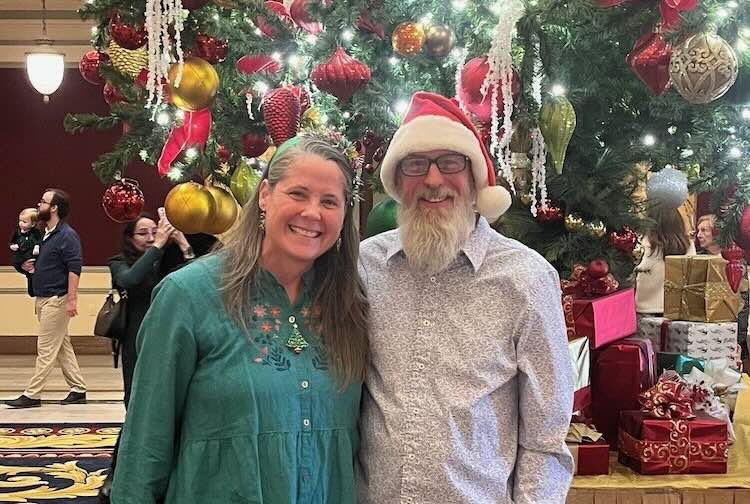 The Ridpaths hope their story encourages others to consider becoming organ donors to help save another person’s life. (Contributed photo)
FAQ: How to become a living organ donor
What are the benefits of living organ donation?
For recipients, a donated kidney or liver offers the opportunity to avoid years on a national waiting list, during which their health could deteriorate. Receiving a lifesaving transplant earlier in the course of their illness significantly improves long-term outcomes and speeds up recovery time. Living donor organs generally function better and last longer than those from deceased donors, as well.
Who can be a living organ donor?
Donors can be family, friends, coworkers or even altruistic individuals – strangers – who donate their organs to someone they don’t know out of a desire to help others. To qualify, you must be at least 18 years old, in good health with no major medical conditions, and have stable mental health.
For kidney donation, even if you are not a compatible match, programs such as paired exchanges or “swaps” can help find a suitable match. And for liver donation, Hume‑Lee offers ABO‑incompatible living donor liver transplants, allowing some patients to move forward with donation even when a blood‑type match is not possible.
How much will it cost me to be a living organ donor?
As a living donor, your medical expenses are covered by the recipient's insurance. At Hume-Lee, we can assist you with wage and travel reimbursement programs, as well, to ensure your expenses are minimal, if any.
What is recovery like after surgery?
At Hume-Lee, most living donor surgeries are performed using minimally invasive, robotic techniques. This surgical innovation offers less pain, smaller incisions and a faster recovery. Kidney donors typically stay in the hospital for 2 to 3 days, and the total recovery time is roughly 2 to 4 weeks. Liver donors typically stay in the hospital for 4 to 7 days, and the total recovery time is roughly 4 to 6 weeks.
How can I become a living organ donor?
For kidney donation, you’ll start by completing a brief health questionnaire at vcuhealthlivingdonor.org. A member of our dedicated living donor team will then contact you to guide you through the next steps.
For liver donation, please call (804) 828-2762 to speak with our living donor patient concierge representative. From there, our team will walk you through the living donor process and next steps.
As a donor, you will receive comprehensive support from a team of medical professionals focused solely on your well-being.
Your health matters. Sign up for updates and tips from our VCU Health care team today.