VCU Health experts weigh in on managing hair loss during menopause
For some women, menopause can mean brittle, thinning hair. Two VCU Health professionals reveal what to expect and what treatments are worth trying.
May 05, 2026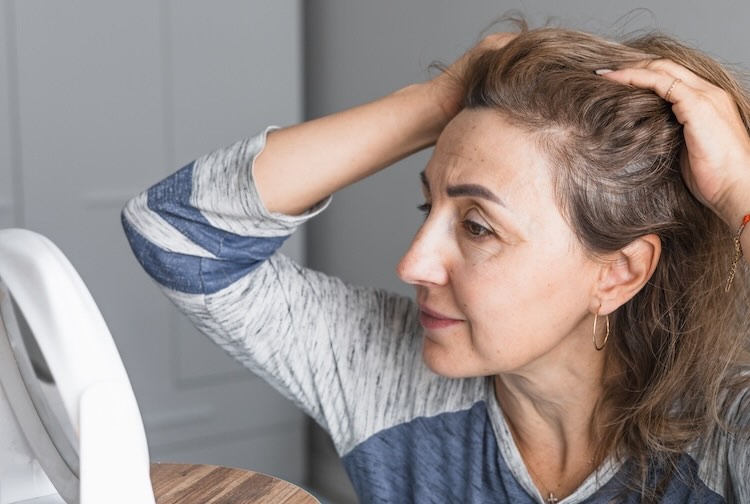 Hair thinning is a common symptom of menopause. (Getty Images)
By Haley Tenore
For most women, hair is more than just part of your body. It’s a tool of self-expression, a symbol of femininity, and something that you may form an attachment to. That’s why hair loss can be extremely distressing during that time in your life when your body is changing a lot – menopause.
Hair thinning is a common symptom of menopause, but you may be wondering if the amount you are experiencing is typical. If you are at a loss over why you are shedding so many strands, or what steps to take next, we’ve got you covered.
VCU Health News tackled common questions with the help of a dermatologist who specializes in hair loss and a gynecologist who specializes in menopause.
The difference between normal shedding and menopause-related hair thinning
On a typical day, a person will lose about 50-100 strands of hair. Hair goes through stages of growth, which include a shedding stage. Kimberly Salkey, M.D., a VCU Health dermatologist who cares for patients with hair and scalp conditions, says at any given time, about 10% of the hair on your head is in the shedding phase.
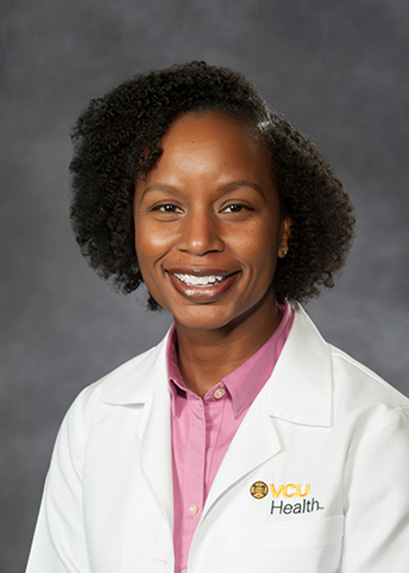 Kimberly Salkey, M.D., is a dermatologist at VCU Massey Comprehensive Cancer Center. (Enterprise Marketing and Communications)
“Hair loss related to menopause may occur as increased hair shedding or as slow, progressive hair thinning. Women experiencing shedding due to menopause see more shedding than average,” Salkey said.
Between 40% and 60% of women experience hair loss during menopause, Salkey added. Researchers aren’t entirely sure why this happens; however, there are a few theories.
In some cases, menopause-related hair loss is a type of telogen effluvium – a temporary period when more hair follicles shed due to extreme stress or illness. Salkey says the hormonal fluctuations from menopause can be considered a “stressful event” that causes the body to shed more hair than usual. Women also experience telogen effluvium after giving birth, leading some to think that the two events could cause a similar stress response to hair follicles.
Another mechanism for hair loss seen during menopause is hair follicle shrinking, called female pattern alopecia. This can begin as early as the late teen years, but can take decades before it is a significant change. This type of hair loss also happens in men.
Genetics may also play a role. Hair follicles respond differently to nutrients, hormones and blood flow as a person gets older. This change, called chronogenetic or senescent hair loss, can cause hair to become sparse.
When to go to the doctor for hair loss concerns in menopause
Consulting a dermatologist or physician about hair loss may feel uncomfortable, but Jane Limmer, M.D., a VCU Health OB-GYN, says it’s important to advocate for yourself and to not be ashamed. As an expert in perimenopause and menopause and Certified Menopause Provider, Limmer cares for many patients going through these changes.
“It is not wrong for any woman to ask their physician if it is bothersome to them,” Limmer said. “If someone sees large bald patches throughout their hair or significant widening of the central part on the scalp that's visible and bothersome to them, those would be reasons to raise that with their provider.”
 Jane Limmer, M.D., is an OB-GYN at VCU Health who is a Menopause Society Certified Practitioner. (Tom Kojcsich, Enterprise Marketing and Communications)
Limmer and Salkey recommend scheduling an appointment with a medical professional when hair loss becomes noticeable. Hair loss can be due to multiple causes, so speaking with a doctor can help you come up with an individualized treatment plan.
As for whether you can expect to see regrowth after hair loss, that depends on the cause and the treatment plan.
“In the case of telogen effluvium, regrowth of shed hairs is expected. For other types of hair loss, the goal of treatment is to halt any progression. Getting hair regrowth is considered “icing on the cake,” Salkey said.
What lifestyle changes can improve hair health during menopause?
Living a healthy lifestyle can be easier said than done, but making those changes now could lead to improvements, not just in your health but in your hair. Companies may try to push miracle products or supplements, but the secret may be simpler than you think.
“A well-balanced diet is important for overall health at all stages of life. Proper nutrition is important for normal hair growth. Getting adequate physical activity is also helpful to stave off or manage chronic illnesses such as hypertension or diabetes, which may also impact hair growth,” Salkey said.
“Make sure that you have ruled out other medical causes, like iron deficiency, celiac disease or thyroid disease,” Limmer added. “Certain hair-styling practices such as hair dye, heat styling and tight hairstyles (high ponytails, braids, extensions, etc.) can cause hair to fall out more, and thus we encourage menopausal patients to avoid those practices if they are concerned about hair loss.”
As for treatments, Limmer says hormone replacement therapy may be able to slow down hair loss. There are also a variety of hair loss-specific treatments available.
While supplements are popular, many on the market may not be worth trying. Since supplements are not federally regulated like prescription medications, Salkey says there isn’t much research supporting their effectiveness.
“When my patients feel they are getting benefit from a supplement, I do not discourage its use. However, for most patients, a standard multivitamin is sufficient,” Salkey said, adding that most people don’t need to take supplements unless they have a vitamin deficiency.
Early diagnosis is helpful because treatments are more effective before your hair follicles become damaged. Contact a dermatologist for an appointment if your hair is not growing back after a few months.