The anti-aging secret that every dermatologist wants you to know
VCU Health dermatologists say sunscreen not only makes your skin look better in the long run – it also protects it from severe damage and potentially cancer.
July 07, 2026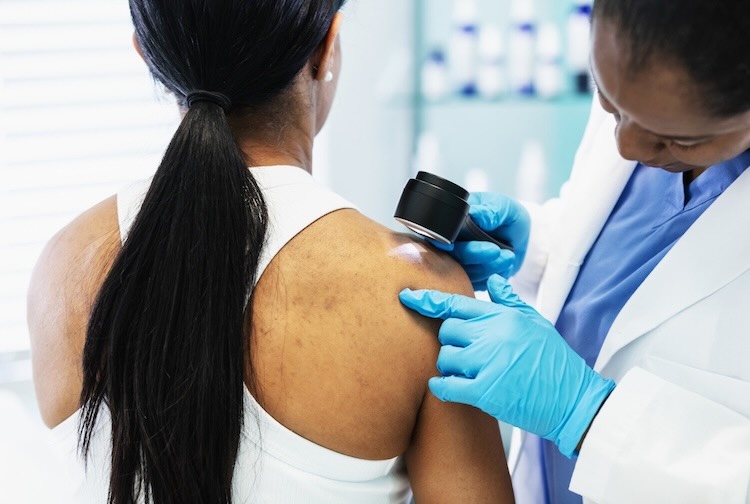 According to the World Health Organization, skin cancer is the most common cancer in the world. (Getty Images)
By Leigh Farmer
Want to know the real secret of looking younger?
Use sunscreen. Every day.
The aging effect that the sun has on our skin is called photoaging. According to the Skin Cancer Foundation, photoaging is responsible for 90% of the visible aging on a person’s face. Daily sunscreen can slow down that process by up to 24% according to a study funded by the National Health and Medical Research Council of Australia.
“UV exposure breaks down collagen and other structural components, leading to wrinkles, brown spots, uneven pigmentation and loss of skin elasticity,” said Roxana Shirazi, M.D., a VCU Health dermatologist specializing in cosmetic dermatology and laser treatments. “Daily sun protection is the most effective anti-aging measure available.”
Sunscreen, as most of us know, is also one of the most effective ways to avoid skin cancer, the most common cancer in the world, according to the World Health Organization. Talk to any dermatologist and they will tell you the same thing – sunscreen is essential to keeping your body healthy. It can reduce your risk of the most common types of skin cancer by up to 50%.
Both Shirazi and Jeff Yu, M.D., the chair of VCU Health Dermatology, recently spoke with VCU Health News regarding sunscreen, skin cancer, early detection and treatment.
Why is it important to protect your skin from the sun and how can it save your life?
Roxana Shirazi, M.D.: One in five Americans will develop skin cancer during their lifetime. It’s a staggering but very real statistic. Protecting your skin reduces your risk of skin cancer, including the deadliest form of skin cancer, melanoma.
In Virginia, UV exposure is highest during spring and summer months, but sun damage occurs year-round. UV rays can penetrate clouds and, in the winter months, reflected sunlight from snow can also contribute to skin damage.
Most of our lifetime sun exposure comes from everyday activities such as walking the dog, driving, gardening or running errands. Make sunscreen part of your daily routine, just like brushing your teeth.
To protect your skin properly, use broad spectrum SPF 30 or higher, seek shade during peak sun hours (10 a.m. – 4 p.m.), wear sun protective clothing and wide brimmed hats, and avoid tanning beds.
The U.S. Food and Drug Administration just approved a new type of sunscreen. What is Bemotrizinol?
Jeff Yu, M.D.: It is a sunscreen filter that has been used in the rest of the world for many years. It is well tolerated, safe and effective at blocking UVA and UVB light.
Bemotrizinol is a large molecule, so it doesn’t get absorbed into the blood stream. Additionally, there is a low risk of contact dermatitis and, therefore, a safe option for those with sensitive skin. It is also cosmetically elegant compared to mineral sunscreens as it does not create a white cast when applied. Sunlight doesn’t break it down like other sunscreens, so it lasts longer.
What are the signs and symptoms of skin cancer? And when should you talk to a doctor if you are concerned?
Shirazi: Contact your physician if you see a spot on your skin that is new, rapidly growing, painful, spontaneously bleeding or not healing.
A simple guideline for determining if your skin has warning signs for melanomas is the ABCDEs:
A – Asymmetry in the spot of concern can look like an uneven circle or different boarders in one half of the spot versus the other.
B – Irregular Boarders are scalloped or hard to define.
C – Multiple Colors that take on shades of tan, black, brown or areas of white, red or blue.
D – Diameter of the spot is larger than a pencil eraser.
E – Evolution of the spot in size, shape or color. Compare it to other spots on your skin. Does it look significantly different?
If you notice any of the above, then it’s worth having it evaluated. If you have a strong history of blistering sunburns or family history of skin cancer, consider yearly skin exams with a board-certified dermatologist.
The most common types of skin cancer are basal cell carcinoma (BCC) and squamous cell carcinoma (SCC). Both are often treated with Mohs surgery, which VCU Health dermatology offers.
What is Mohs surgery?
Shirazi: VCU Health is one of the first health systems in Central Virginia to offer Mohs surgery.
Often referred to as the “gold standard” in treating the most common types of skin cancer, doctors who perform Mohs surgery remove cancer layer by layer. Each layer is examined under a microscope during the procedure until all cancer cells are gone.
Mohs surgery offers the highest cure rate while preserving as much healthy tissue as possible. It is commonly used for skin cancers on cosmetically sensitive areas such as the head and neck.
There are more ways than ever to protect your skin from the sun while still enjoying the outdoors. Make sure you use sunscreen as part of your daily routine to not only look younger, but stay healthy, as well.
It is also a good habit to see a dermatologist annually for a skin check. As part of an academic medical center, VCU Health Dermatology has access to the latest research, treatments and technology, all in one place.
Your health matters. Sign up for updates and tips from our VCU Health care team today.