Silent heart risks: understanding aortic diseases
Insights from a VCU Health vascular surgeon on diseases affecting the body’s largest artery and when to see a specialist.
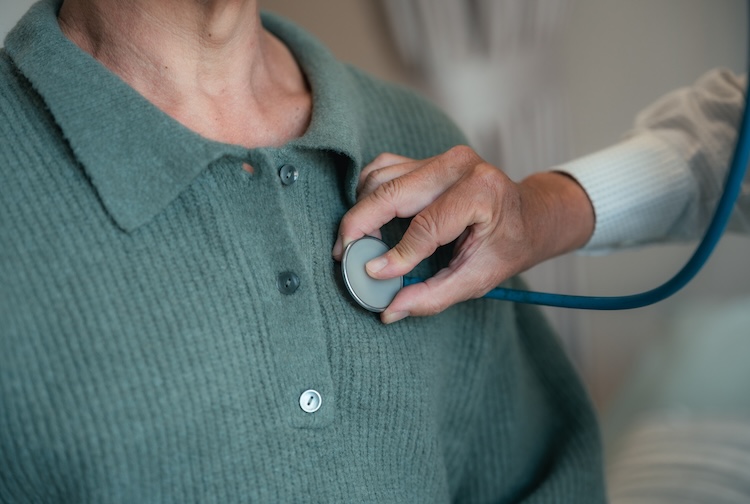
July 15, 2026 Age is common risk factor for aortic diseases; they are fairly common in adults over 65. (Getty Images)
By Tanner Lambson and Liz Torrey
The sudden passing of South Carolina Sen. Lindsey Graham has renewed nationwide awareness of silent cardiovascular risks. Preliminary findings from the medical examiner's office point to aortic dissection as the 71-year-old's cause of death.
The aorta is the body’s largest artery and is known as the “on ramp” for oxygen-rich blood to reach the rest of the human body, according to Dan Newton, M.D., a vascular surgeon at VCU Health Pauley Heart Center and co-director of the Comprehensive Aortic Program.
“Because symptoms of aortic disease are often invisible until an acute emergency, it is important to seek medical attention immediately when symptoms of an aortic event show up. These can be life-threatening if not treated immediately,” Newton said.
Aortic diseases, like aortic dissection, cause about 10,000 deaths every year in the United States. These conditions can be scary for patients who worry about the potential of developing an aneurysm or dissection without knowing it.
To relieve some of those concerns, we spoke with Newton about ways to improve your vascular health and how VCU Health Pauley Heart Center delivers advanced surgical care to treat and cure diseases of the aorta.
What is the aorta? Why is it an important part of the body?
In its simplest terms, you can think of the aorta as the pipe leading out of the heart that supplies bood to the rest of the body. When the heart contracts and the blood is pushed out, the aorta stretches to accept that volume of blood. Then the aorta relaxes again and helps propel the blood forward to the rest of the body.
What is aortic disease?
There are two primary diseases we treat in the aorta: aortic aneurysms and aortic dissection.
- Aortic aneurysms are a “ballooning” of the aorta. When you have an aortic aneurysm, you get a weak spot in the aorta. That spot stretches over time, and it can get so big that it ruptures. Aortic aneurysms develop slowly over time and do not disrupt blood flow to the rest of the body unless they rupture.
- Aortic dissection happens when the walls of the aorta partially tear or “delaminate”, which reduces blood flow to the organs. Because the wall of the aorta is now weaker, it is also at risk of rupturing. Aortic dissection occurs suddenly and is a medical emergency that requires immediate treatment.
What are the symptoms of aortic problems? When should one seek medical attention for symptoms?
Unfortunately, aortic disease can be considered a “silent killer.” Typically, there aren’t any symptoms until you have an event like a rupturing aneurysm or an aortic dissection.
To an inexperienced eye, both an aneurysm and dissection can look like a heart attack or a kidney stone. Some symptoms of an aortic dissection and aortic aneurysm rupture include:
- Extreme, stabbing pain in the chest, back, mid-back or belly
- Rapid heartbeat
- Dizziness or fainting
Fortunately, aneurysms and other aortic diseases are often found incidentally. You may be at the doctor to get a scan for something else, and during that scan they will discover an aneurysm. When that happens, discuss your diagnosis with your primary care provider and seek follow-up with a cardiac or vascular surgeon for treatment.
Additionally, if you are male and have ever smoked, there is a one-time ultrasound screening at age 65 that your primary care physician should administer to make sure you don’t have an aortic aneurysm.
What are the available treatment options for aortic disease?
Aortic dissection: A team approach to treating cardiovascular emergencies
Aortic dissection is a life-threatening emergency that needs to be managed at a hospital with experience in treating these disorders.
Depending on the location of the dissection, the patient may need open-heart surgery performed by a cardiac surgeon or a stent placed by a vascular surgeon. Dissection can also sometimes be treated by an ICU team with medication alone. At VCU Health, we use a multidisciplinary team approach to ensure each patient gets the best treatment possible for their individual needs.
Aortic aneurysms: Medication management and stent surgical innovations
Aortic aneurysms are often treated first with medication to slow aneurysm growth, lower blood pressure and manage cholesterol. We will monitor your heart with cardiovascular imaging to see how it is doing with medication. If imaging reveals that the problem is getting worse, we will move forward with surgery.
Before the turn of this century, these surgeries were done with big incisions and long hospitalizations. Today, we can fix most aortic issues with a stent. This is a minimally-invasive surgery with an easier recovery than open-heart surgery. Some patients may need multiple procedures throughout their life to repair their hearts.
At VCU Health, we can even implant complex stents in the aorta that align perfectly with an individual patient’s anatomy. Not all patients will need these more complex stents, but some do. Advanced stent technology allows us to treat patients previously considered inoperable and get them back home to their families in only a few days.
How can I lower my risk of aortic disease and maintain my vascular health?
A major risk factor for aortic disease is age; it’s most common in adults over 65.
Hypertension (high blood pressure) is another factor as well. In general, aortic dissections occur more often in individuals who have uncontrolled high blood pressure. Be sure to get your blood pressure checked regularly. Half of all Americans have high blood pressure, and of those, half don’t know it.
Smoking is the biggest risk factor for aortic disease that you can change. In fact, aortic aneurysm cases are decreasing because of a historical decrease in smoking. So, to lower your risk of aortic disease – quit smoking and don’t start smoking if you haven’t already.
Additionally, if you use drugs that can cause blood pressure spikes – for example, cocaine – you are at greater risk.
Do genetics play a role in aortic disease?
Genetics absolutely play a role in aortic disease. We find that aortic disease is more common in people with genetic connective tissue disorders like Marfan syndrome, Loeys-Dietz syndrome or Vascular Ehlers-Danlos syndrome.
People under 65 with known aortic disease and those with a family history of aortic disease should receive genetic testing to help guide preventive treatment.
What should I do if I’m worried about my vascular health?
If you are worried about your vascular health and aortic disease, the first thing you should do is talk about it with your primary care doctor or cardiologist.
Men over the age of 65 who are or were smokers should receive a one-time abdominal ultrasound screening, which is completely painless.
Women over 65 with a history of smoking should discuss screening with their primary care provider, but because this type of aneurysm is much less common in women, it’s not always recommended.
Most aortic aneurysms develop slowly over many years. If screening at age 65 shows no aneurysm, the chance of developing one later is generally low.
Stay informed, stay healthy. Sign up for VCU Health’s e-mail newsletter.