How the FAST acronym helped a Virginia woman reach VCU Health’s Comprehensive Stroke Center just in time
A quick check of Holly Furlong’s face, arms and speech alerted loved ones to act immediately, getting her rapid stroke treatment.
May 04, 2026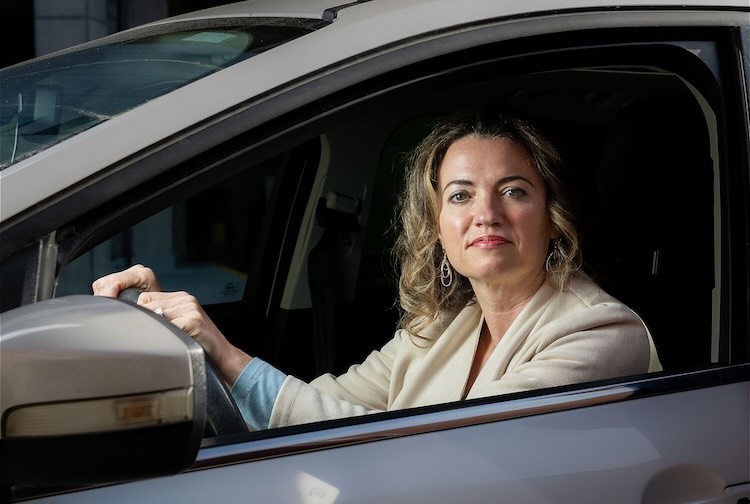 In 2024, Holly Furlong sought care from VCU Health’s Comprehensive Stroke Center after her friend and husband realized she was having a stroke. (Dean Hoffmeyer, Enterprise Marketing and Communications)
By Joan Tupponce and Sara McCloskey-Nieves
Sometimes the most powerful medical interventions don’t happen in an operating room; they come from loved ones who know what to look for.
FAST – Face, Arms, Speech, Time – isn’t just an acronym. It’s a simple, high‑impact checklist anyone can use to spot the earliest signs of a stroke.
In moments when hesitation could mean permanent brain damage and disability, FAST gives people a clear way to take immediate action. It turns bystanders – like Josh Plauny and Jeanne Nuara – into first responders, transforming uncertainty into life‑saving decisiveness.
It was a typical Friday night for Holly Furlong. The 44-year-old was on her way to have dinner with her friend, Jeanne, when she noticed something was off. Holly was having trouble breathing.
At first, she thought it was a panic attack, something admittedly she had never experienced. But after a couple of minutes, Holly realized these symptoms were more worrisome than a panic attack.
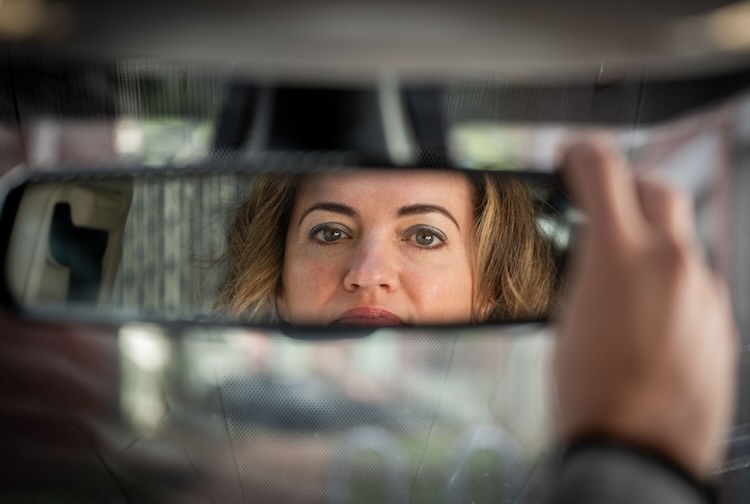 Holly Furlong urges others to get help immediately if they think something is wrong with their health “because there are consequences in the long run if you ignore it.” (Dean Hoffmeyer, Enterprise Marketing and Communications)
Sitting in Jeanne’s driveway, Holly’s chest began to tighten. Her left arm was tingling. She didn’t know what to do.
“It was like my body recoiled,” she said.
She called Jeanne from the car and asked her to come out. By the time her friend was standing by car, Holly’s left arm was numb.
Jeanne called Holly’s husband, Josh, who is VCU Health’s associate vice president of supply chain. He immediately knew what to do. He walked the two women through FAST to evaluate what Holly was experiencing.
When evaluating the signs of stroke, FAST stands for:
- Facial weakness or drooping
- Arm or leg weakness
- Slurred speech or difficulty
And the “T” stands for time – as in time to call 911 if these symptoms are occurring.
“I had to lift up my arm, and this arm wouldn’t stay up,” she said. “I tried to lift up my left leg, and I couldn’t. I could still kind of speak, but it was all over the place.”
Holly displayed all of the symptoms. She was having a stroke, also known as a brain attack. It happens when blood flow to the brain is interrupted, depriving the brain of oxygen.
“Stroke is a true medical emergency that requires rapid, time-sensitive care. Every minute is critical. The longer you wait to get medical help, the greater the risk of death or major disability,” said Daniel Falcao, DO, vascular neurologist and co-medical director of the VCU Health Comprehensive Stroke Center.
The critical steps after spotting FAST stroke warning signs
Strokes are the fifth leading cause of death and the number one cause of disability in the United States, according to the American Heart Association. Brain cells die rapidly when blood circulation and oxygen are cut off. Quick medical attention is essential to prevent brain damage, long-term disability or death.
If you believe you are experiencing a stroke, don’t drive yourself to the hospital, Falcao says. Call 911.
“EMS can activate the stroke team (at the hospital) immediately,” Falcao said. “Using the FAST system helps save lives because the faster we react, the more brain we save.”
For a stroke patient, the best chance at survival is treatment by a medical team within an hour of symptoms beginning. Some treatment options aren’t as effective if a patient comes in later. The type of hospital a patient is brought to can also impact what treatments are available.
Fortunately, Holly was taken to VCU Medical Center, home to the VCU Health Comprehensive Stroke Center.
Using the FAST system helps save lives because the faster we react, the more brain we save.
Daniel Falcao, DO, co-medical director of the VCU Health Comprehensive Stroke Center
By that time, she was having trouble speaking and couldn’t stand up.
“I couldn’t even sit up straight in the wheelchair,” Holly said.
The VCU Health Comprehensive Stroke Center practices a “patient-centered focus,” Falcao said. “We approach it as a team, and we provide timely care as well as high standards of care.”
The team is a highly coordinated, multidisciplinary group composed of nurses, radiologists, pharmacists, therapists and physicians from multiple subspecialties —including vascular neurology, emergency medicine, neurosurgery, radiology and rehabilitation medicine — available at a moment’s notice to care for patients, like Holly, when time is critical for survival.
The center provides advanced care for routine and complex stroke patients. It has a designated operating room for emergency stroke cases that is ready at all times and equipped with the latest technology.
In Holly's stroke crisis, compassionate care made all the difference
The entire experience was extremely frightening for Holly, but in the midst of it all there were several moments of uncommon compassion that made her feel more at ease.
A nurse in the emergency room advocated for her during what Holly described as her darkest moments, keeping her calm and ensuring she was comfortable with everything going on. Another nurse came to Holly’s aid when she was about to have an MRI.
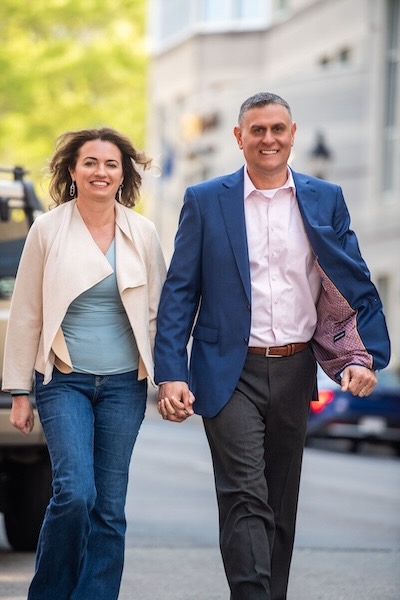 Holly Furlong’s husband, Josh Plauny, walked through the FAST acronym to see if she was experiencing stroke symptoms. (Dean Hoffmeyer, Enterprise Marketing and Communications) “She helped remove my fairy hair for the MRI. It is like metallic strands attached to your hair,” Holly said, noting that you can’t have metal in an MRI because of the powerful magnets in the machine. “I just had it put in two days prior so she helped remove each strand from my hair so I could get the MRI.”
“I feel like at VCU, there’s always a nurse there that’s like an angel,” Holly added.
Holly underwent several scans and within 30 minutes was on an anti-blood-clotting drug to help break things up and get the blood flowing again. Within another 30 minutes she was able to regain strength on the left side of her body and was able to communicate.
Her fast recovery was aided by the fact that VCU Health is a leader in stroke care, education and research. VCU Health is Virginia’s first Joint Commission–certified Comprehensive Stroke Center, reflecting the highest level of advanced stroke care. It is also a member of the National Institutes of Health (NIH) StrokeNet, a prestigious national clinical trials network that provides patients access to cutting-edge therapies and innovative research protocols often not available at most centers, advancing stroke treatment and outcomes.
For Holly, this experience has been eye-opening. She will be forever grateful for her loved ones for acting FAST. And she has become a staunch advocate for knowing the signs of a stroke.
“You might feel like you’re being dramatic, but it’s better to seek help immediately because there are consequences in the long run if you ignore it,” she said. “Don’t be afraid to seek medical care, because you just never know.”
Stroke FAQ: Symptoms, warning signs and what to do in an emergency
What is a stroke, and what causes it?
A stroke happens when blood flow to part of the brain is interrupted, preventing brain cells from getting the oxygen they need to function. The most common type, ischemic stroke, is caused by a blood clot that blocks the blood flowing from an artery in the heart to the brain. A hemorrhagic stroke occurs when a blood vessel ruptures and causes bleeding in or around the brain.
People with certain medical conditions are at higher risk of having a stroke, including high blood pressure, heart disease, diabetes, high cholesterol and certain heart rhythm disorders, such as atrial fibrillation. Smoking can also increase risk. Understanding stroke causes can help people recognize risk factors and take steps toward prevention.
What are the early warning signs of a stroke?
Early warning signs of a stroke often appear suddenly and may include face drooping, arm weakness, and difficulty speaking. Other symptoms can include sudden vision problems, dizziness, confusion, or trouble walking.
A simple way to remember stroke symptoms is the acronym FAST: Face drooping, Arm weakness, Speech difficulty, Time to call 911. Recognizing these early signs of stroke and acting quickly can be lifesaving.
Can stroke symptoms come and go?
Yes, stroke symptoms can sometimes come and go within an hour or two, especially during a transient ischemic attack (TIA), often called a “mini‑stroke.” TIAs cause temporary stroke‑like symptoms that resolve on their own and don’t cause permanent damage.
However, even if symptoms go away, TIA is a medical emergency. This is a serious warning sign that a person is at high risk of a full stroke and needs immediate evaluation and treatment.
Why is time so important when treating a stroke?
When a stroke happens, brain cells begin to die within minutes due to lack of blood flow. The longer treatment is delayed, the greater the risk of permanent brain damage, disability or even death.
Fast treatment allows doctors to use time sensitive therapies that can restore blood flow and limit injury. Quickly recognizing symptoms and getting medical attention can significantly improve outcomes.
Can people fully recover after a stroke?
Stroke recovery varies from person to person. Some people recover fully, especially when the stroke is treated quickly and followed by appropriate rehabilitation. Others may experience lasting physical, cognitive or speech challenges.
With specialized stroke care and ongoing support, many stroke survivors continue to regain strength and function over time. Advances in stroke treatment and recovery programs have greatly improved long‑term outcomes.
What makes VCU Health’s stroke center different?
Patients who come to VCU Health’s Comprehensive Stroke Center have access to the highest level of stroke care available. The center is Virginia’s first Joint Commission–certified Comprehensive Stroke Center and a member of the National Institutes of Health (NIH) StrokeNet, which means our team uses cutting-edge therapies often not available at most hospitals to treat stroke patients.
Our stroke care team is also unique. This multidisciplinary group has expertise in a wide variety of specialties, such as vascular neurology, emergency medicine, neurosurgery, radiology and rehabilitation. When time is so critical for treating strokes, having so many different specialties on one team allows clinicians to care for an individual patient’s unique medical emergency quickly and effectively.
Discover what makes VCU Health a leader in stroke care, education and research