Cardio-oncology care expands with virtual clinic at South Hill hospital
VCU Health expert says as cancer survivorship grows, so does the need for specialized heart care in rural communities.
May 07, 2026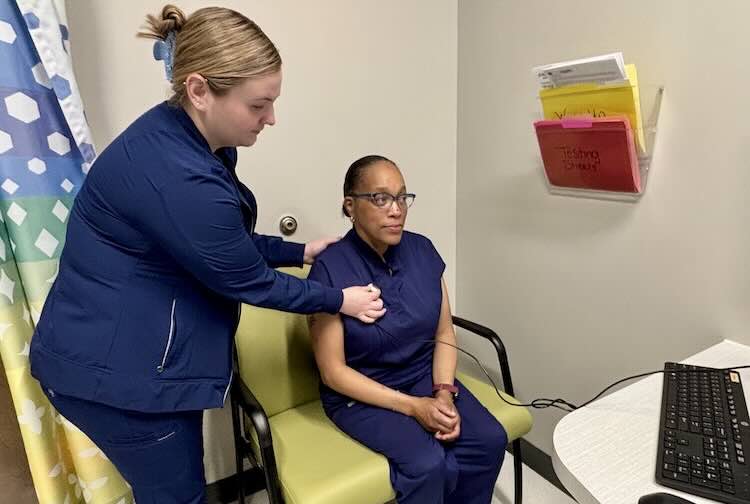 Victoria Elliott, CCMA, a medical assistant for VCU Health Community Memorial Hospital Cardiology Services, prepares patients for virtual appointments with providers based in Richmond. (Shea Wright, Enterprise Marketing and Communications)
By Shea Wright
People are living longer after a cancer diagnosis thanks to advances in treatment. However, some of those medications can weaken the heart – making cancer survivors at a higher risk of developing heart disease.
According to the National Cancer Institute, heart disease is now one of the leading non-cancer causes of death among cancer survivors. At VCU Health, cardio-oncologists are looking to curb that statistic by playing offense, not defense.
Cardio-oncology is a multi-disciplinary field of medicine that focuses on protecting the heart before, during and after cancer treatment. And the team at VCU Health is preserving the life of patients who have gone through the grueling treatments that cancer can bring.
“Now that so many patients are living longer after cancer, we have an opportunity and a responsibility, to focus on the person’s full journey,” said Wendy Bottinor, M.D., medical director of cardio-oncology at VCU Health Pauley Heart Center and research member in the Cancer Research and Control program at VCU Massey Comprehensive Cancer Center. “That includes making sure patients can complete treatment safely and stay healthy for years to come.”
By being part of a highly integrated health system, cancer patients and survivors living near VCU Health Community Memorial Hospital (CMH) now have access to cardio-oncology specialists in Richmond through virtual care appointments coordinated on campus. It’s called clinic-to-clinic care.
These specialists, part of the top heart center in the state, work closely with Massey oncologists at VCU Health’s Hendrick Cancer and Rehab Center and Solari Radiation Therapy Center to ensure patients have support throughout their cancer journey.
Expanding access to cardiology and cancer care in rural communities
CMH’s clinic-to-clinic care in cardio-oncology supports patients from before treatment begins, to long-term survivorship.
Some patients are seen early to assess risk and optimize their hearts’ health before starting cancer treatment. Others are referred to the clinic if concerns arise, helping to prevent interruptions during treatment. Many patients continue to be seen by cardio-oncology specialists as part of their long-term care plan.
“What’s unique about this field is that we’re not just reacting to problems, we’re trying to get ahead of them,” Bottinor said. “We’re looking for early signs, sometimes before patients even feel symptoms, so we can intervene sooner.”
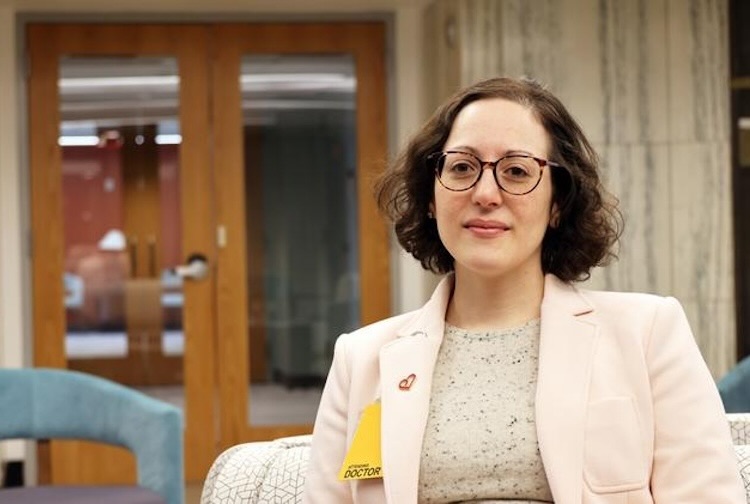 Wendy Bottinor, M.D., is the medical director of cardio-oncology at VCU Health Pauley Heart Center and and a researcher at VCU Massey Comprehensive Cancer Center. (Blake Belden, VCU Massey Comprehensive Cancer Center)
For patients in rural areas, accessing this level of specialty care hasn’t always been easy.
Traveling to larger medical centers can mean hours on the road, time away from family and added stress during an already challenging time. For some, those barriers can delay or even prevent care altogether.
The clinic-to-clinic care in cardio-oncology at CMH was designed to remove those barriers, connecting patients with specialists while keeping care rooted in the local community.
“This has been something we’ve wanted to build for years,” said Bottinor, who helped to establish the clinic in December 2025. “The challenge has always been distance and access. The clinic-to-clinic model finally gave us a way to reach patients where they are.”
Now that so many patients are living longer after cancer, we have an opportunity and a responsibility to focus on the person’s full journey.
Wendy Bottinor, M.D., medical director of cardio-oncology at VCU Health Pauley Heart Center and researcher at VCU Massey Comprehensive Cancer Center
This model is designed to complement, not replace existing care. Patients often continue seeing their CMH cardiologists and oncology teams, with the cardio-oncology specialists – based at the Pauley Heart Center in downtown Richmond – providing additional expertise and support. This collaboration ensures that patients benefit from both specialized knowledge and trusted local relationships.
One of the people fostering those local relationships is Victoria Elliott, CCMA, a medical assistant for CMH Cardiology Services. She supports patients every step of the way throughout these virtual appointments.
“It really feels like a team approach,” Elliott said. “Even though the visit is virtual, the patient still has a full care team right there with them if needed.
At VCU Health Community Memorial Hospital, virtual care has a personal touch
While the clinic is virtual, the experience is anything but distant.
Patients go to CMH’s ambulatory clinic as they would for any in-person appointment. When they arrive, a member of the care team walks them through the visit step-by-step.
We’re able to see and talk with patients in real time, while also having a trained clinical team there with them. That combination is what makes this model so effective.
Wendy Bottinor, M.D., medical director of cardio-oncology at VCU Health Pauley Heart Center and researcher at VCU Massey Comprehensive Cancer Center
“Once the patient arrives at the clinic, I get their vitals and an EKG, if needed. We go over their chart and update their information on current medications, symptoms, etc. We then start the video conference once the patient and Dr. Bottinor are ready,” Elliott said.
Elliott remains in the room with the patient, providing hands-on support throughout the visit, while using a digital stethoscope that transmits heart sounds in real time, allowing Bottinor to listen, assess and guide care alongside the on-site team.
If a patient requires further in-person evaluation, CMH’s cardiology team is already in place, ensuring continuity and immediate support.
“It’s a true collaboration,” Bottinor said. “We’re able to see and talk with patients in real time, while also having a trained clinical team there with them. That combination is what makes this model so effective.”
The clinic-to-clinic care in cardio-oncology is currently offering appointments one afternoon a week. As awareness about this specialty grows, the team hopes it can expand both virtual and in-person services so patients can continue their care journey with the support they need.
“People don’t always realize the connection between cancer and heart health,” Bottinor said. “Our goal is to make sure they don’t have to navigate that alone.”
Stay informed, stay healthy. Sign up for VCU Health’s e-mail newsletter.