Can athletes bounce back after tearing their ACL?
The medical director of VCU Health Sports Medicine shares what he wishes athletes knew about ACL tears before getting injured.
February 12, 2026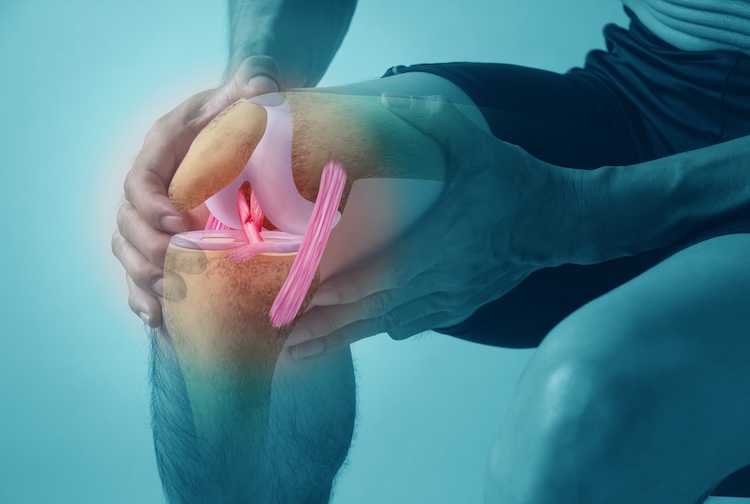 The anterior cruciate ligament, commonly called the ACL, helps the knee twist and rotate from side to side. (Getty Images)
By Sara McCloskey-Nieves
Millions worldwide watched in anticipation for Team USA's legendary alpine skier Lindsey Vonn to return to the Olympics after a partial knee replacement in 2024. But after sustaining an ACL rupture – her fourth ACL injury – just nine days before the women’s downhill event, Vonn crashed during her first run down the slope.
“The world witnessed the dangers that sports can present, especially when the knee is compromised,” said Seth Cheatham, M.D., medical director of VCU Health Sports Medicine.
Some professional athletes can bounce back after sustaining major injuries to their knees and anterior cruciate ligaments, commonly called ACL. But the likelihood of reinjuring the knee – and making it worse – is high, according to Cheatham.
Cheatham sees these types of injuries firsthand. Not only is he an orthopaedic surgeon who specializes in treating athletes, Cheatham is also the team physician for Virginia Commonwealth University Men’s Basketball. He accompanied the team to the NCAA Final Four in 2011.
 Seth Cheatham, M.D., is the medical director of VCU Sports Medicine. (Enterprise Marketing and Communications)
“I joke with patients that surgery is the easy part,” Cheatham said. “The rehab afterwards is the challenge. It requires countless hours and takes a very long time. It can be frustrating along the way and that is normal.”
How can athletes safely recover and return to their sport after tearing their ACL? Cheatham told VCU Health News he wishes athletes and patients knew before hurting their knees.
Where is the ACL on the body? What does it do?
The ACL is a critical part of your body that helps maintain your knee’s ability to move during physical and daily activities. The ligament is located deep within the center of the knee and connects the back of the femur (thighbone) to the front of the tibia (shinbone). It plays a major role in moving your knee, making sure it can twist and rotate from side to side. The ACL also stabilizes your shin so it doesn’t slide too far forward.
How do you tear an ACL?
ACL tears usually occur due to a noncontact injury. These are oftentimes due to a sudden change in direction or landing from a jump.
Athletes are at high risk of tearing their ACL if they play sports like football, basketball, soccer and volleyball. Studies show knee joint injuries also account for one-third of all injuries for recreational alpine skiers.
What are the signs and symptoms of an ACL tear?
When a patient gets injured, they often report hearing or feeling a pop in the knee. They have immediate pain and well notice swelling over the next 24 hours. They may or may not be able to put weight on it, but usually are not able to continue participating in the activity that they were involved in.
What options are there to repair an ACL tear? How long does it take to recover?
If a patient wants to continue to participate in ACL-dependent activities, which usually involves most sports, we will recommend an ACL reconstruction. This surgery is performed to stabilize the knee and prevent or minimize future damage to the meniscus or cartilage in the knee. The ACL will be reconstructed using graphs from other tendons. This is typically an outpatient procedure, meaning the patient can go home the same day.
In general, it takes 9 months to return to sports, but this can vary depending on the body's response to surgery. Towards the end of rehab, the physical therapists will perform functional testing on the knee which will help determine when the knee is ready.
How are athletes still able to compete after an injury like this? Is this normal?
Some athletes are able to complete depending on the severity of the ACL tear. These injuries are classified into three grades, ranging from mild stretching (Grade 1) to partial tearing (Grade 2) and complete rupture (Grade 3).
Following an ACL rupture, we do not recommend athletes return to sport. There is a high probability that at some point the knee will buckle again, increasing the likelihood that further meniscus or cartilage injuries can occur which can have long term consequences on the knee.
Can you function without an ACL?
Yes, you can function without an ACL when it comes to daily activities (i.e. walking in a straight line) if other muscles around your knee and legs are strong. However, your knee might feel unsteady if you are trying to pivot or jump.
Not everyone that tears their ACL necessarily needs surgery. The biggest determining factor is what your goals are. If you want to return to ACL-dependent activities (i.e. stop and go activities, landing from jumps), then surgery is recommended. However, if the injury was due to a fluke accident and you are committed to modifying your activity level, you don't necessarily require surgery and might be fine with a non-operative rehab program.
What do you wish athletes and patients knew before an ACL injury?
It would be beneficial for athletes and patients to understand the amount of work required to return to sports and achieve an optimal outcome. It also depends on how the body responds to the initial injury and surgery. This is unpredictable. On average, it takes nine months to return to a sport, but this number is not written in stone – it can really vary.
In the end, it is important to respect the data and numbers obtained from functional testing performed by the physical therapist or the athletic trainer. This is the best gauge of when a patient is ready. Additionally, the first season back it is normal to feel abnormal. It is a different knee and that is ok.
Your health matters. Sign up for updates and tips from our VCU Health care team today.