Advancements in heart failure treatments and care
A VCU Heath Pauley Heart Center cardiologist shares what to expect after a heart failure diagnosis.
October 05, 2026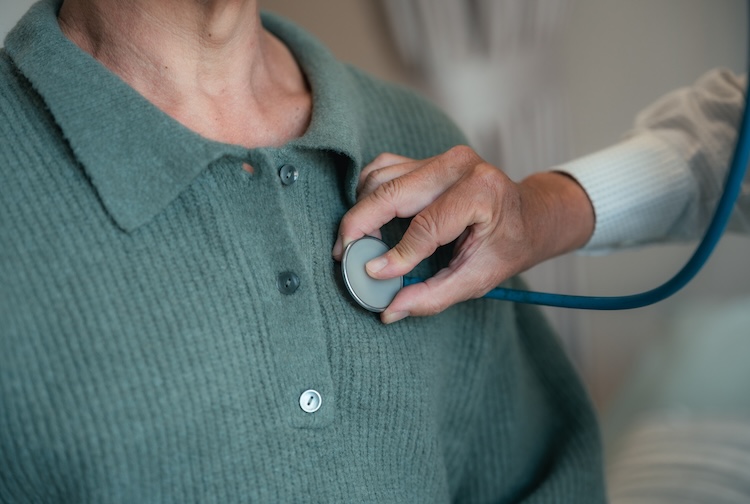 Shows show that about one in four adults will develop heart failure in their lifetime. (Getty Images)
By Tanner Lambson
A heart failure diagnosis doesn’t mean your heart is going to stop beating tomorrow.
Today, thanks to advancements in testing for the condition’s root causes and technology to help the heart pump more efficiently, patients living with heart failure can manage their disease while living active lives.
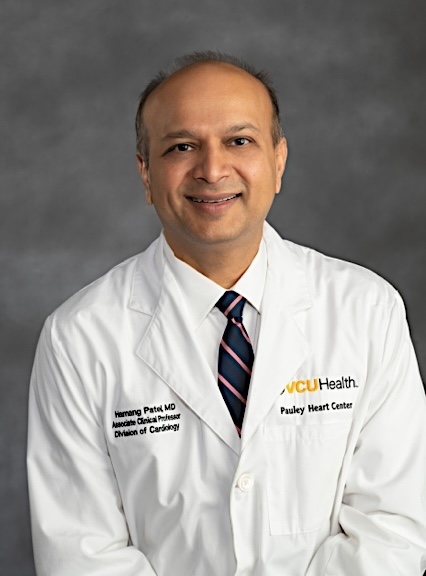 Hamang Patel, M.D., a cardiologist at VCU Health Pauley Heart Center. (Enterprise Marketing and Communications)“When a patient is first diagnosed with heart failure, our team’s priority is to identify the cause and whether it is reversible. Next, we figure out whether the heart failure is mild, moderate or severe,” said Hamang Patel, M.D., a cardiologist at VCU Health Pauley Heart Center.
Recognizing that each patient’s heart is unique, the advanced heart failure team at VCU Health Pauley Heart Center works closely with patients to develop personalized treatment plans to address their individual needs and to help them live a better life.
Patel spoke with us about the latest heart failure treatments and questions to bring up with your provider after a diagnosis.
What is heart failure, and how is it diagnosed?
Heart failure is a chronic condition that makes it difficult for the heart muscle to pump and keep up with the body’s demand for blood. About one in four adults will develop it in their lifetime.
There are several types of heart failure, primarily based on which side of the heart is affected. Each type has different signs and symptoms, some of which include fatigue, shortness of breath during daily activities, swelling of the limbs and abdomen and poor appetite.
To diagnosis heart failure, a patient will have a blood test and an echocardiogram, which is a sonogram that shows us how the heart is functioning.
What should patients ask their doctor after a heart failure diagnosis?
First, what’s causing heart failure and is that cause reversible?
Second, what stage of heart failure is it? Cardiologists categorize heart failure on a four-class scale based on how much physical activity triggers symptoms, from Class I (no symptoms) to Class IV (shortness of breath at rest); Classes II and III fall in between.
Can heart failure be reversed?
Heart failure is usually caused by a combination of factors rather than a single problem. In some cases, however, there may be one primary cause that’s treatable, such as thyroid disorder, pregnancy-related heart problems, blocked coronary arteries or poorly managed diabetes.
Less commonly, heart failure can develop when diseases — such as cardiac amyloidosis or cardiac sarcoidosis — affect the heart muscle. Identifying these underlying conditions is important because they may require specialized treatment. Pauley Heart Center offers dedicated clinics for patients with cardiac amyloidosis and cardiac sarcoidosis to help diagnose and manage these complex conditions.
Ultimately, when the underlying cause is treated, up to half of patients with underlying causes see some degree of recovery, and many reach what we call remission: no ongoing signs or symptoms of heart failure.
Can heart failure be cured? How are heart failure symptoms managed?
While heart failure cannot be cured, symptoms can be well managed in more than 95% of patients, whether through symptom control, improved heart function or both.
Medication remains the cornerstone of treatment.
Cardiac rehab — a supervised, individually-tailored exercise and education program — is an underused piece of heart failure treatment. Patients often worry it will worsen their symptoms or that they won’t be able to keep up, but cardiac rehab has a long track record of safely improving heart failure outcomes.
How have heart failure treatments advanced over the past decade? How might they advance in the near future?
While medication is still the foundation of care, newer devices are expanding what’s possible.
The Barostim, for example, stimulates receptors in the carotid artery to quiet the hormonal signals that make heart failure worse. When organs sense reduced blood flow, they release hormones to push the heart to work harder and the kidneys to retain fluid, which drives the weight gain and swelling common in heart failure.
For patients that don’t respond to medication or devices like the Barostim, the next step would be a left ventricular assist device (LVAD) — an implantable mechanical pump that helps the heart pump blood through the body when it is too weak to do so on its own — or a heart transplant along with targeted treatments for underlying causes like amyloidosis.
In the future, we are going to see more advances in personalized care for heart failure. We are getting better at matching a patient’s genetics, heart failure symptoms and drug responses to the exact right treatment for them.
Prevention will also improve as we get better at managing diabetes, hypertension, and coronary disease that lead to heart failure in the first place. At the same time, heart failure will likely remain common, partly because an aging population means more patients developing heart failure later in life.
What’s a common misconception about heart failure?
That it’s a life-ending diagnosis with few treatment options. Heart failure once had 50% five-year mortality rate. Today, five-year survival is closer to 90%.
What should I do if I am worried about my heart health?
Get an appointment with a cardiologist. When you see them, report all your symptoms and how long you have been experiencing them. Patients often chalk up fatigue, minor weight gain or mild swelling to “just getting older” and may not mention these symptoms to their doctor.
Heart failure that develops gradually over months may have a very different underlying causes and effective treatments than heart failure that comes on suddenly. Knowing your timeline of symptoms makes it much easier for your provider to sort out what’s going on.
The VCU Medical Center — where the Pauley Heart Center delivers cardiology and cardiothoracic and vascular surgery services — is Virginia’s top hospital for heart care in part because we have medical professionals who specialize in the full spectrum of heart disease. As part of an academic health system, our heart failure team collaborates with specialists across VCU Health to help patients treat the underlying causes of their heart failure.
We’re here to help you navigate your heart failure diagnosis, no matter how complex or advanced. Call us at 804-VCU-BEAT (828-2328) or visit us online to make an appointment today.
Stay informed, stay healthy. Sign up for VCU Health’s e-mail newsletter.