VCU Health addresses complex menopause using a team approach
Patients experiencing troubling menopause symptoms after standard treatment receive personalized care from OB-GYNs and Menopause Society certified practitioners.
November 06, 2026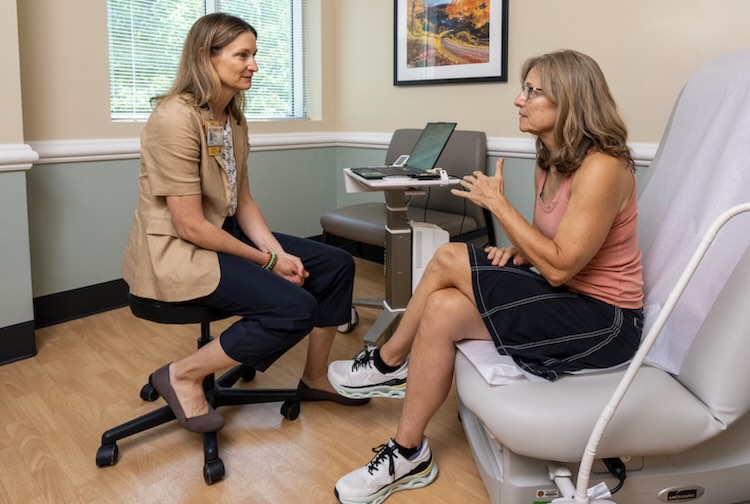 Menopause specialists offer expert care for women who experience severe symptoms, have complex medical histories, or haven’t responded well to typical menopause treatments. (Jonathan Mehring, Enterprise Marketing and Communications)
By Mia Stephens
Every woman will experience menopause, and no two journeys are the same.
For some, the reality is far more complex than the typical symptoms of hot flashes and night sweats. Filled with many challenges and unanswered questions, studies show that women don’t feel empowered to bring up their symptoms and are worried providers will dismiss them.
“As women age, our bodies will continue to change. There are no magic prescriptions or supplements that can make us feel 25 again. It is important for us to have moments of acceptance. No matter their age, women are capable of being strong, healthy and happy,” said Jane Limmer, M.D., an OB-GYN at VCU Health and a Menopause Society Certified Practitioner.
Limmer deeply understands the struggles women face during this vulnerable phase in life and is dedicated to connecting women with the care they deserve.
“My goal is to empower women as they navigate through these inevitable changes,” she said. “Most importantly, I want patients to have access to safe, evidence-based care that they can trust throughout their menopause journey.”
VCU Health News spoke with Limmer to learn how the OB-GYN team and menopause specialists at VCU Health are using a multidisciplinary approach to bring relief to women who need additional support outside of standard menopausal care.
When does menopause become “complex”?
Menopause can become complex when the patient is experiencing other medical issues like autoimmune diseases or cancer treatment. The symptoms can be similar but may need additional treatment not offered for typical menopause.
Symptoms can range from severe anxiety attacks and depression to unexplained weight changes. Other symptoms may include:
- Chronic sleep problems
- Brain fog, including difficultly concentrating or memory loss
- Persistent joint and muscle pain, similar to arthritis
- Irregular heartbeat patterns
- Tingling sensations underneath the skin
- Loss of balance
- Unexplained changes in diet and weight
When should I reach out to a menopause specialist for care?
Not every woman will need to visit a menopause specialist. Oftentimes, seeing a gynecologist is enough to identify and treat many menopause symptoms.
The complex menopause team at VCU Health, staffed by Menopause Society Certified Practitioners, offers more in-depth expertise for women who are experiencing severe symptoms, have complex medical histories or haven’t responded to typical menopausal hormone replacement therapy as expected.
What makes VCU Women’s Health care different from other women’s health teams?
Our women’s health team is unique because we provide a 365-degree view of our patients’ health and wellness through partnerships across the health system. We work closely with other specialists such as weight management, cardiology, sleep medicine, orthopedics and psychiatry, who are essential to supporting women during this time of life and beyond.
The OB-GYN team partners with patients to address menopause care during their annual well-woman visit. The department stays up to date on the newest medications, treatment options and cutting-edge research to better support the women who entrust their care to us.
What can I expect during my first visit with a VCU Health menopause specialist?
During your visit we will mainly focus on menopausal symptoms and your health history, which includes:
- Symptoms you are currently experiencing with menopause
- Any history with previous treatments
- Any complications from previous treatments
After that, we will discuss treatment options and provide resources as needed.
(Taylor MacKillop, Enterprise Marketing and Communications)
Besides menopausal hormone therapy, what treatments are used for complex menopause symptoms?
Patients who are experiencing difficulty managing their symptoms may need treatment outside of the traditional recommended therapies.
For example, hormone therapies are not recommended for breast cancer patients and survivors because of the risk of the treatment causing the cancer to grow or come back. Other patients may have adverse reactions to hormone therapy.
Nonhormonal treatment options for menopausal symptoms include:
- Cognitive behavioral therapy (CBT) is a form of talk therapy used to decrease the frequency and severity of hot flashes, mood swings and sleep issues.
- Selective serotonin reuptake inhibitors (SSRIs) and Serotonin and norepinephrine reuptake inhibitors (SNRIs) are antidepressants that are often prescribed to help women with hot flashes and mood changes.
- Gabapentin, a medication often used to treat neuropathic pain
- Oxybutynin, a medication used for overactive bladder, can be prescribed to decrease the frequency and severity of hot flashes.
- Neurokinin receptors antagonists are medications that block certain chemical signals from the brain that are linked to hot flashes.
Since menopause can impact so many parts of a patient’s health and wellbeing, having access to a team with a multidisciplinary approach to care is vital. Being part of a university-based health system allows us to collaborate with specialists across VCU Health to provide personalize care that best supports each patient’s needs as they evolve.
To make an appointment with one of our gynecologists or menopause specialists, call 804-828-4409 or visit our website. No referral is required.
Our goal is to make sure every patient who sees us feels better and healthier. Anytime a woman schedules an appointment with our team, we take time to get to know their goals and struggles to tailor the right treatment that is best for her.
Your health matters. Sign up for updates and tips from our VCU Health care team today.