What foods to avoid to reduce your risk of chronic diseases, cancer
VCU Massey Comprehensive Cancer Center researchers say ultra-processed foods have harmful compounds that can impact your health long-term.
March 10, 2026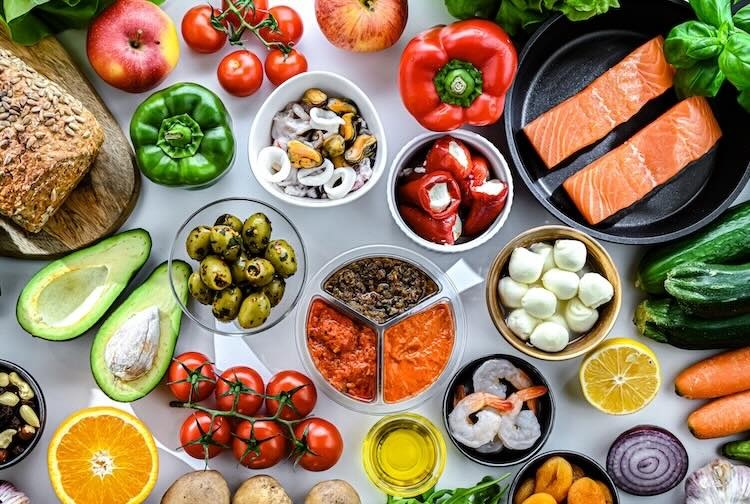 Advanced glycation end products (AGEs) are harmful compounds that form when proteins and fats from food combine with sugar in the bloodstream. (iStock)
By Bill Potter
What you eat doesn’t only fuel you for the day. The quality, preparation and how often you consume certain types of food can impact you for years to come.
Researchers at VCU Massey Comprehensive Cancer Center have been studying the effects of both diet and the environment as it relates to health and cancer outcomes.
The labs of Victoria Findlay, Ph.D., co-leader of the Cancer Prevention and Control research program at VCU Massey Comprehensive Cancer Center and associate professor in the Department of Surgery at the VCU School of Medicine, and David Turner, Ph.D., a member of the Cancer Prevention and Control research program and vice chair of Research and Innovation in the Department of Surgery at the VCU School of Medicine, are working to establish a direct cause-and-effect relationship between advanced glycation end products (AGEs) and chronic conditions.
In light of new dietary guidelines from the United States Department of Health and Human Services, we sat down with Findlay and Turner to learn more about the best foods to eat for optimal health.
Can you give us a high-level overview of the new federal dietary guidelines?
Turner: The idea behind the recommendations is fairly simple. In a nutshell, eat real food, cut back on processed foods and sugar, and make protein a regular part of meals. It also prioritizes consuming less ultra-processed foods, such as packaged sugar, highly-refined foods and added sugars.
Findlay: I think one of the really good things about these guidelines is the emphasis on limiting ultra-processed foods, and I think that's coming from a lot of the research that's been ongoing. I think everyone who has studied ultra-processed foods at whatever time has shown they're not good for our overall health, and so I think that is an important key takeaway.
What are AGES and how do they affect the body?
Findlay: AGEs are harmful compounds that form when proteins and fats combine with sugar in the bloodstream. While they are in everything we eat, we find higher levels of AGEs in foods that are ultra-processed.
How you prepare your food can also affect the amount of AGEs it contains. For example, people think grilling is healthier than deep-frying. From a fat perspective it is true, but from an AGEs perspective that is not necessarily true, since high, dry heat can cause AGEs to form in the foods which we then consume.
Turner: When we consume AGEs, they bind to tissues within the body, and as they accumulate, it can degrade the tissue, making it older. At a certain point, the accumulation of AGEs can cause inflammation, oxidative stress and metabolic dysfunction – basically, the three drivers of virtually every chronic disease.
And if you look at patients with a chronic disease, AGEs are consistently higher than in patients that don't have those diseases. AGEs’ ability to increase inflammation, metabolic stress, and oxidative stress is why we should care about how they affect the body.
How do you measure AGEs in a person?
Turner: AGEs accumulate over time in tissues, so they can reflect your lifestyle from the beginning of life.
Because the AGEs accumulating in your tissues reflect how healthy your organs are, we can compare your chronological age to your biological age. We actually have a machine in our office that measures how many AGEs are in your skin. If you're 30 years old, this machine will tell you whether your organs are 25, 30, or 40.
How do the results from measuring AGEs in a person differ from a traditional blood test?
Turner: When we take a blood sample at a certain time, or a certain set of times, it doesn’t really reflect what you've been exposed to over your life - it only reflects what you've been exposed to at that time.
Measuring AGEs is more of a readout; it’s closer to a combination of everything that you're exposed to over a lifetime, and how that leads to and contributes to disease later on. We’re exploring whether AGEs could actually be a lifetime exposure marker, because they accumulate as a consequence of one’s environment over a lifespan.
If AGEs accumulate because of eating ultra-processed foods, how can people take steps to avoid those?
Findlay: Unfortunately, ultra-processed foods are now a mainstream part of most diets; research indicates that more than 70% of foods we find in the grocery store are processed or ultra-processed in some way, so we’re all fighting an uphill battle to even pick healthy, unprocessed foods at the store.
And that’s before we begin to factor in the cost of those healthier foods. We find so many people who want to eat healthier but cannot afford to. And we are also finding that educating people about food preparation is incredibly important, too.
Turner: Generally, ultra-processed foods do not look like the original food. Think about the TV dinners you used to see (and still do). It has been made to look like food, but it never quite looks right.
How can people learn more about AGEs, including what foods may be affected?
Findlay: We have a dedicated website regarding AGEs, where people can see the AGE content of various foods to help guide them through the grocery store or restaurant. We also provide food preparation recommendations and have a chart of estimated AGEs in commonly consumed foods.
For pet owners, we also offer insights into how AGEs might affect our four-legged friends on the site, too.
What would you say to people concerned about their diet, or making changes to it?
Turner: It’s like what my grandmother used to say, ‘everything in moderation.’ It's still so true, even if it was first said hundreds of years ago.
You can still enjoy a life with steak. It tastes good; it's nice. But I don't have three or four steaks a week.
If you've had a lot of food high in AGEs, then balance it out with some low-AGE foods. That way, your body can deal with the AGEs, at least to a greater extent. It can't get rid of all of them, but it can deal with them as long as you don't overload the system.
When it comes to one’s diet, it's sort of knowing the foods and how many AGEs are in them.
Your health matters. Sign up for updates and tips from our VCU Health care team today.