Virginia man comes back after heart transplant to compete in World Transplant Games
VCU Health’s leading transplant center saved Kyle Dodd’s life and opened new doors for the U.S. Army Veteran and father of four.
February 06, 2026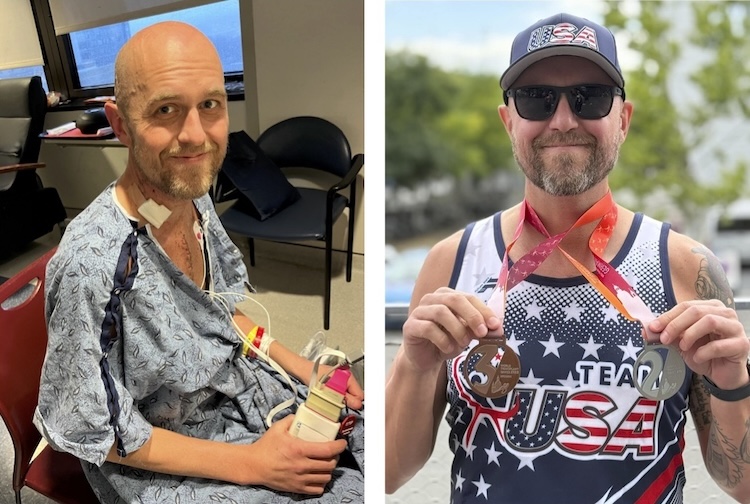 Two years after Kyle Dodd received a heart transplant at VCU Health Hume-Lee Transplant Center, he competed and won two medals in the World Transplant Games. (Photos provided by Kyle Dodd)
By Jeff Kelley
Kyle Dodd is a lifelong athlete, though he never imagined he’d be in a position to represent Team USA. But in August — two years after nearly losing his life — the 40-year-old father of four stood on a global stage, competing alongside transplant recipients from around the world.
A baseball player, strong swimmer and U.S. Army Veteran, Kyle always defined himself by staying active and competitive. Those instincts helped carry him through a life-threatening heart crisis and, ultimately, to the World Transplant Games, an international multi-sport event celebrating life after transplant.
Just after Thanksgiving 2022, he became ill. He was vomiting and unable to keep food down, assuming it was just a stubborn stomach bug. By late December and into January, his condition worsened. After multiple emergency room visits, he was admitted to VCU Medical Center, where his health declined rapidly.
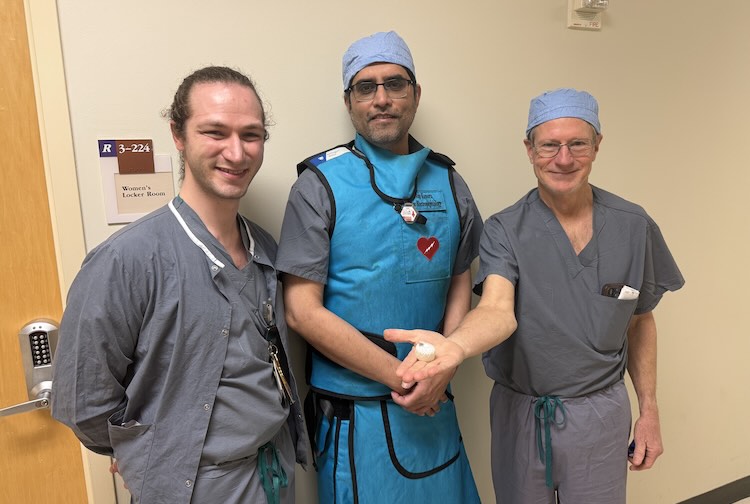
Years earlier, Kyle had passed out while working out and was later diagnosed with left ventricular noncompaction cardiomyopathy, a rare congenital heart condition that limits the heart’s ability to pump blood effectively. He was placed on medication, lived what he described as “a very normal life” and was followed for years by Keyur Shah, M.D., interim chief of the Division of Cardiology at the VCU Health Pauley Heart Center.
Kyle was in the right place at the right time. Being in Central Virginia, he would not have survived if he were anywhere but VCU Health.
Keyur Shah, M.D., interim chief of the Division of Cardiology at the VCU Health Pauley Heart Center
By early 2023, however, Kyle’s left ventricle was no longer functioning, and his organs began to fail. When the advanced heart failure team from VCU Health Pauley Heart Center evaluated him, they discovered an immediate danger: a massive clot inside his left ventricle, the chamber responsible for pumping oxygenated blood to the body. With his heart failure so advanced, the transplant team was called in to collaborate on Kyle’s care.
“When we looked at his echocardiogram, he had a lot of clot in his left ventricle — a lot,” said Josue Chery, M.D., a cardiothoracic surgeon and the surgical director of heart transplant at VCU Health Hume-Lee Transplant Center. “That narrowed his options.”
“The good news is that Kyle was in the right place at the right time,” Shah said. “Being in Central Virginia, he would not have survived if he were anywhere but VCU Health.”
Temporary heart support vs. a total artificial heart
Temporary mechanical heart support such as ventricular assist devices can be lifesaving for many patients. In Kyle’s case, the clot burden made that approach dangerous.
“We thought a temporary device was not a great idea because we could potentially cause showering of those clots (sudden release of blood clots in the blood stream) and cause a stroke or shut down his organs,” Chery said.
The team turned to a far rarer option: a total artificial heart. Unlike other support devices that sit inside the left ventricle, a total artificial heart replaces both ventricles entirely.
“Essentially, you cut out the right ventricle, you cut out the left ventricle and replace them with a mechanical device,” Chery said. “You’re removing the source of all the clots.”
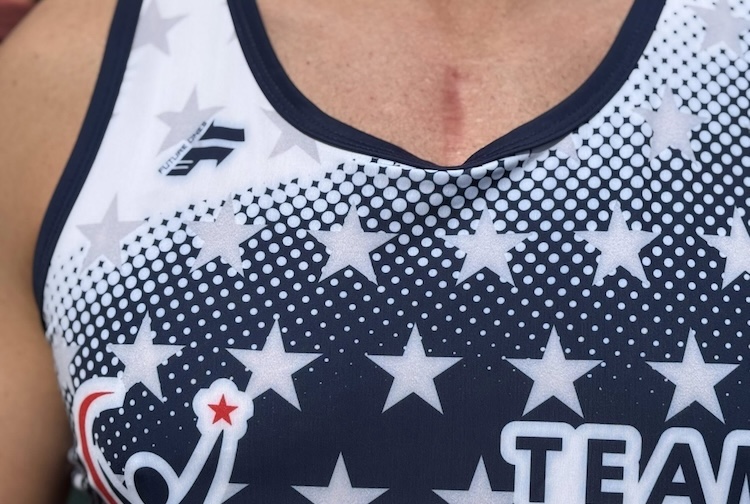 A scar on Kyle’s breast bone is all that is left after two major surgeries on his heart in 2023. (Photo provided by Kyle Dodd)
VCU Health Hume-Lee Transplant Center performs about one total artificial heart implant per year. Advances in technology and patient selection have reduced how often the procedure is needed, Shah said.
“The total artificial heart is never a first choice,” Shah said. “It is a lifesaving option when nothing else will safely support the patient.”
Chery implanted Kyle’s total artificial heart during an emergency operation, mobilizing a highly specialized team on short notice. The procedure also requires a commitment by the surgeon to physically stay at the patient’s bedside, around the clock, for the first 48 hours, as the device is complex, and the early period post-surgery can be unstable.
“You can’t just leave and go home and tell the nurses to call if something happens,” Chery said. “The surgeon is like the pilot. I have to fly that plane.”
Eight days later, a donor heart became available. Kyle’s heart transplant was performed by cardiothoracic surgeon Mohammed Quader, M.D.
“That Kyle was able to receive a heart transplant just one week after his total artificial heart was another stroke of luck in his care,” Shah said.
A new heart and a new goal
Kyle recalls a “profound experience” during his hospitalization. “There was such a calm over me,” he said, despite what his family described as “a metal box in your chest keeping you alive.” Looking back, he added, “I probably should have been freaking out.”
Discharged seven days after his transplant, Kyle focused on rebuilding. Like all heart recipients, doctors and therapists want patients to stay active and moving. He’d lost about 50 pounds during his illness and hospitalization, so he was focused on regaining basic strength, endurance and confidence in his body. He began walking to the end of his driveway — then laps, then miles. “Move every day” became his rule.
I was just running the rat race and taking things for granted... My transplant has opened up a whole new path in my life and weirdly changed it for the better.
Kyle Dodd, VCU Health patient
During his recovery, his fiancée, Becca, showed him a video clip from the World Transplant Games, a biennial international multi-sport event for organ transplant recipients, living donors and donor families. While Kyle excelled athletically, participation in the games is inclusive to all abilities so long as the athlete is medically cleared for sport. “This was obviously going to be the next target for me to go after,” he said. The summer games were just over a year away.
In 2025, he represented Team USA in Dresden, Germany, competing in golf (winning a bronze medal), swimming and a ball throw (winning silver). But for Kyle, just as meaningful was the camaraderie.
“I didn’t know anyone else who’d had a transplant before I went to the games. Being around people who had gone through the same thing was incredible,” he said. “It gave me perspective — and gratitude.”
Life after a heart transplant
The average life expectancy for heart transplant recipients is about 12 years across all ages, though younger patients can live much longer. Long-term success depends on medication adherence, medical monitoring and physical activity.
“I essentially have a second half of my life with this heart if I take care of it,” Kyle said.
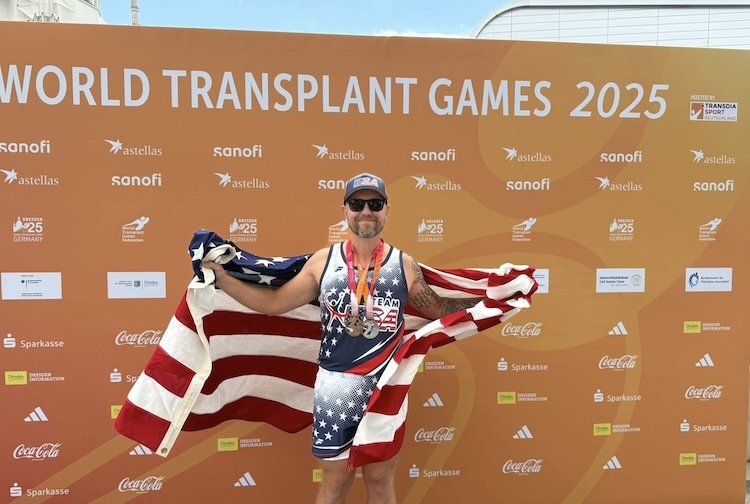 Kyle Dodd competed for Team USA in the World Transplant Games, which were held in Dresden, Germany, in 2025. (Photo provided by Kyle Dodd)
He says the transplant opened new doors, like participation in the games.
“I was just running the rat race and taking things for granted, and now I get to participate in a lot of new experiences and talk to others about transplantation,” he said. “I’m grateful. It showed me how fleeting life can be, and that it can be taken from you in the blink of an eye. My transplant has opened up a whole new path in my life and weirdly changed it for the better.”
His guidance to others facing transplant? Recognize it will be frustrating and there will be pain, but there’s fulfillment on the other end. Like others, Kyle lives with restrictions and a daily medication regimen but refuses to let them define him.
“I didn’t get a new heart to live in a bubble,” he said. “I got a new heart to live a new life.”