Therapy dogs reduce loneliness in hospitalized psychiatric patients, VCU research finds
The first-of-its-kind study adds to growing evidence that animal-assisted interaction improves patients’ well-being.
February 05, 2026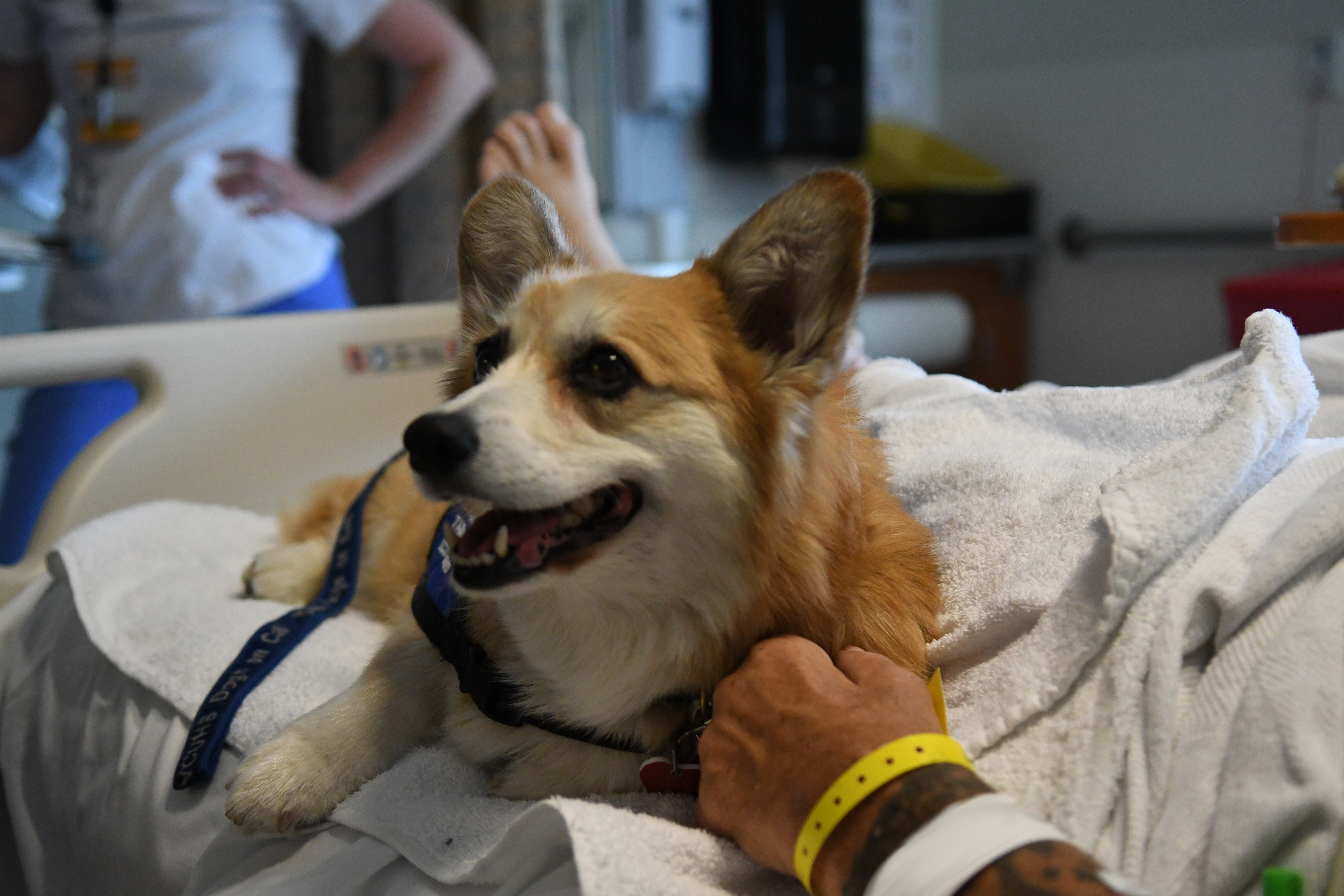 Dogs on Call, a therapy dog program offered by VCU’s Center for Human-Animal Interaction, provides visits from registered therapy dogs to most patients at the VCU Medical Center and some off-campus VCU Health locations. (VCU Center for Human-Animal Interaction)
By Olivia Trani
A lengthy hospitalization can be a lonely experience, particularly for patients being treated for mental illness. However, receiving regular visitors can help fight feelings of isolation, especially if that visitor has fur, paws and a wagging tail, according to new clinical research.
The study was led by researchers at Virginia Commonwealth University and funded through a grant from the Human Animal Bond Research Institute (HABRI) and Pet Partners. The results, published in Frontiers in Psychiatry, show that visits from therapy dogs helped people hospitalized for psychiatric treatment feel less lonely.
“To our knowledge, this is the first study of its kind to examine how dogs impact loneliness in people hospitalized for the treatment of acute mental illness,” said Nancy Gee, Ph.D., a professor in the VCU School of Medicine’s Department of Psychiatry. She is also the director of VCU’s Center for Human-Animal Interaction, which operates the Dogs on Call therapy dog program to enhance the well-being of patients, visitors and team members across VCU Health.
“Our findings show that there is something unique about the presence of a therapy dog that provides immediate improvement in loneliness, above and beyond that of human interactions or the standard of care,” Gee said.
Loneliness’s deep impact on mental and physical health
The United States has faced a loneliness epidemic in recent years, with survey data from the American Psychological Association showing that more than half of Americans report feelings of isolation, being left out or lacking companionship.
This rise in chronic loneliness and isolation poses a significant public health concern, with research showing that loneliness is strongly linked to increased risk of heart disease, dementia, stroke, depression, anxiety and premature death. Feelings of loneliness are also often a precursor to suicide attempts and relapses in substance use.
“Loneliness poses health risks that are as deadly as smoking 15 cigarettes a day,” Gee said. “Older adults and people with mental health conditions are some of groups most vulnerable to the deleterious effects of loneliness, particularly those who are hospitalized.”
Therapy dogs offer comfort and measurable health benefits
There is a growing body of evidence that therapy dogs can make a difference in the health and mental well-being of hospitalized patients. Previous studies have shown that animal-assisted interactions reduce anxiety, depression, pain and fear in hospitalized patients with mental illness. Exposure to therapy animals is also associated with improved group therapy attendance and treatment adherence in hospitalized patients with serious mental illness.
“Our research has shown that therapy dogs can have a beneficial impact on a number of key psychological outcomes when deployed as an adjunct to the treatments they receive at the hospital,” Gee said. “In a previous study, we found that therapy dogs helped combat loneliness in hospitalized older adults. In the current study, we specifically wanted to know if therapy dogs can make a genuine change in loneliness levels for psychiatric inpatients who are particularly at risk to the deleterious effects of loneliness. With the Dogs on Call program at VCU Health, we have had the perfect opportunity to get some answers.”
The study involved 60 research participants who were receiving treatment for acute mental illness at VCU Health. The individuals were randomly assigned to one of three interventions – a visit from a Dogs on Call therapy dog and its handler, a handler-only visit (conversational control) or their usual care – for 20 minutes per day for three days. Participants also completed assessments on their mental health and feelings of loneliness before and after the intervention.
The results showed that patient loneliness generally decreased in all three interventions, but the participants visited by therapy dogs experienced the biggest reduction in loneliness levels on average. Though the results were nuanced, this trend was apparent across sexes, with both male and female patients experiencing the biggest decrease in loneliness after therapy dog visits. The same was true for patients who owned dogs compared with those who didn’t own dogs.
More research is needed to understand why therapy dogs reduce loneliness levels in patients, though Gee notes that dogs are often natural “icebreakers” in social settings, and studies have shown that dogs also help reduce stress levels in humans. She added that these interactions are a mutually beneficial experience for both humans and therapy dogs.
“In the Dogs on Call program, the dogs are our partners, and we know that they gain something from these interactions just as the humans do,” Gee said. “This ‘One Health’ approach is such an important part of our program. It really is about how we can help and support one another.”