Study finds moderate, leisure exercise may be linked to better liver health
Exercise appears to protect the liver from scarring, but a VCU Health hepatologist says it doesn’t help as much if you’re only physically active at work.
December 09, 2025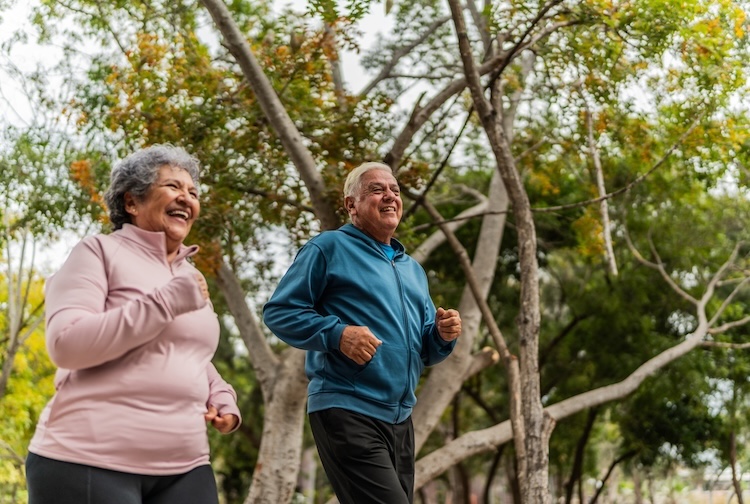 A VCU researcher says that leisure exercise, such as brisk walks through a park or neighborhood, can benefit liver health. (Getty Images)
By A.J. Hostetler
There’s good news if your New Year resolutions include adding more activity to your life. Being active in your leisure time may help protect against serious liver damage, even if you drink alcohol.
But – and there’s always a but – the exercise you get while on the clock isn’t going to help your liver much, according to new research involving Virginia Commonwealth University hepatologists.
A new study, published in Hepatology Communications, looked at more than 4,300 adults nationwide with fatty liver disease. It found that people who got enough leisure-time physical activity, such as brisk walking, cycling or playing sports, were much less likely to have advanced liver scarring, known as fibrosis.
While exercise is good, the study also suggested that being physically active at work, such as lifting, standing or doing manual labor, didn’t protect the liver.
“Not all movement has the same impact on liver health,” said Juan Pablo Arab, M.D., one of the study’s co-authors and director of alcohol sciences at the VCU Stravitz-Sanyal Institute for Liver Disease and Metabolic Health. “Structured leisure activity appears to offer real protection, while physical activity at work does not.”
What the study found
Using data from the U.S. National Health and Nutrition Examination Survey (NHANES) collected between 2017 and 2020, researchers examined three groups of people diagnosed with: fatty liver disease, fatty liver disease and alcohol use, and those with alcohol-associated liver disease (ALD).
When comparing activity on the job and during free time, researchers found that people who got the equivalent of at least 150 minutes of moderate exercise a week in their leisure time had a 40-45% lower risk of advanced fibrosis than those who were less active.
Whether someone spent long hours standing or lifting on the job made no difference once factors such as age, income, body weight and metabolic risks were taken into account. The researchers also found no major differences among the types of liver disease when comparing work and leisure activity.
The data used for this study relied on self-reported activity, meaning participants shared their own estimates of how much they moved each week. While the way the study was designed can’t confirm whether exercise directly caused lower rates of liver fibrosis, the consistency of the findings across all types of liver disease suggests the link is strong.
Why the type of activity matters for liver health
Experts say the results point to what’s known as the “physical activity paradox,” which research has already found in cardiovascular health. In short, being active at work doesn’t seem to deliver the same health benefits as exercise done for recreation or fitness.
“Work activity often involves long hours of low-level exertion, with little recovery or variation,” Arab said. “Leisure exercise tends to be structured and includes rest, which may support better metabolism and lower inflammation.”
Exercise is known to help the body manage fat and sugar and reduce inflammation, all key to keeping the liver healthy. Even without weight loss, regular aerobic or resistance exercise can cut liver fat and improve blood sugar control.
Alcohol adds another wrinkle. Heavy drinking directly harms the liver, but moderate or structured physical activity may help offset some of that damage. Still, the researchers caution that their study cannot prove cause and effect.
Implications for public health
This study adds to growing scientific evidence that structured leisure-time activity, such as walking, cycling, swimming or dancing, can make a real difference in liver health.
Researchers say these findings could help shape public health campaigns that encourage recreational activity as a simple, low-cost way to reduce the risk of liver disease, especially for adults with obesity or diabetes, or those who drink alcohol.
“Our results underscore the importance of moving for your health, not just moving for your job,” Arab said. “Regular, intentional exercise outside of work may help protect your liver and your overall wellbeing.”
The study’s authors include VCU hepatologist Hanna Blaney, M.D., as well as other researchers University of Louisville, University of California; San Diego, University of California; Los Angeles and Stanford University. The researchers note that larger, long-term studies should be pursued to confirm these findings and to learn what kinds and amounts of exercise work best for people living with or at risk for liver disease.
Learn more about our innovative researchers and their projects
See how VCU’s Stravitz-Sanyal Institute for Liver Disease and Metabolic Health is making an impact