Regular dental care linked to fewer complications, lower liver cancer risk in veterans with cirrhosis
VCU researcher says ‘it’s time to take orodental health seriously’ to help prevent liver cancer and disease progression.
March 26, 2026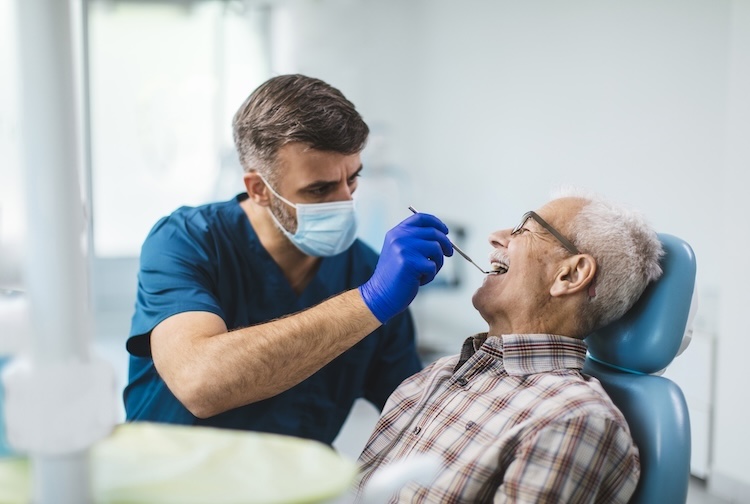 Poor oral health can cause bacteria to build up in the mouth, causing gum disease, infections and inflammation that can spread throughout the body. (Getty Images)
By A.J. Hostetler
Regular dental care may help protect the health of people living with liver disease. A study by researchers at Virginia Commonwealth University and the Richmond Veterans Affairs Medical Center found that veterans with early-stage cirrhosis who received routine dental cleanings experienced fewer complications and hospitalizations.
The researchers reviewed medical records from nearly 48,000 veterans diagnosed with compensated cirrhosis using data from the U.S. Department of Veterans Affairs between 2005 and 2023. Compensated cirrhosis refers to a stage of liver disease where the liver is scarred but still functioning. The findings, recently published in the Journal of Hepatology Reports, suggest that maintaining good oral health may support overall health in people with cirrhosis.
Only about 17.5% of the 47,809 veterans included in the study received regular dental care, defined as at least one dental cleaning or periodontal maintenance visit per year beginning two years before their cirrhosis diagnosis.
“It is time for us to take orodental health seriously, especially since we have few ways to prevent cancer and disease progression in these patients,” said senior co-author and gastroenterologist Jasmohan Bajaj, M.D., of the VCU Stravitz-Sanyal Institute for Liver Disease and Metabolic Health and the Richmond VA Medical Center.
In addition to Bajaj, contributors include senior co-author Nilang Patel, M.D., of VCU Division of Nephrology and Richmond VA Medical Center, Janina Golob Deeb, D.D.S., of VCU School of Dentistry, Anas Aljabi, M.D., and Scott Silvey, of VCU and Richmond VA Medical Center.
What connections did researchers find between the liver and mouth?
After adjusting for factors such as age, medical history, medications and health care use, the researchers observed several differences between patients who maintained dental care and those who did not.
Among the findings, veterans with annual dental care were:
- About 27% less likely to develop hepatocellular carcinoma, the most common form of liver cancer, during the two-year follow-up period.
- About 15% less likely to develop ascites, a buildup of fluid in the abdomen that signals worsening liver disease.
- About 19% less likely to develop hepatic encephalopathy, a condition in which toxins affect the brain and cause confusion or other cognitive problems.
- About 15% less likely to be hospitalized for any cause and about 20% less likely to require hospitalization for liver-related complications
The analysis did not reveal significant differences in rates of variceal bleeding or spontaneous bacterial peritonitis, two other serious cirrhosis complications.
Because the study focused on veterans, who tend to be older and have higher rates of chronic illness than the general population, additional research will be needed to determine whether the findings apply more broadly.
How does dental health impact the liver?
The connection may lie in the relationship between oral bacteria, inflammation and liver disease. Cirrhosis is associated with immune dysfunction and changes in the body’s microbiome, factors that contribute to complications such as encephalopathy, infections and cancer. By reducing oral inflammation and bacterial load, routine dental care could help limit some of those systemic effects.
Might something else be the cause?
To test whether the results simply reflected patients who were more engaged in preventive care overall, the researchers also examined colonoscopy screening rates. Colonoscopy — another routine preventive service — did not show the same association with fewer liver complications or hospitalizations, suggesting the oral health care itself may play a specific role.
Despite the potential benefits, dental care is rarely emphasized in routine cirrhosis management. Even among veterans eligible for dental services through the VA system, fewer than one in five received routine dental care during the study period. Many patients receive a dental evaluation only during the workup for liver transplantation.
Would it help to get more frequent dental cleanings?
The benefit appeared to level off at about one dental visit per year, with little additional improvement in hospitalization rates from more frequent visits.
What should patients and providers do?
More research needs to be done to determine if these findings can apply to a broader population. But in the meantime, the researchers say regular dental cleanings and gum disease treatment may represent an underused strategy in cirrhosis care.
Access remains a barrier, however. Even among veterans eligible for dental services through the VA system, fewer than one in five received routine dental care during the study period.
This research was supported in part by a Merit Review Award from the U.S. Department of Veterans Affairs and by a Clinical and Translational Science Award (UM1TR004360) from the National Center for Advancing Translational Sciences. The authors noted that the content is solely their responsibility and does not necessarily represent the official views of the funding agencies.
See how VCU’s Stravitz-Sanyal Institute for Liver Disease and Metabolic Health is making an impact
Stay informed, stay healthy. Sign up for VCU Health’s e-mail newsletter.
Related Articles