Injuries from e‑scooters and e‑bikes are rising – here’s how to stay safe
VCU Health trauma specialists explain the risks of personal electric vehicles and how you can prevent serious injuries.
June 29, 2026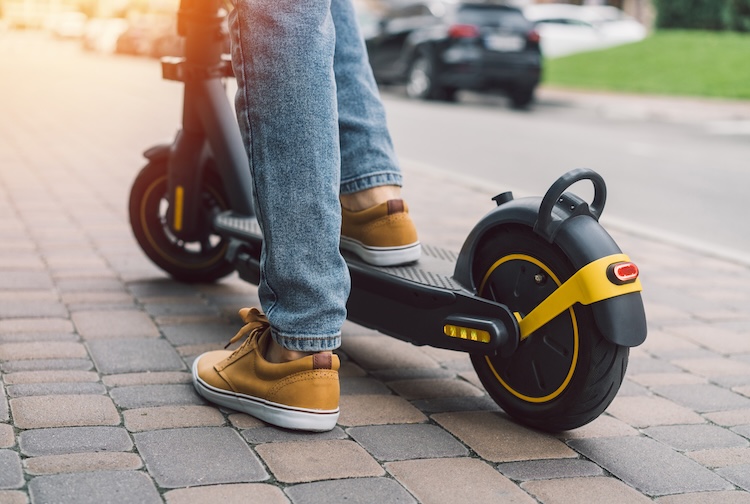 Emergency departments are seeing an uptick in injuries related to personal electric vehicles, such as e-scooters and e-bikes. (Getty Images)
By Joan Tupponce
Imagine sitting in your car, ready to head home after a day of shopping at the mall.
While checking for oncoming traffic, something catches your eye — two teenagers quickly zigzagging through a row of parked cars.
You pause. Waiting for them to run by. Except they aren’t running.
With more personal electric vehicles — electric scooters, skateboards, bikes and golf carts — sharing the road, it’s more important than ever to keep safety top-of-mind.
“The recent popularity of motorized scooters and e-bikes has unfortunately translated into an increased incidence of significant physical injuries, many of which are preventable,” said Jeffrey Haynes, M.D., director of the pediatric trauma program at Children’s Hospital of Richmond at VCU.
Over the last four years, Beth Broering, MSN, RN, trauma program director for VCU Medical Center, has also seen an uptick in injuries due to falls or accidents involving personal electric vehicles, also known as micromobility vehicles or electric personal assistive mobility devices under some state and local laws.
That uptick is on par with national trends, with one major study noting e-scooter injuries increased by 1310% from 2020 to 2022.
Patients with road-related injuries are often brought to VCU Health's medical campus in downtown Richmond. As the only hospital in the region verified as a Comprehensive Level I trauma center, this care team is equipped to handle the most complex cases facing adults and children, including traumatic burn injuries.
If you think it’s just kids using personal electric vehicles, think again
Teens and adults are also riding them, but many don’t realize how fast they are going. Some can travel over 20 miles an hour.
Under Virginia law, no one is allowed to use a personal electric mobility device at a speed higher than 25 miles per hour. For motorized skateboards or scooters, you can’t go faster than 20 miles per hour. Teens under 14 years old are not legally allowed to use these vehicles unless they are supervised by an adult.
When it comes to emergency care, Broering has seen the typical age range change for patients.
“We are seeing more and more adults on these,” she said. “There is greater speed associated when they fall off or hit something and the magnitude of injuries is more significant.”
And severe injuries don’t only happen at high speeds. Take, for instance, a battery-powered toy car — weighing more than 60 pounds and reaching a top speed of 5 mph. Even though it is for kids, it can be dangerous if they fall out or the car tips over.
Falling at a high speed requires more than a Band-Aid
Trauma specialists at VCU Health are seeing all sorts of injuries — broken teeth and minor scrapes to severe head trauma — because riders were not wearing helmets. Some patients even come to the emergency department with serious fractures and damage to their internal organs.
“Obviously, the rider can recover from some injuries, but some injuries result in lifelong medical challenges,” said Corri Miller-Hobbs, BS, RN, CPN, CPST-I, injury prevention education and outreach coordinator and Safe Kids Virginia program coordinator at Children’s Hospital of Richmond at VCU. “Additionally, riders should use a helmet that is specifically designated for the piece of equipment and activity they are participating in.”
Patients may miss school, sports and playdates, while their parents or guardians may miss work for a prolonged period to care for them.
“Regardless of how minor the injury is, you can’t ignore the negative emotional and psychological effects this type of trauma has on a child and their entire family,” Miller-Hobbs said.
Until a child is at least 12 years of age or older, Miller-Hobbs says they do not have the skills to operate these devices.
“Children lack the necessary skills to assess danger, to evaluate speed, to react quickly and appropriately and likely are not familiar with the rules of the road,” she explained. “All of this means they are at greater risk of injury when interacting with other vehicles, bicycles, scooters or pedestrians.”
Before going for a ride, grab a helmet
While helmets are only required for motorcycles and e-bikes under Virginia law, Broering says if you land on your head going 25 miles per hour on a scooter “the injuries will be massive and can be catastrophic.”
Everyone riding one of these devices should be wearing “a bicycle helmet or helmet that is similar to one used when rollerblading,” she added.
In addition, cover all exposed skin and wear some type of protective gloves like you would on a bicycle or motorcycle.
“When you are not wearing protective clothing, your skin is not protected,” Broering said. “You can get soft-tissue injuries where the skin is sheared off. A muscle can be ripped off a bone; we refer to it as road rash. It can be devastating and need everything from cosmetic skin grafting to other cosmetic restoration.”
If you are considering buying a personal electric vehicle for yourself or a child in your life, do your research. The manufacturer has age and size guidelines, which are important to follow. Also, consult your city or county to determine what ordinances are in effect for riding these devices.
“If you purchase one of these products, repeatedly review the manufacturer’s instructions and rules of the road with your child,” Miller-Hobbs said. “In addition, supervise your child to monitor their use and make corrections as needed.”
Lastly, electric bikes, scooters and skateboards are for one person only. No one — adults or children — should share a ride.
And always, "think before you ride,” Broering said.
Your health matters. Sign up for updates and tips from our VCU Health care team today.