How to safely clean your home with household products
Expert safety tips for spring cleaning from the director of Virginia Poison Center at VCU Health.
March 05, 2026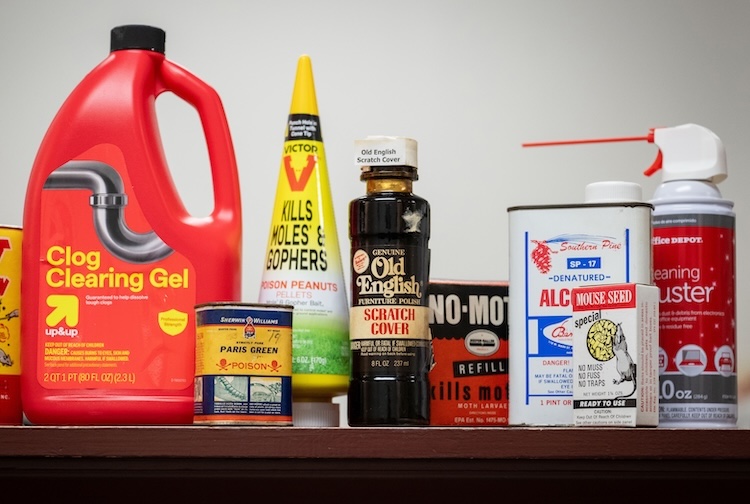 In 2025, the Virginia Poison Center at VCU Health received nearly 2,500 calls from people concerned about accidental poisonings or exposure linked to household cleaning products. (Dean Hoffmeyer, Enterprise Marketing and Communications)
By Mia Stephens
It’s almost time to put away the snow shovels and ice melt to make way for a deep clean to welcome in the spring.
But did you know that household cleaning products are among the most common reasons people call local poison centers for advice? In fact, the Virginia Poison Center at VCU Health received nearly 2,500 calls from people concerned about accidental poisonings or exposure to these products in 2025.
 John Downs, M.D., MPH, director of the Virginia Poison Center at VCU Health. (Dean Hoffmeyer, Enterprise Marketing and Communications)
“Most calls we get about cleaning products involve everyday tasks – someone mixing products and having trouble breathing from fumes, accidentally getting a splash of cleaner into their eyes while spraying or skin exposure from handling concentrated products without gloves,” said John Downs, M.D., MPH, director of the Virginia Poison Center at VCU Health. “We often see a rise in cases during the springtime and around the holidays, however, the poison center is always here as a resource for prevention advice and real-time guidance.”
VCU Health spoke with Downs about the hidden risks of household products and how to safely spruce up your home this spring.
What are common signs of chemical exposure during spring cleaning?
Symptoms depend on the product and how you were exposed to it. In most cases, people experience irritation affecting their skin, eyes, throat or lungs.
- Skin irritations are typically mild and may appear as red and dry or have a burning sensation. Highly concentrated products can cause painful blistering and chemical burns.
- Eye exposures often cause immediate burning, tearing, redness and light sensitivity, but occasionally can injure the surface of the eye.
- Inhaling fumes may lead to coughing, throat irritation, chest tightness or trouble breathing.
Most symptoms are temporary, however, we always recommend calling the poison center to help figure out what might be a more concerning exposure situation.
What common household cleaning products often lead to accidental poisonings?
Most cleaning products are safe to use when used, stored and disposed of correctly. The root cause of many cases is related to improper use. Chemicals often reported include bleach-containing products, detergent pods, disinfectants, specialized cleaners (floors, tile and bathroom) and all-purpose cleaners stored in spray bottles.
What are some myths and misconceptions about household cleaning products?
There are many myths and misconceptions about household cleaning products, including:
- “Household” does not mean harmless. Many cleaning products contain chemicals that can cause injury if used incorrectly.
- Mixing cleaners makes them work better. Mixing products can generate toxic gases and can be extremely dangerous or even fatal.
- Using more products improves effectiveness. Overuse often increases fumes and residue without improving cleaning results.
- Children know not to touch cleaning products. Young children are naturally curious, and many products are stored within easy reach, such as under sinks.
- Products are only dangerous if they are swallowed. Many chemicals can also cause harm through skin contact, eye exposure or inhalation.
- Child-resistant packaging is child-proof. These caps are designed to slow children down, not prevent access entirely.
For households with children, which products need extra precaution?
The biggest concern we see for children are laundry and dishwasher detergent pods, which deserve special attention. These products are highly attractive to kids and are often mistaken for toys or candy because they are brightly colored, soft and highly concentrated.
When pods burst, it can cause serious injuries to the eye, mouth and block airways resulting in coughing and vomiting. Depending on the case, a visit to the emergency room may be needed. In most cases, children recover with little to no side effects.
Other products raising concerns for poison centers are highly concentrated or corrosive cleaners, such as oven, drain, and toilet bowl cleaners. These products can cause rapid burns to the skin, eyes or mouth if misused. While these types of exposures are less common, they can be more severe.
Are “green” or “natural” cleaning products safer?
Not necessarily. While some products labeled as “green” or “natural” may reduce certain risks, they are not entirely poison-proof. Many of these cleaning products have ingredients – essential oils, vinegar or plant-based surfactant – that can still cause irritation or toxicity at concentrated levels.
How can I prevent chemical exposure while cleaning my house?
Regardless of the product, it’s important to make sure you have adequate ventilation, supervision, and are properly using it. Taking a few moments to read product labels and reassess how and where cleaning products are stored — especially in homes with children or pets — can significantly reduce the risk of injury.
When reading labels, be sure to pay attention to signal words such as “danger,” “warning” or “caution,” which indicate the level of hazard. Also, look for precautionary statements including protective measures like handwashing or ventilation, storage and disposal instructions and first-aid advice.
Here are more safety tips to add to your cleaning routine:
- Always keep products with their original label and container. That way, ingredients and safety information are always available for you to reference in case of an emergency.
- Store cleaning products in places out of reach from children and pets. Consider locking them up with a child-safety lock or latch.
- Do not mix cleaning products together. Products with chlorine bleach with ammonia, an ammonia-based or acidic properties can produce a toxic gas that can be dangerous and even deadly.
- Use products in well-ventilated areas. Make sure you crack open a window or turn on a fan to keep the air flowing.
- Wear protective gear to protect your skin, such as gloves.
- Do not leave products unattended when cleaning.
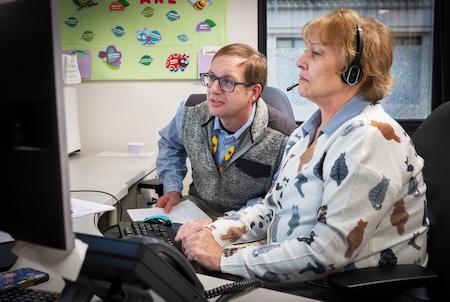 Household cleaning products are among the most common reasons people call local poison centers for advice. (Dean Hoffmeyer, Enterprise Marketing and Communications)
When should I call a poison center vs. 911?
Call the poison center if you or someone has concerns about potential exposure and are awake, breathing normally and stable. Our specialists can provide advice about home monitoring, managing symptoms and determine if medical care is needed.
If someone is having trouble breathing, wheezing, choking, a seizure or is unconscious, call 911 for immediate medical assistance.
Stay informed, stay healthy. Sign up for VCU Health’s e-mail newsletter.