How to manage chronic headaches
Expert advice from a VCU Health headache neurologist on ways to find lasting relief.
June 02, 2026 If over the counter treatments aren't helping or the headache is preventing you from living a normal life, it’s likely time to talk to your doctor. (Getty Images)
By Leigh Farmer
Roughly 39 million men, women and children in the United States live with often debilitating, always painful migraine headaches, according to the American Migraine Foundation. That means, whether you know it or not, someone you know suffers from them.
In childhood, migraines are more common in boys, however, around puberty, the number of girls who begin to suffer symptoms increases exponentially. One out of 11 children experience migraines. In adulthood, 1 in 5 women and 1 in 16 men suffer from them, according to Lauren Strauss, DO, FAHS, VCU Health pediatric and adult headache doctor and division chief for general neurology and headache.
“A migraine is generally moderate to severe throbbing or pounding headaches, often on one side of the head, but can also be accompanied by nausea and difficulty tolerating noise or lights,” Strauss said. “Some patients may experience an aura which may include visual symptoms like flashing lights, blind spots, or sensory symptoms like feeling pins and needles.”
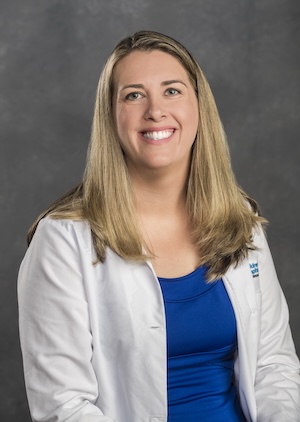 Lauren Strauss, DO, FAHS, is the division chief for general neurology and headache at VCU Health. (Enterprise Marketing and Communications)
If you or a loved one suffers from this type of headache, controlling symptoms and knowing when to get help from a specialist are important to maintaining your overall quality of life.
VCU Health News sat down with Strauss to learn how you can control your symptoms and when it might be time to go to a migraine clinic for more support.
What are the most common causes of headaches?
At the VCU Health headache medicine clinic, this is an important and challenging part of the assessment. There are several health conditions or reasons that headaches appear in childhood, which can also determine how severe a headache can become. Things like hormones, infection, inflammation, disease, head trauma, medications and general habits can affect your health and be reasons why someone begins to have chronic headache.
A migraine is your body’s alarm. It can be set off whenever the brain or body is under stress. Triggers can include infection, stress at school or work, lack of sleep, too much caffeine or a skipped meal.
When should I seek medical care for headaches?
If over the counter treatments are not providing relief or the headache is prohibiting you from living a normal life, exercising or attending school or work, it’s likely time to ask for an evaluation from a primary care physician.
An evaluation with a primary care physician will look at any dental or vision concerns, review bloodwork and go over some healthy habits that can potentially help. If the headaches do not respond to a prescribed treatment and lifestyle adjustments, or there are unusual symptoms, you might be referred to neurology or headache specialty clinics.
What lifestyle changes can improve headache pain?
Some of the first suggestions we make to address severe headaches are healthy habits and lifestyle changes, such as:
- Maintaining a consistent sleep schedule, avoiding naps and sleeping in
- Eating a nutritious diet, with three meals a day
- Regular activity and exercise
- Limiting caffeine
- Hydrating regularly
What are the latest migraine treatments?
Headache medicine is in a new era. In the past, treatments were borrowed from other conditions (blood pressure, allergies, nausea or seizures). Now there are treatments designed specifically for migraine. This means they are more likely to be effective with less side effects. These medications can be offered as monthly injections, infusions or pills and have been a gamechanger for many of our patients.
Are there common non-medication treatments for migraine?
A great add-on treatment to consider is a migraine cap. It is made from a gel material that you put over your head during a headache. It can provide the right amount of pressure therapy and can be tailored to the temperature that provides you relief. The cap can be put in the microwave for warmth or cooled in the refrigerator. It’s also a great gift idea for a loved one looking for relief.
Neuromodulation tools like transcutaneous electrical nerve stimulation (TENS) are often used to provide relief, as well. You can apply a TENS unit to the scalp or on the arm to help during a headache. It can also be used regularly to prevent pain.
Physical therapy for migraines is another option. Our program offers headache-focused evaluation and treatment, guiding patients through stretches and strengthening exercises. It also offers dry needling, a treatment that uses acupuncture style needles to treat trigger points or sore areas. Physical therapists may also review your desk set up and / or pillow type to prevent neck related causes for headache.
The main goal of treatment for debilitating migraines is to develop a care plan that gets each patient back to living a high-quality life. At VCU Health, we investigate the root cause in each patient, so we can design a customized care plan.
Your health matters. Sign up for updates and tips from our VCU Health care team today.