How to maintain weight loss from a GLP-1
Good news, you lost weight! Bad news, it might be hard to keep it off without consistent medication, VCU Health expert says.
December 03, 2025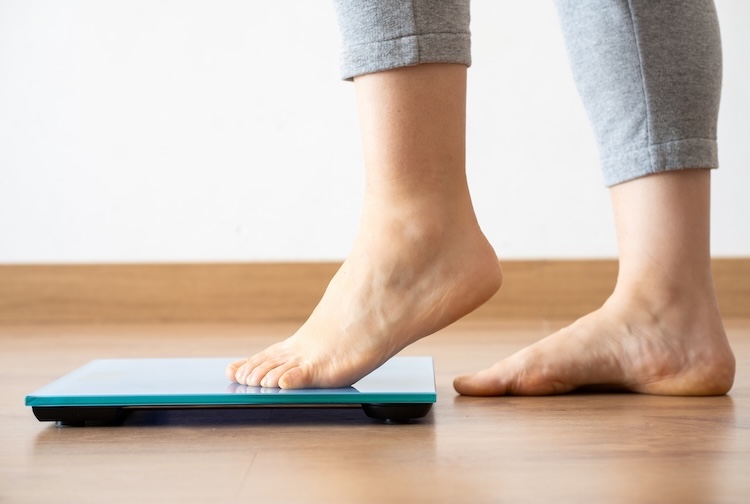 According to the Centers for Disease Control and Prevention, about 40% of American adults are affected by obesity. (Getty Images)
By Leigh Farmer
Glucagon-like peptide-1 receptor agonists, better known as GLP-1s, are naturally made in our intestines after we eat a meal. They help us lower our blood sugar, slow our digestive system, and make us feel full.
However, this hormone is naturally short lived. So, scientists have developed several “boosters,” known as GLP-1 receptor agonists, which are active ingredients in the brand-named drugs Wegovy, Ozempic, Mounjaro and Zepbound.
These drugs are stronger, longer lasting versions of your body’s GLP-1, making you feel fuller for a longer time. Originally prescribed to treat people with type 2 diabetes, GLP-1 drugs are now being used to treat obesity and a variety of other medical conditions.
“Obesity is the quintessential disease that causes almost all of the other chronic diseases we see. So, if we treat that effectively, we might actually be able to take some of the other medications away,” said Susan Wolver, M.D., medical director of VCU Health’s Medical Weight Loss Program.
Obesity is currently defined by a body mass index of 30 k/m2. Roughly 40% of Americans fall into this category. Lots of people are seeing incredible results from using these medications.
 Susan Wolver, M.D., is the medical director of VCU Health’s Medical Weight Loss Program. (Tom Kojcsich, Enterprise Marketing and Communications)
Here’s the bad news: If you have had success on GLP-1 drugs, you’ll like need to stay on the medication long-term, maybe even for life, Wolver said.
According to multiple studies, the chance of regaining some, if not all, of the weight you lost is very high if you stop taking a GLP-1.
Wolver minced no words: “The bottom line is you don’t stop the medication.”
This is where the story could end. A simple, albeit costly solution that will require you to take a maintenance dose of a GLP-1 for the rest of your life. But let’s dig a little deeper, shall we? Because the more you know, the more empowered you can be to do what’s right for your body, your budget and your life.
Why is it so hard to lose weight on your own? Blame the caveman.
“When we were cavemen, losing weight was a calamity, a catastrophe,” Wolver said. “Our brains are saying ‘we have a catastrophe here. I’m going to make you hungrier; I’m going to make you crave more and I’m going to make your metabolism slow down so that you cannot continue to lose weight.’”
Today we have grocery stores and drive throughs, but our bodies didn’t get the memo. They are still working out of a cave.
It can be particularly frustrating for middle-aged women who are gaining weight but have had the same diet for years.
“I get patients all the time that say, ‘I did nothing different and I’m gaining weight,’” Wolver said. “Their metabolism is slowing. It’s more difficult to maintain a healthy weight, which is why those people have to do everything to keep their metabolism up.”
This can include weight training, regular exercise, and eating whole foods. And now, you can add this newest breakthrough in modern medicine. However, when you decide to stop taking them, Wolver said, the cravings will come rushing back.
Maintaining a healthy weight on and off GLP-1s
Of the hundreds of patients she has treated with GLP-1s, Wolver has had a handful of them attempt to maintain their weight loss without continued use of the drug.
“They do notice a marked increase in food noise, hunger, cravings,” said Wolver, adding that every one of them is now back on a GLP-1.
You could try and beat the odds by disembarking from the GLP-1 express weight loss train. Weight loss doctors, like Wolver, will support your efforts.
“I find that a low – carb diet for most people can have much more improvement in some of their metabolic parameters,” Wolver said.
Generally, here’s what else you can do to maintain the weight loss (please check with your provider for specific guidance for you):
- Drink water – at least 64 ounces a day
- Eat protein – at least 90 grams a day (if you don’t have kidney disease)
- Exercise – aerobic and strength training to build your muscle
- Weigh yourself weekly – keep track of changes on the scale and make an intervention if the scale is not moving in the right direction
But, as an experienced and well-trained physician, Wolver also provides her patients with a practical reminder: “Obesity is a chronic, progressive and relapsing disease. Nobody would ever put someone on blood pressure medicine and say ‘ok, your blood pressure is really well controlled now, let’s take away the medicine and see what happens.’”
So, if you are one of the thousands of people who have decided to use GLP-1s for weight loss, know that the fun part is losing weight.
“You are getting all those external positive reinforcements, like the scale is going down, people are saying things to you, your clothes feel better, and you can do more things,” Wolver said.
Maintaining weight loss can be a much larger challenge.
“There is a lot of sameness, and you can no longer really rely on those external reinforcements,” Wolver said. “It’s just a lot of the same hard work.”
Even if you stay on GLP-1s, you will likely have to adjust your maintenance dosage because your body will adapt over time and those primal, caveman instincts will creep back in.
“We have to figure out how to treat that metabolic adaptation,” Wolver added, “and then it won’t be so hard and maybe we won’t have to stay on these medications for life.”