How to avoid common throwing injuries in baseball
Advice for baseball players from a VCU Health surgeon – who’s also the team doctor for the VCU baseball team.
July 20, 2026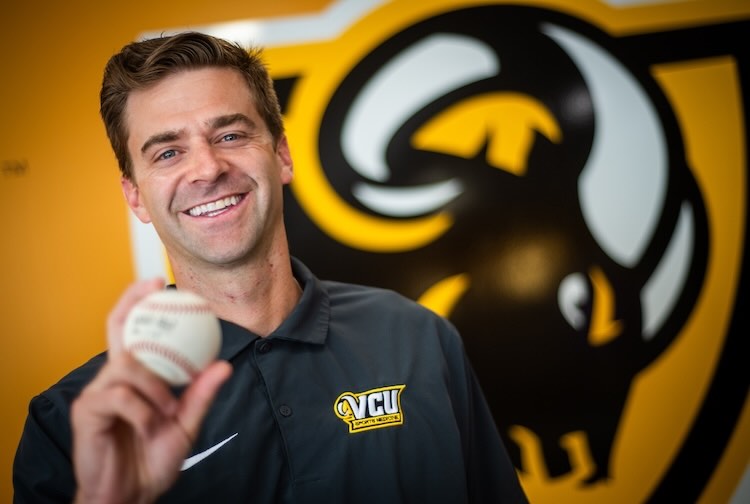 Brett Goodloe, M.D., is an orthopedic surgeon with VCU Health Sports Medicine. (Dean Hoffmeyer, Enterprise Marketing and Communications)
By Leigh Farmer
America’s favorite pastime continues to be a homerun for people no matter the age. However, young baseball players seem to be throwing out their arms at a much faster rate.
Doctors are reportedly treating three times the number of elbow injuries in young pitchers than they were just 20 years ago. When it comes to all sports-related elbow injuries, the majority – 45% – come from playing baseball.
“There has been a dramatic rise in elbow injuries among kids between 10-15 years of age over the past few decades,” said Brett Goodloe, M.D., an orthopedic surgeon who specializes in sports medicine at VCU Health. “I think this is largely due to programs focused heavily on throwing harder and year-round baseball play.”
And the issue only compounds with age. Research shows that one in four professional pitchers have undergone surgery at some point in their career.
Goodloe is a former Division I college baseball player for William & Mary and is now the VCU baseball team’s sports medicine provider. He has some tips to help young athletes stay healthy and grow stronger without getting hurt.
“Let [kids] go to the pool, play with friends and run outside. Baseball is a wonderful sport and I’m very thankful for my years of playing,” Goodloe added. “But playing all the time can be detrimental to the throwing arm and predispose it to injury.”
Goodloe recently spoke with VCU Health News about throwing injury symptoms and how to enjoy the game without long-term health issues.
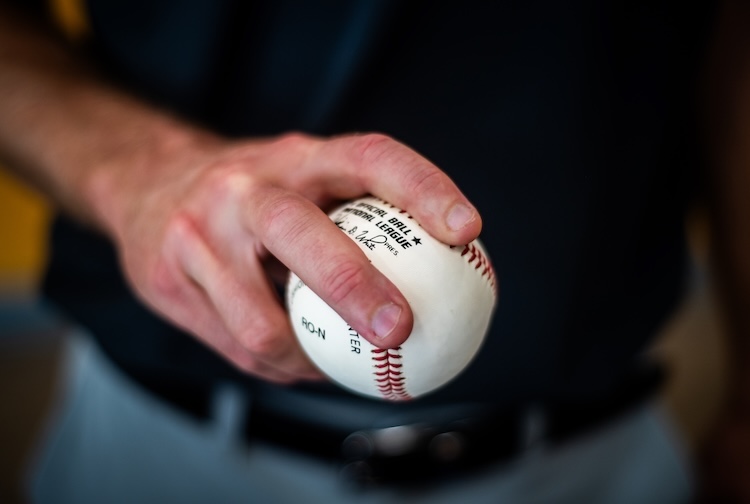 Research shows that the majority of sports-related elbow injuries come from playing baseball. (Dean Hoffmeyer, Enterprise Marketing and Communications)
Why is baseball considered a high-risk sport for arm injuries, especially for pitchers?
Throwing a baseball is a full body activity because of the force generated from the lower half of the body and the core muscles. All that energy moves through the body and exits the throwing arm. The inside part of the elbow experiences significant torque with higher velocity throws, predisposing it to injury as athletes begin to throw harder. Specifically, the ulnar collateral ligament (UCL), a strong band of tissue on the inside of your elbow, can become stretched or torn. Year-round throwing and early sports specialization predisposes kids to injuries at earlier ages.
How can baseball players protect their arms from throwing injuries?
Play other sports. Grow as an athlete, not just a baseball player. Doing different athletic movements throughout the year allows the young body to adapt to different stressors. In terms of arm care, strengthening the core, legs and back can limit some of the stress on the shoulder and elbow and can help with longevity.
How can athletes tell if arm pain is a serious throwing-related injury?
There is a delicate balance between soreness and pain. It is not uncommon to have soreness after long weekends of baseball tournaments.
However, pain that limits your ability to throw, whether in the shoulder or elbow, or the evolution of pain that worsens with repetitive stress on the throwing arm is concerning, and medical attention is appropriate. Sudden injuries or episodes of pain, often described as hearing a “pop,” then followed by inability to throw are also concerning and warrant evaluation.
What treatment options are available for throwing injuries?
Treatment options vary based on the type and severity of the injury. My goal, in general, is to be conservative with surgery, especially with younger athletes.
When we decide not to operate but there is true injury to the elbow, I recommend not throwing for six to eight weeks and have my athletes do physical therapy directed strength training. To return to throwing, my athletes undergo a formal evaluation that includes an upper body stress test to assess whether it is appropriate to return to throwing. This is followed by a gradual progression towards returning to play.
In terms of minimally invasive surgery, UCL treatment has been improved with a device called an internal brace, which is essentially an “extra seatbelt” implanted over top of a patient’s torn ligament. There is growing data on the success of this device for athletes who throw, and it can be an option for some patients depending on the tear.
Ligament reconstruction, also known as “Tommy John” surgery, is still the gold standard. It still offers excellent return to play opportunities for the right patient.
All surgery requires a long period of recovery and rehabilitation, typically up to 18 months, along with the other risks associated with surgery. That is why we try not to get to that and want to focus efforts on injury prevention.
No matter what level of play you are participating in, be mindful of overusing your throwing arm. Training your body in different ways can decrease the risk of this type of injury.
And when something just doesn’t feel quite right, the VCU Health Sports Medicine team is here to help you get back in the game.