Hope on the horizon: Celebrating 25 years of VCU Health LifeEvac
Providing critical care in the air, VCU Health’s emergency medical aviation program has saved thousands of lives across Virginia for a quarter of a century.
October 14, 2026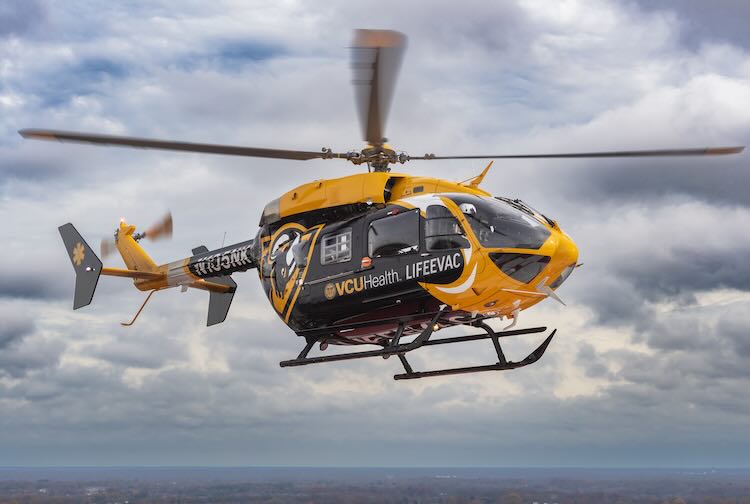 The VCU Health LifeEvac program averages about 1,400 flights each year. (Allen Jones, Enterprise Marketing and Communications)
By Joan Tupponce
“You guys saved my life. Thank you.”
These seven words were directed to Beverly “Bev” Harris and her team at VCU Health’s LifeEvac 3, stationed at Middle Peninsula Regional Airport, a few years back.
The unexpected praise came from a patient whom the team flew to VCU Medical Center.
For the flight teams on each of VCU Health’s four LifeEvac helicopters, there is no such thing as a routine transport — someone is in the midst of having the worst day of their life and every second counts.
“Every call is a chance to make a difference for people,” said Harris, RN, a certified critical flight nurse and the aviation clinical site manager for VCU Health LifeEvac. She has been with the program for 21 years. “There are so many defining moments. I’m so proud when folks come back and tell us thank you or we see a person we helped, and they are doing great. It’s very humbling.”
VCU Health’s LifeEvac program is an extension of the VCU Medical Center in downtown Richmond, a Level I trauma center which provides the highest standard of adult and pediatric care for trauma and burn injuries in the region. Through air and ground support, patients are transferred from the scene of an emergency to the academic medical center, with flight paramedics and flight nurses who begin advanced, specialized treatment while en route.
This year, the program marks its 25th year in operation. LifeEvac began in 2001 with a single helicopter based at Richmond International Airport.
“Starting a helicopter service from scratch is definitely unique,” said David Trueman, RN, a flight nurse who has been with the program since its inception. “We had to figure it out. We identified fairly early that we needed a good mix of nursing and paramedic staff with varied experience so we could create this cohesive unit that — no matter where we put them — they'd be able to take care of the patient.”
(Will Sidaros, Enterprise Marketing and Communications)
LifeEvac completed approximately 600 flights during that first year. Now, the program averages 1,400 flights annually. LifeEvac bases have expanded to locations throughout Virginia, including in Hanover County (LifeEvac 1), West Point (LifeEvac 3), Petersburg (LifeEvac 4) and the newest addition at VCU Health Community Memorial Hospital in South Hill (LifeEvac 5), bringing around-the-clock emergency air transport to patients across the region.
In addition to adding more locations, in 2021, VCU Health and LifeEvac established an air medical alliance with partners at Bon Secours Mercy Health, Riverside Health System and Mary Washington Healthcare. LifeEvac supports this air medical alliance by assisting with emergency air medical services for these facilities, to increase access and shorten response times for patient transfers requiring critical care air support northeast of Richmond.
These expansions over the years were based on a need for rapid, rural health care access.
“Having a critical care team that is able to respond to patients in rural areas means that we are able to minimize the disparities in accessing critical medical care. That is the biggest benefit, being able to provide an optimal outcome wherever they are geographically located,” said Harinder S. Dhindsa, M.D., MPH, director of the Division of Emergency Medical Services at VCU Health and medical director for LifeEvac who was instrumental in starting the program. “And, that is what our critical care teams bring to these patients, being able to transport them rapidly to where they can get definitive care.”
How VCU Health LifeEvac delivers ICU-level care in the air
Each aircraft’s medical crew consists of a pilot along with a certified critical care flight nurse and paramedic with experience and training to treat patients of all ages and populations with a variety of medical emergencies, including heart attacks and strokes to trauma and burn injuries. Each aircraft is also equipped with advanced life-saving technology typically found in an intensive care unit.
Team members are always learning and growing in order to provide the highest technical and professional care to communities. Safety and continuing education are among the few top priorities of the LifeEvac program.
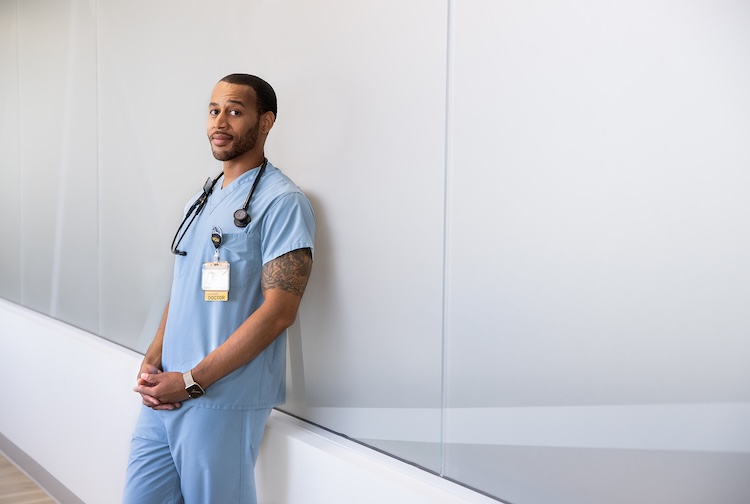
“That’s what keeps me coming back to work every day, knowing we do such good work for the communities we serve,” said flight paramedic Xavier Smith, a nationally registered paramedic and a certified flight paramedic, who joined LifeEvac in 2025.
Smith is humbled by the amount of knowledge and skills required of the team on a daily basis.
“We are in the field of taking care of patients and in the field of lifelong learning. We are consistently reviewing our skills and disease processes, which is so important,” he said.
One of the things we learned over the years is that it’s important to take care of ourselves as well as our patients. Crew safety has moved more to the forefront.
Beverly “Bev” Harris, RN, VCU Health LifeEvac's aviation clinical site manager
All the members of the team agree — LifeEvac does not work in isolation. When caring for a patient in the middle of a medical emergency, our first responder partners are on the scene first, doing all that they can to stabilize a patient and save their life.
“We do this in total partnership with our ground EMS partners, other transport services and our partner hospitals. We are one piece of the puzzle, but it really starts with the people that call us,” Dhindsa said.
And when they take off, Trueman notes how important it is to give patients hope that they will get better.
“There’s the hope that we can get you somewhere that might be able to fix what’s going on. Academic health systems, like VCU Health, are almost always at the forefront of current research, processes and modalities,” he said. “That’s what drives us. While we can’t save everybody, we can get you where you need to be and give patients and their families the best chance possible.”
With a focus on safety, LifeEvac remains dedicated to their patients and team members
The dangers of working this type of in-the-moment service are a reality, and sometimes a life is lost to help others. In 2005, the program experienced the crash of LifeEvac 2, an aircraft operated by a vendor at a partner base.
“We lost two team members, flight paramedic Nikki Kielar and pilot Joe Schaefer. We have committed to them and their families to never to forget them or their sacrifice,” Dhindsa said.
As a result of the accident, today’s safety practices are based on “remembering them and honoring them,” he added.
Ensuring the safety of patients — and their flight team — is a priority for the program and its training protocols.
All flight crew members must have a minimum of 3 to 5 years of experience a paramedic or nurse before joining VCU Health’s team. Most have much more experience.
“Upon hiring, they are sent to an eight-day Critical Care Academy. When they return, they are enrolled in our orientation program, which lasts approximately six months,” Harris said. "During that time, they complete in-hospital clinical rotations to include the emergency department, various ICUs, operating rooms and in pediatrics. They are also required to fly shifts alongside a precepting crew of experienced flight nurse and flight paramedic.”
A variety of specialized certifications are required for the flight crew, including specific training in disaster management from the Federal Emergency Management Agency (FEMA), cardiac life support for adults and neonatal resuscitation, to name a few. All flight crew members are required to attend quarterly education training overseen by VCU Health’s operational medical directors and participate in immersive simulations to test their skills.
There’s the hope that we can get you somewhere that might be able to fix what’s going on. Academic health systems, like VCU Health, are almost always at the forefront of current research, processes and modalities. That’s what drives us.
David Trueman, RN, VCU Health LifeEvac flight nurse
The foundation for how the flight crew works together is based on a training and management framework called Crew Resource Management (CRM), which is a structured approach to address human-factor causes of accidents. It focuses on how crews communicate, coordinate and manage workload under pressure.
“If we don’t arrive safely on scene, we can’t do our job,” Harris said.
Safety also comes in the form of self-care as well, she adds.
“One of the things we learned over the years is that it’s important to take care of ourselves as well as our patients,” Harris said. “Crew safety has moved more to the forefront.”
One of the first things a crew member does when coming in for a shift is a self-risk assessment, which includes questions like how much sleep have you had, how do you feel?
“We go by a numerical score and if it reaches a certain level or is in warning range, administration is notified. By doing this, we make sure we are ready to take care of others and we are safe to fly,” Harris said. “We are really good about watching out for each other.”
Aside from the skills he’s learned from his fellow flight crew members and safety training, Smith has also learned a lot about himself since joining the team.
“I’ve found that determination, motivation, persistence and clinical excellence are all skills that sometimes live dormant in people,” he said. “You might need a specific driving force or person to unlock them and bring them to life. Being on this team has done that for me.”
Much like other healthcare and emergency response careers, being on the LifeEvac team can mean long hours and difficult cases. The process to join VCU Health’s LifeEvac team is “very selective for a reason,” Harris said.
“We hire team members, not just people with advanced skills. You have to be able to think critically and roll with the punches,” she added. “We have the best of the best people.”
Dhindsa echoes how the team is made up of the best people. He’s extremely proud of the program, not only for how it has grown but more importantly for the professional care and dedication the team has to their patients.
“It’s really about getting the right people in the right seats,” he said. “And, what I mean by that is people with the right values, the right compassion and the right skill set. People that are eager to learn and constantly strive to improve and represent the health system.”
Members of the team are “family,” Harris said. “I have felt so privileged to be part of this team for over 20 years, and I still feel the same way today.”
 Each of the VCU Health LifeEvac aircrafts is equipped with advanced technology typically found in an intensive care unit. (Allen Jones, Enterprise Marketing and Communications)