Derek Sant’Angelo named fellow of the American Association for the Advancement of Science
This highly selective honor is in recognition of the VCU professor’s career-long contributions to the field of T cell immunology.
March 26, 2026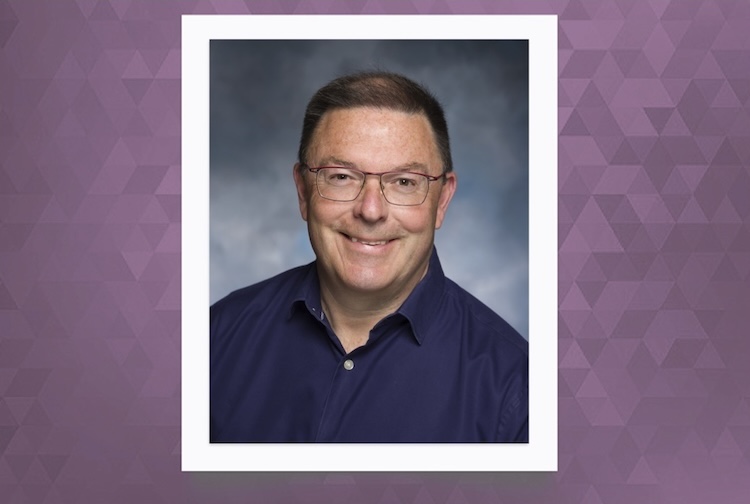 Derek Sant’Angelo, Ph.D., chair of the Department of Microbiology and Immunology, has identified fundamental mechanisms of T cell development, discovered new T cell subsets and functions, and elucidated the role of these cells in health and disease over the past 25 years. (VCU School of Medicine)
By Olivia Trani
Derek Sant’Angelo, Ph.D., chair of the Virginia Commonwealth University School of Medicine’s Department of Microbiology and Immunology, has been named a fellow of the American Association for the Advancement of Science – a prestigious honor from the world’s leading general scientific society. Sant’Angelo was recognized for his distinguished research contributions in molecular immunology and his commitment to increasing access to biology education.
The AAAS fellowship is a highly selective honor, as it recognizes not a single innovation but a careerlong dedication. Sant’Angelo is a leading researcher in the field of T cell immunology. T cells are essential for preventing infectious disease and cancer, and for maintaining day-to-day health of the body.
“I extend my congratulations to Dr. Sant’Angelo for this prestigious recognition of his research career and his impactful contributions to our understanding of immunology to further advance human health,” said P. Srirama Rao, Ph.D., vice president for research and innovation at VCU. “This honor from the AAAS could not be more well-deserved, and it exemplifies our faculty’s commitment to making groundbreaking discoveries and innovations that transform lives and addresses the world’s most pressing challenges.”
A designation that dates back to 1874, AAAS fellows are recognized for their achievements across disciplines – from research, teaching and technology to administration in academia, industry and government, as well as to excellence in communicating and interpreting science to the public. Fellows are elected each year by the AAAS Council.
With this distinction, Sant’Angelo joins a notable group of scholars and innovators who have significantly shaped (or are shaping) the future of science and society. Among them are inventor Thomas Edison, sociologist and activist W.E.B Du Bois, engineer-astronauts Mae Jemison and Ellen Ochoa, and computer scientist and mathematician Grace Hopper.
Over the past 25 years, Sant’Angelo has identified fundamental mechanisms of T cell development, discovered new T cell subsets and functions, and elucidated the role of these cells in health and disease.
In particular, his research has focused on a subset called natural killer T cells, which have “innate-like” characteristics that allow them to respond more quickly against infected cells and cancer cells. In their studies, Sant-Angelo and his colleagues discovered that the transcription factor PLZF is essential for regulating the functions of NKT cells in preventing numerous diseases, including asthma, autoimmune diseases, obesity and cancer.
In his lab, Sant’Angelo is also a dedicated educator, training fellows, post-docs, graduate and undergraduate students, and medical students to become the next generation of impactful scientists.
“There is a generational foundation in science that is often not fully appreciated. My accomplishments are entirely the result of those who trusted me to mentor them, and those who were gracious enough to mentor me,” Sant’Angelo said. “This is the essence of academic science. I am proud to receive this award, but only in that context.”
This year, Sant’Angelo is joined by nearly 500 scientists, engineers and innovators in receiving the AAAS lifetime honor. New fellows will be presented with a certificate and blue and gold rosette pin at the annual Fellows Forum in Washington on May 29.
A version of this story was originally published by VCU News
Stay informed, stay healthy. Sign up for VCU Health’s e-mail newsletter.
Related Articles