A sleep expert’s guide to understanding your sleep apnea treatment options
From CPAP therapy to navigating mask discomfort, a VCU Health sleep specialist explains how patients breathe easier and finally get some shut-eye.
June 04, 2026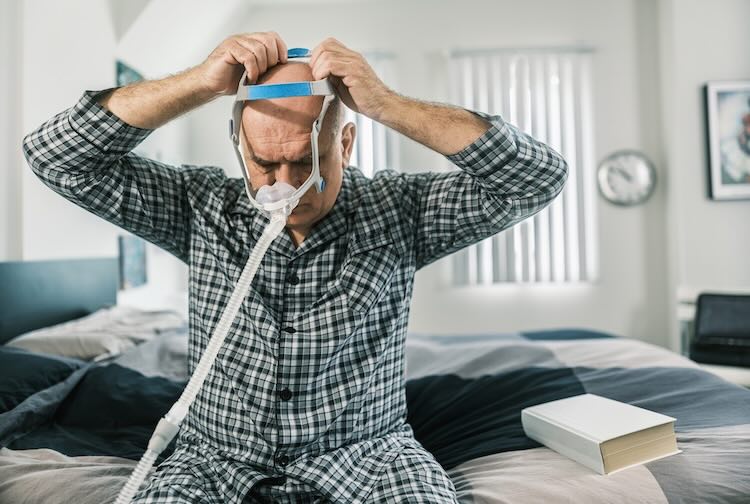 From CPAP therapy to navigating mask discomfort, a VCU Health sleep specialist explains how patients breathe easier and finally get some shut-eye.
By Konrad Solberg
Have you ever received complaints about your snoring or have woken up gasping for air? It might be due to obstructive sleep apnea (OSA). This common sleep disorder causes your breathing to repeatedly stop and restart throughout the night, interrupting your sleep cycle and lowering your oxygen levels.
If left untreated, sleep apnea can potentially lead to heart disease, strokes, high blood pressure and trouble focusing during the day – making treatment essential for both your health and quality of life. But when it comes to sleep apnea treatment options, navigating the world of machines and masks can feel overwhelming.
 Maha Alattar, M.D., director of the VCU Health Center for Sleep Medicine. (Enterprise Marketing and Communications)
To break down the science of sound sleep, Maha Alattar, M.D., director of VCU Health’s Center for Sleep Science, answers her most common patient questions about continuous positive airway pressure (CPAP) machines, troubleshooting mask discomfort and successfully managing therapy.
The gold standard of sleep apnea treatment
Why is CPAP considered the gold standard for treating obstructive sleep apnea?
American Academy of Sleep Medicine guidelines indicate this is the treatment of choice for most patients. It’s effective because it addresses mild, moderate and severe sleep apnea. But it may not be the right treatment for everyone and there are other treatment options besides CPAP, if that isn’t the right fit.
What is the difference between CPAP, APAP and BiPAP? How do I know which sleep apnea machine is best for me?
The differences between these three machines come down to how the air pressure is delivered to your upper airway (your throat). Your provider will work with you to determine what is the best option based on your individual health needs and preferences.
Continuous Positive Airway Pressure (CPAP): This machine delivers one constant, set pressure all night. Whether you inhale or exhale, the air comes at you at the exact pressure it’s set on.
Automatic Positive Airway Pressure (APAP): This is an automatic machine, usually set to a variable range. The machine automatically increases or reduces the pressure depending on whether you are having apnea attacks during that specific hour.
Bilevel Positive Airway Pressure (BiPAP): This device utilizes two distinct pressures. When you inhale, it starts at a higher pressure, and when you exhale, it drops to a lower pressure. This makes it much easier to breathe out against the machine.
Tracking your CPAP compliance and progress
How long should I wear my CPAP?
We like to see patients use CPAPs whenever they sleep, since sleep apneas can emerge at any time during the night. If you can only tolerate a few hours at first, that is perfectly okay. You can gradually work your way up to a full night. It takes time to adjust. But be mindful of insurance requirements for hours of use as well.
How do you monitor whether CPAP therapy is actually working — what data do you look at?
Our sleep specialists can monitor your usage hours and track whether you are still experiencing apneas while using the machine. We can access this data remotely through the cloud thanks to a chip inside your CPAP machine.
We use this information to make sure the sleep apnea therapy is working effectively and to verify with your insurance that you are in compliance, meaning that you are using the machine for at least four hours a night for 70% of the month.
Overcoming CPAP mask problems and claustrophobia
How do you help patients who struggle with feelings of claustrophobia when wearing a CPAP mask?
There are many steps we can take to help patients overcome CPAP claustrophobia. We can try smaller masks that fit directly under the nose, rather than covering the entire mouth and nose.
We can also lower the starting air pressure and gradually increase it so you ease into it. Other times, we can switch the patient from a standard CPAP to a BiPAP to make exhalation feel less restrictive. It’s important for providers to help lower patient anxiety about it too; that helps a lot.
How do you help patients who struggle with discomfort when wearing the CPAP mask?
If a patient is struggling with discomfort from the mask, we switch them to a different style and/or size, depending on what the specific issue is. We also consider other issues besides the mask such as airflow, so we adjust the pressure up or down.
We also make sure the humidity and temperature are just right for your own needs, and we adjust them as well. If all else fails, we consider alternative sleep apnea treatment options like oral appliance therapy or surgery.
What should patients do if they wake up with a dry mouth, sore throat or skin irritation?
First, check your machine’s built-in heated humidifier and climate control settings. I also encourage my patients to learn to self-adjust the humidity and temperature settings to find what feels best for them. However, don’t change the air pressure settings – leave that decision to your provider.
A separate humidifier in your bedroom may also help. Finally, make sure your mask fits securely. If it’s leaking air, it’s likely leaking water and humidity too, causing a dry mouth and throat.
Adopting CPAP therapy is a journey, and hitting a few bumps on the road is entirely normal. The key to long-term success is open communication with your care team. With incredibly customizable solutions, modern sleep medicine means you should never get a bad night’s rest.
Your health matters. Sign up for updates and tips from our VCU Health care team today.