A patient guide to cardio-oncology: Cancer care and heart health
Cancer therapies affect your heart. A VCU Health Pauley Heart Center expert explains how cardio-oncology can protect it.
August 13, 2026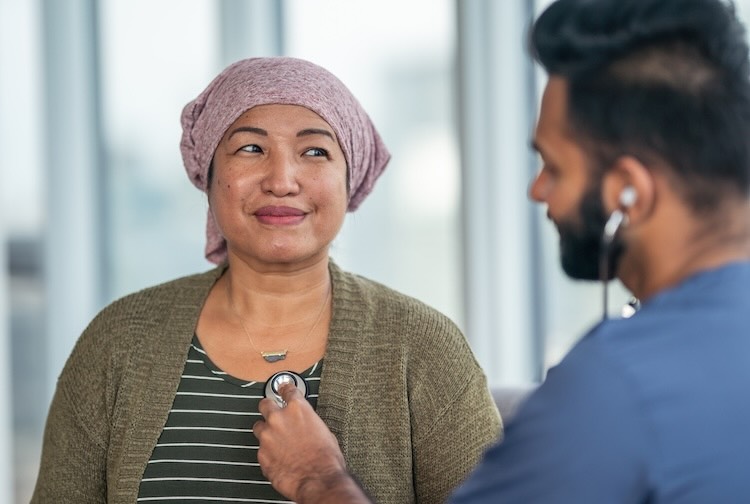 Cardio-oncology is a medical subspecialty that combines cardiology and oncology. It focuses on treating patients for heart problems that may arise from cancer therapies. (Getty Images)
By Tanner Lambson
Adult cancer survivors face a 42% higher risk of experiencing heart disease than people who've never had cancer, according to recently published research.
The reason for this might surprise you: some cancer treatments are cardiotoxic, meaning they can weaken the heart or cause other heart problems. Today, the leading cause of death in cancer patients and survivors of cancer is not actually cancer, but heart disease.
With more people beating cancer and living longer after treatment, a new specialty of cardiology is emerging: cardio-oncology.
VCU Health Pauley Heart Center’s cardio-oncology program was founded in 2013 by a doctor who came out of retirement after being diagnosed with cancer. Today, the cardio-oncology program is the only one in the region recognized as a gold level certified center of excellence by the International Cardio-Oncology Society (ICOS).
“Dr. Michael Hess started Pauley’s cardio-oncology program by literally walking around the hematology and oncology wards and asking, ‘Do you need help?’” said David Chuquin, M.D., a cardio-oncologist at VCU Health Pauley Heart Center. “We’ve taken that spirit of collaboration forward. I am in constant communication with the hematology-oncology teams at VCU Massey Comprehensive Cancer Center, [and we work] together to come up with the best plan of treatment for our patients.”
That level of excellence and spirit of collaboration was recently reflected in VCU Health Pauley Heart Center and Massey Comprehensive Cancer Center being chosen to host the 2026 Global Cardio-Oncology Summit in Williamsburg, Va.
VCU Health News spoke with Chuquin about the field of cardio-oncology and what cancer patients need to know about their heart health.
What is the connection between cancer treatment and heart health?
For decades, we’ve known that certain cancer therapies can raise the risk of heart problems. More recently, though, we've come to understand that the relationship actually runs both ways. Having a history of heart disease appears to raise the risk of cancer, and having cancer appears to raise the risk of heart disease.
We're still researching exactly why, but one theory is that certain tumors secrete pro-inflammatory markers, and inflammation may increase cardiovascular risk. It's a complex relationship that researchers are still working to fully understand, but the connection itself is well established.
Are all cancer treatments bad for the heart? How exactly do they damage the heart?
Some treatments are clearly higher-risk than others, but the majority carry at least some risk of damaging the heart — very few have no risk of cardiotoxicity at all.
The damage to your heart happens through a few different mechanisms. Some therapies cause direct damage to heart muscle; anthracycline chemotherapies, used for certain blood cancers and breast cancers, are a classic example.
Others don't damage the heart muscle but make it harder for the heart to handle stress — HER2-targeted treatments for breast cancer increase risk this way.
A third category doesn't affect the heart directly, but raises cardiovascular risks over time, such as high blood pressure, high cholesterol or weight gain. Some examples of these medications include aromatase inhibitors and androgen deprivation therapy (ADT) for prostate cancer.
How can I lower my risk of heart complications during or after cancer treatment?
I tell my patients that we can't change the fact that they need these treatments to fight their cancer, but what we can do is get our hands on every other risk to the heart, which will lower their overall risk. That means managing things like blood pressure, cholesterol, and blood sugar and staying as active as possible.
We're still learning exactly what type of fitness activities are ideal during cancer treatment, but it's already clear that staying active during treatment lowers heart risk — and probably lowers the risk of cancer recurrence, too.
Should I undergo cardiac monitoring as part of cancer treatment, or is that something I need to request?
I'd say most cancer treatments warrant consideration for cardiac surveillance. Some therapies are higher-risk — examples include anthracycline chemotherapies, HER2-targeted treatments and immune checkpoint inhibitors, which are becoming increasingly common.
For those, I'd recommend patients receive monitoring and also obtain good baseline cardiac testing up front, so we know where their heart stands before treatment starts. If a problem does come up later, having that baseline makes it much easier to tell whether the problem is related to cancer treatment or if it was already present in the body.
How can heart disease affect cancer treatments?
If you have preexisting heart disease, you're generally at higher risk of developing a heart issue from cancer treatment, so we watch those patients more closely and build a tailored plan.
The reverse matters, too. Preexisting heart disease can make oncologists more hesitant to prescribe certain cancer treatments, since the cardiac risk is higher.
A big part of what we do in cardio-oncology is work to minimize that heart risk as much as possible, so a preexisting heart condition doesn't close the door on the best available cancer treatment. That means managing a patient’s heart disease well, building a solid monitoring plan, and staying in close communication with the hematology-oncology team.
Do all cancer survivors need to actively monitor their heart health?
I think every cancer survivor should keep a close eye on their heart health and get regular cardiac screenings. Just having a history of cancer raises cardiovascular risk, independent of whatever treatment a patient has received. Add specific cancer treatments on top of that, and the risk can climb further.
At minimum, regular heart screening means checking blood pressure, cholesterol and blood sugar. In certain cases, patients will also need dedicated heart testing periodically to catch any late effects of cancer treatment.
Why should I see a cardio-oncologist rather than a general cardiologist?
First, I want to acknowledge that cardio-oncology is still a fairly small field; there aren't many of us doing this full-time. General cardiologists in the community who have an interest in cardio-oncology play an important role bridging that gap, since there simply aren't enough dedicated cardio-oncologists to go around. That said, because my team and I do this full-time, we're not seeing these cases once or twice — we're seeing them hundreds of times over — and that volume builds a level of expertise that's hard to replicate otherwise.
Patients of VCU Health Pauley Heart Center’s cardio-oncology program also get more than just a physician or nurse practitioner. They receive care from an entire team genuinely invested in this patient population and in tailoring care to each person's individual cancer journey. Our center also does a significant amount of cardio-oncology research, which reflects our institutional investment in the field.
Your health matters. Sign up for updates and tips from our VCU Health care team today.