A gerontologist’s guide to making friends as we age
What’s the formula for building strong friendships later in life? VCU expert E. Ayn Welleford shares tips for fostering intentional relationships.
July 16, 2026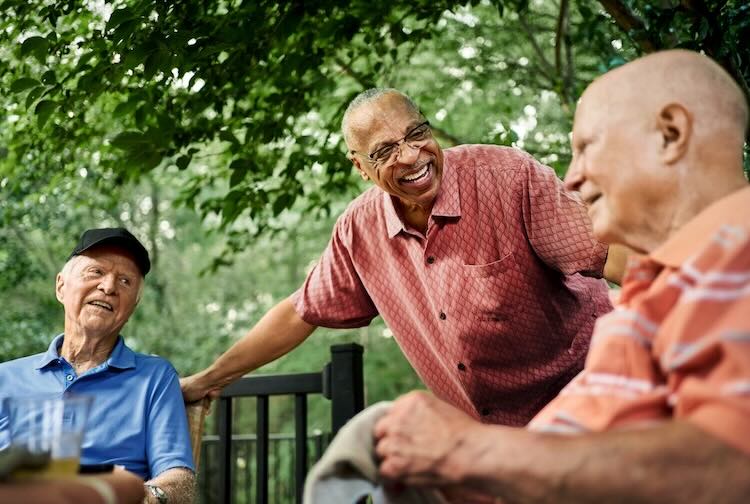 As we get older, research shows that maintaining strong social relationships can play an important role for our health. (Getty Images)
By Olivia Trani
Social isolation and loneliness are serious public health issues, posing unique challenges as we all grow older.
Surveys show that one in four Americans ages 65 and older feel socially isolated and 43% of those ages 60 and older report feeling lonely. Such feelings can pose significant threats to our mental and physical health, increasing the risk of heart disease, stroke, dementia, depression and anxiety. Isolation and loneliness can also become exacerbating factors for individuals who are experiencing other health risk factors and illnesses.
Maintaining strong social relationships plays a critical role for our health across our lifespan, and without a roadmap, making meaningful friendships later in life can feel like a daunting challenge.
“Due to individual and developmental transitions, we tend to experience shifting roles and responsibilities, which may reduce our opportunities to make friends and limit our time for developing and fostering friendships,” said E. Ayn Welleford, Ph.D., an associate professor and developmental gerontologist in the Department of Gerontology at VCU’s College of Health Professions. “It’s called ‘making’ friends for a reason because it has to be intentional and requires an investment in time, and we’re not typically taught the formula.”
VCU Health News spoke with Welleford about the health benefits of friendships and shares strategies for how to make and maintain strong connections as we age.
How can friendships and social interactions impact your health?
First, it’s important to discuss what we mean by friendships since it can mean different things to different people. I like to think of friendships as voluntary relationships. These are people who you choose to spend time with and are not necessarily your family or your work colleagues.
Having friendships and strong social ties can positively impact our health in many different ways, such as reducing blood pressure, reducing inflammation, improving cardiovascular health and boosting resilience. When we look at the big picture, all of these factors play a role in our longevity. Studies have shown that people who have high scores on their friendship ratings, meaning expressing satisfaction with their level of social engagement, have significantly reduced mortality.
How do our priorities in friendships change as we age?
In young adulthood, we’re still trying to figure out who we are in the world, so we try out different identities and hang out with different people. Often a key goal of friendships when we’re younger is socialization and exploration, hanging out with friends over the weekend and blowing off steam. Then as you go through midlife, most of our social interactions have to do with both personal and professional roles. We connect through our work, clubs, hobbies or children. As we get older, roles shift and we typically become more selective about relationships and choose friendships that are meaningful, support our sense of purpose and reinforce our identities.
How do you make new friends and maintain them?
The classic formula for forming a close friendship is proximity, affinity and time.
Proximity
Many acquaintances start based on proximity. You’re more likely to be friends with a next-door neighbor than someone that lives down the street, for example. To start making new acquaintances, you first have to think about proximity.
A good place to start is to think about places you consistently go to, like the grocery store, the pharmacy, the gym, a barber shop or a hair salon. Be intentional about choosing places that you enjoy, that are smaller and where you can get to know people and have social interactions. Start with these little seeds of connection and build your friendship network from there.
Affinity
For an acquaintance to develop into a friendship, there has to be something you both have in common, like a mutual hobby or a key component to your identities. If you’re really interested in making friends with other people, see if you can find a shared affinity for something. Then, suggest a low-stakes activity together based on what you both like. This could be something you are already doing and invite the new acquaintance along, like playing pickleball or taking an art class.
Time
The amount of time you end up spending with that person often determines whether that person becomes a close friend. It takes many hours of investment for an acquaintance to become a close friend. With that being the case, it’s essential that we be selective and intentional.
What should you look for in healthy friendships and social groups?
One of the tasks I ask my students to do is called a calendar excavation, where you look back through your week and rate your experiences. This activity works with friendships too.
Ask yourself if you are looking forward to seeing an acquaintance (possibly future friend) and enjoy being with them. Or alternatively, do you dread seeing them and feel like you need a nap afterward? Attending to your internal signals gives you insight into where to spend your time.
Think about how this person makes you feel: Do they support your identity? Do they make you feel less lonely? Are they helping your resilience? You have to be intentional about what you’re looking for in a friend.
How can adult children or caregivers help an isolated older adult expand their social circle?
First, remember that social engagement and the experience of loneliness is uniquely subjective. Before assuming that a person feels lonely, start by asking that person if they are satisfied with their quality of social engagement. This can be as simple as asking “do you have as many friends or social interaction as you would like?” Some people may want to be more engaged than others, so the first tip is to understand what their social needs are and whether they are satisfied.
Then, if they express a lack or desire for more engagement, get clarity on what this person enjoys as social engagement. Some detective work may be required to figure this out. Would they prefer something as simple as phone calls and cards, or do they want something more significant like outings?
Your local area agency on aging is a great place to find social opportunities for older people in the community. In my opinion, we don’t have a shortage of opportunities to socialize, just a shortage of awareness. It’s just a matter of being truly curious and compassionate in order to find out what works.
Your health matters. Sign up for updates and tips from our VCU Health care team today.