

 Back to search results
 (804) 628-4327
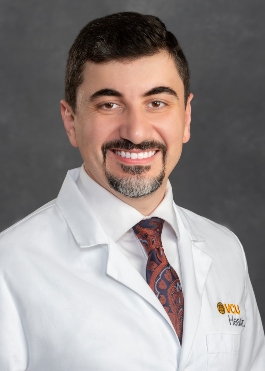
 Mohammad A Al-Ani, MD, FACC, FHFSA, FSCMR
Locations
332 N. Henry St.
Williamsburg,
VA
23185
 Get directions
6605 West Broad Street
Richmond,
VA
23230
Get directions
Education
Medical School
University of Jordan
Residency
University of Florida
Internship
University of Florida
Fellowship
University of Florida
Biography
People with weakened hearts are among the most fragile patients in medicine, each with a unique case and multiple routes for treatment and therapy. Through both patient care and research into the field of advanced heart failure, transplantation and cardiac imaging, Mohammad Al-Ani, M.D., has dedicated his practice to finding the best therapies to achieve the best outcomes for these patients.
At VCU Health Pauley Heart Center, Al-Ani works as an advanced heart failure and transplant cardiologist specializing in the care of patients with severe heart weakness, including those who may need a heart transplant or mechanical heart pump support.
“Because every patient’s condition is different, finding the right treatment often requires tailoring advanced therapies to their individual needs,” Al-Ani said. “That requires keeping up with rapidly evolving technology and research — which is a challenge, a passion and a privilege.”
He has extensive expertise in advanced cardiac imaging, particularly magnetic resonance imaging (MRI) and dynamic, four-dimensional CT scans, which are used to provide precise, non-invasive insight into the heart’s structure and function. “Advanced imaging helps us guide our team and the patient to the best treatment plan,” Al-Ani said. “My goal is to use the least invasive methods possible to provide clear answers and effective care.”
Prior to joining VCU Health in 2025, Al-Ani served as an assistant professor of cardiology, where he also held appointments in the departments of health outcomes, biomedical informatics and radiology. In that role he has lead several interdisciplinary clinical and scholarly initiatives such as heart transplant management using efficient MRI techniques, donor acceptance standardization, and guided mechanical circulatory support management via imaging and AI.
He’s an active researcher, too, working to make heart failure and transplant medicine even more effective for patients by combining engineering, informatics and clinical cardiology. His goal is to help redefine how imaging and machine learning can guide diagnosis, treatment and long-term outcomes in patients with advanced heart disease.
“It takes deep medical knowledge, strong problem-solving skills, and the ability to work as part of a team that includes other physicians, nurses and scientists,” said Al-Ani. Equally important is empathy and listening to patients’ concerns and helping them navigate complex decisions about their care.”
He is exploring the use of integrating artificial intelligence into cardiovascular care and has helped establish new imaging and quality-improvement protocols that improve patient outcomes and reduce costs. His research has been supported by the federal National Institutes of Health, the American Heart Association and Bristol Myers Squibb, among others, and has been featured in leading journals such as the Journal of the American College of Cardiology, Journal of Heart and Lung Transplantation, and Frontiers in Cardiovascular Medicine. He also serves as an associate editor for numerous specialty publications.
Al-Ani said he was drawn to VCU Health for its blend of clinical excellence, innovation, and collaboration across disciplines. “VCU Health represents what academic medicine should be—a place where the best science and the best care come together to serve patients from all walks of life,” he said.
Outside of medicine, Al-Ani enjoys spending time with his wife and three children, cooking and grilling, swimming and exploring new places.
Advice to patients: “For treatable conditions, partner closely with your care team, follow the treatment plan, and don’t underestimate the power of healthy lifestyle habits. For serious or long-term challenges, focus on what you can control, lean on your support system, and remember that advances in medicine are creating new possibilities every day.”
Ratings & Reviews
Learn More About the Press Ganey Survey
In order to provide our patients and visitors with the most accurate and useful information, we only post physician satisfaction data when a physician has received a minimum of 30 returned surveys. For this provider, we have not yet received the minimum.