What to know about roller coaster safety and injuries
From safety tips to signs you might need a doctor, a VCU Health spine surgeon shares insights on head, neck and spine injuries related to amusement park rides.
October 22, 2026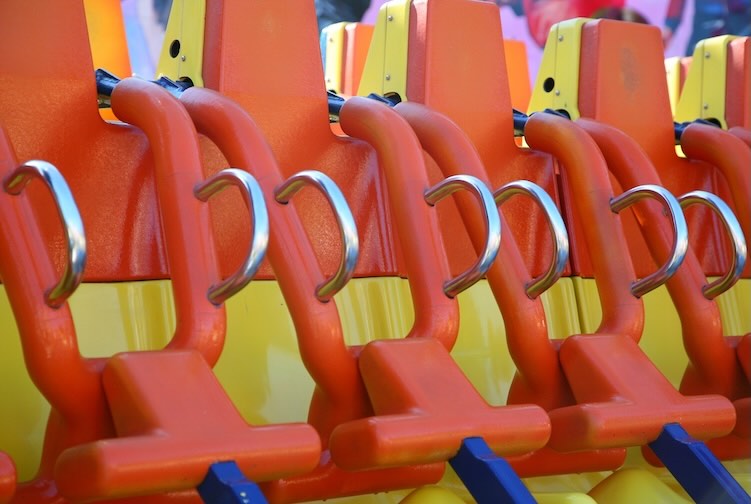 Questions about the safety of roller coasters have recently been raised because of reported accidents, injuries and deaths at amusement parks. (Getty Images)
By Sara McCloskey-Nieves
Roller coasters are designed to deliver thrills. But what many riders don’t realize is that forces that make these rides exciting — the intense acceleration, sudden stops and changes in direction — can also put a strain on your body.
In recent months, there have been several reports of people dying or facing serious injuries after going on amusement park rides. James Mooney, M.D., a VCU Health complex spine neurosurgeon and assistant professor of neurosurgery in the Division of Spine Surgery at Virginia Commonwealth University School of Medicine, recently researched head, neck and brain injuries sustained by children after riding roller coasters.
“While there is a low risk of injuries, low risk does not mean zero risk,” he said. “It’s important to respect the ride restrictions, consider your individual health and take any new symptoms seriously."
VCU Health News spoke with Mooney to better understand the risks of amusement park rides and what warning signs riders should know.
How safe are roller coasters?
Roller coasters are overall relatively safe and serious injuries are rare. For context, the International Association of Amusement Parks and Attractions (IAAPA) estimates approximately one serious injury per 15.5 million rides at fixed-site United States amusement parks. That estimate covers amusement rides broadly — it is not specific to roller coasters or neurological injuries.
As a neurosurgeon at VCU Health, my interest is in what happens to the brain and spine when injuries do occur. In a study I coauthored, we analyzed 20 years of emergency department data on roller coaster–related head and spine injuries in children. Muscle strains, particularly involving the neck, were the most common diagnosis, but we also identified concussions and rare spinal compression fractures.
The findings are reassuring overall, while reminding us that low risk does not mean zero risk.
Who should not go on roller coasters?
It’s important to read each ride’s specific health restrictions and take your own medical history seriously. Someone recovering from a concussion, a recent spine injury or surgery should discuss returning to intense rides with their doctor. Meeting a height requirement also does not mean a ride is medically appropriate for every person.
Other medical conditions that may prevent someone from going on a ride include:
- Heart conditions
- Head, neck and back injuries
- Neurological conditions, such as uncontrollable epilepsy or seizures
- Pregnancy
- Balance disorders
What are important safety precautions for roller coasters and other amusement park rides?
The restraints on rides are designed to protect riders while they’re traveling at high speeds. It is very dangerous to go on a ride if you do not meet the seating and restraint requirements. For children, never bypass the height requirement or pressure a child into riding if they don’t feel comfortable.
Additionally, as mentioned above, do not go on a ride if you have a medical condition that would prohibit you from riding. Riding while impaired is also unsafe.
When should I get medical attention after riding a roller coaster?
A concussion does not require a direct blow to the head; a forceful jolt that rapidly moves the head and brain can cause one.
If someone develops a headache, dizziness, nausea or difficulty concentrating after a ride, you should stop going on rides and get medical attention. A severe or worsening headache, repeated vomiting, weakness, trouble speaking, seizure or difficulty staying awake warrants emergency evaluation.
Your health matters. Sign up for updates and tips from our VCU Health care team today.