At the Heart of Health: VCU Health surgeon volunteers at a camp for kids with chronic pancreatitis
Passionate about caring for kids with the rare condition, Aamir Khan joins several VCU colleagues to volunteer at Camp Hope.
September 16, 2026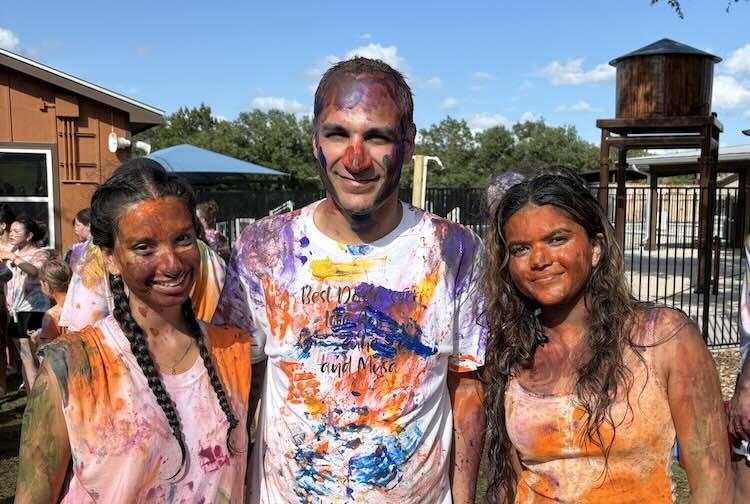 Anusha Soni (left), Aamir Khan, M.D., and and Yatri Patel volunteering at Camp Hope in Texas during the summer of 2026. One of the camp’s signature events is “Color Wars,” where campers cover counselors with paint. (Contributed photo)
By Joan Tupponce
Volunteering at Camp Hope this summer gave Aamir Khan, M.D., a different way of looking at how chronic pancreatitis affects his pediatric patients with the disease.
As the director of the adult and pediatric total pancreatectomy with islet cell autotransplantation (TP-IAT) programs at VCU Health Hume-Lee Transplant Center, Khan usually meets his patients as they are preparing or recovering from surgery. But at camp, kids shared the toll living with the chronic illness has on their lives, and how their perceptions changed after they got sick.
“I discovered what the camp means to them. Most of these kids are sick much of the year. They don’t go out much for fear of getting sick. This is a place they can go and feel safe,” he said.
Camp Hope, a pediatric pancreatitis summer camp for children and young people suffering from pancreatitis or post-TP-IAT held in San Antonio, Texas, was created by Rebecca’s Wish, a non-profit organization that provides support to children suffering from pancreatitis, and the National Pancreas Foundation. Hume-Lee Transplant Center is recognized as a National Pancreas Foundation Center of Excellence.
“It’s a unique camp,” Khan said. “Being there gives kids with pancreatitis or who have had TP-IAT surgery hope of a normal life.”
Khan had heard about Camp Hope through some of his adult patients and others connected to Virgina Commonwealth University who serve as volunteers at the camp.
Yatri Patel, a recent VCU graduate, and Anusha Soni, a third-year undergraduate student in VCU's Guaranteed Admission Program for Medicine, both shared their experiences with Khan about volunteering at the camp.
Watching those interactions reminded me that the best physicians don't stop caring when a patient leaves the clinic. They invest in the whole person, celebrate their successes and create spaces where patients can simply enjoy being themselves. Dr. Khan is one of those physicians.
Yatri Patel, VCU graduate
This year, Khan chose to make the trek to Texas and volunteer. He worked with other clinicians to provide medical services to campers and stepped in as a camp counselor.
“My role wasn’t as a surgeon but as a caretaker with knowledge of the medical field. We were there to make sure these kids are enjoying everything. If they get sick, we take care of them,” he said. “It was such a good experience.”
For Christyn Taylor, founder and president of Rebecca’s Wish and Camp Hope, having doctors like Khan at the camp is crucial.
“Dr. Khan, along with Yatri and Anusha, have made a big impact on the camp. We couldn’t do this camp without volunteers and medical staff,” she said, adding that this summer’s camp had over 150 medical visits to the medical unit. “We have to have experienced medical teams to help with these children.”
She was impressed at how Khan interacted with the children.
“Not only did Dr. Khan provide necessary medical care to our campers, but he also provided important emotional care by participating in social activities such as ‘Color Wars’ where the campers covered him with paint. Dr. Khan really connected with our children and made numerous friends with the entire medical staff,” Taylor said. “He took the lead for the high school boy cabin, overseeing their complicated challenges and they immediately bonded with him. We were blessed to have such a compassionate doctor on our Camp Hope staff.”
VCU Health offers hope for children living with chronic pancreatitis
Khan, who joined VCU Health in 2017, has always been passionate about becoming a transplant surgeon because it offered an avenue to help many patients manage their diseases and live better lives. Through his work, he cultivated a special interest in caring for children with chronic pancreatitis.
Chronic pancreatitis causes the pancreas to become inflamed and damaged over time. The disease can lead to severe abdominal pain and difficulty digesting food. While it affects adults mostly, children can develop it, particularly if they have a genetic mutation or an autoimmune disease.
When children are in chronic pain, they often miss school... Younger kids have a fear of eating and some are dependent on tube feeding. [Chronic pancreatitis] is a really horrible disease. TP-IAT surgery can correct that and restore more of a normal life. After surgery, kids are able to eat without fear of pain, go back to school and live pain free.
Aamir Khan, M.D., director of the adult and pediatric total pancreatectomy with islet cell autotransplantation (TP-IAT) programs at VCU Health Hume-Lee Transplant Center
The pediatric chronic pancreatic clinic at Children’s Hospital of Richmond at VCU, where Khan sees his young patients, includes a multi-disciplinary team.
“The team is incredible,” Khan said. “The team tries to find out the cause of the disease and how to manage it before we offer surgery. We engage the entire family and teach them how to manage the disease.”
If needed, TP-IAT surgery not only helps remove the diseased pancreas but restores the patient's quality of life. Simultaneously, the procedure aids in preventing diabetes from developing. Diabetes without the islet cell autotransplant can be extremely difficult to manage, Khan added.
“When children are in chronic pain, they often miss school. They can’t eat well. They have to have a different diet. Younger kids have a fear of eating and some are dependent on tube feeding. It’s a really horrible disease,” Khan said. “TP-IAT surgery can correct that and restore more of a normal life. After surgery, kids are able to eat without fear of pain, go back to school and live pain free. Plus, they don’t have to be on pain medications all the time.”
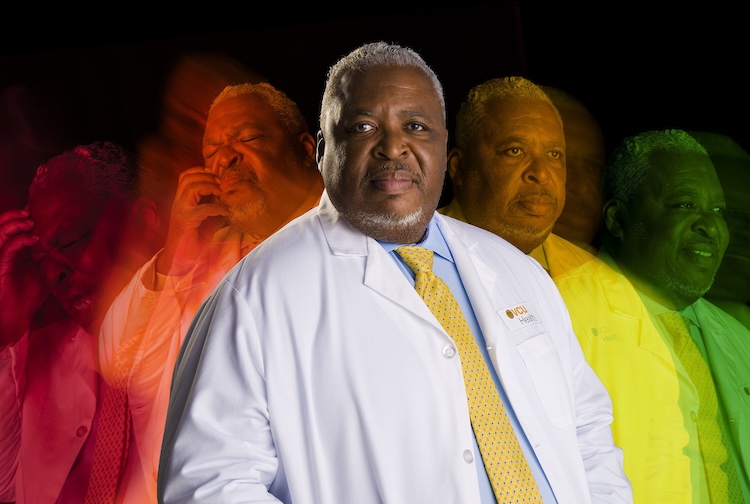
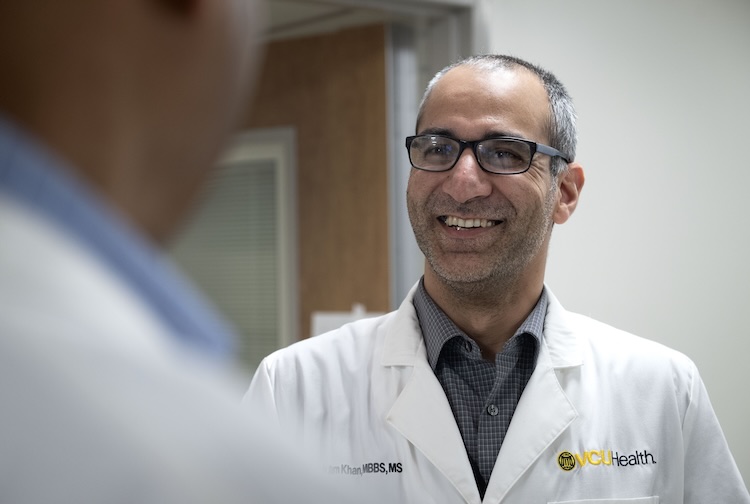 Aamir Khan, M.D., is the director of the adult and pediatric total pancreatectomy with islet cell autotransplantation (TP-IAT) programs at VCU Health Hume-Lee Transplant Center. (Enterprise Marketing and Communications)
TP-IAT surgery involves removing the entire pancreas, often along with the spleen and sometimes even part of the stomach. The pancreas is then processed by the islet isolation team to extract the insulin-producing islet cells. These islet cells are eventually transplanted into the liver where they can continue to produce insulin, which helps regulate blood sugar.
“Chronic pancreatitis is such a rare disease and such a chronic problem for these patients and also their parents,” Khan said. “Helping them in some fashion get back to a normal life is rewarding and satisfying.”
Compassionate care for the whole patient in the clinic and beyond
Soni and Patel have come to know Khan well over the years. With the help of Khan and Mazhar Kanak, Ph.D., director of the Pancreatic Islet Cell Transplant Lab, they started the Virginia Chapter of the National Pancreas Foundation. Both have also worked on pancreatitis and TP-IAT research projects with Khan and Kanak in the lab.
“I have developed a strong interest in endocrinology and hope to explore it further during medical school. Much of that interest has grown from my research involving chronic pancreatitis and islet transplantation,” Patel said of her time in the lab before starting medical school.
Working with Khan has been a rewarding experience for her.
“He has motivated me to think beyond the laboratory and recognize the direct impact research can have on patients' lives,” she said. “He has created an environment where curiosity, critical thinking and collaboration are encouraged.”
Volunteering at Camp Hope reminded Patel that medicine is “not only about understanding disease mechanisms or developing better treatments, but it is also about understanding what those diseases mean in someone's everyday life,” she said.
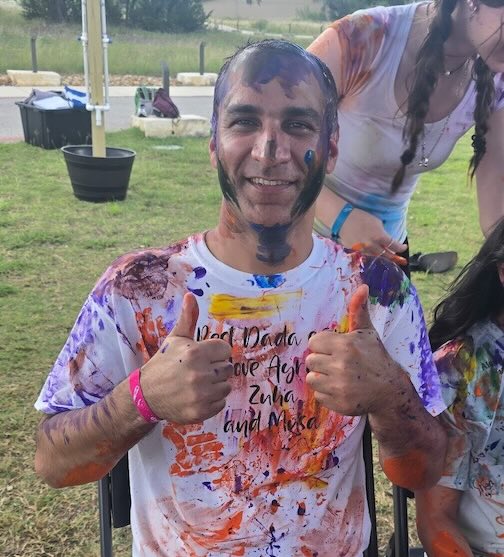 Aamir Khan, M.D., hopes to volunteer at Camp Hope again in 2027. (Contributed photo)Khan, Patel and Soni all bonded with the kids and saw how much they grew over the course of their time at camp. Soni, who is interested in gastroenterology and GI surgery because of her experiences working with the pancreatic disease community, witnessed the campers transform during their experience at Camp Hope. Once quiet and uncomfortable discussing their illness, Soni saw them grow into strong advocates for themselves.
One of the special activities at the camp involved throwing out negative thoughts and keeping good ones.
All the children wrote down lies they were told about themselves. Some that stood out to Soni were “you are not worthy,” “your illness defines you” or “you will always be held back by your illness.” The kids then burned their lies in a fire.
“Then, on a piece of cloth, the children wrote down new truths they had learned at camp such as ‘you are loved,’ ‘your illness doesn't define you.’ The cloth was then tied carefully around their ankles, as a reminder of strength and community which could be carried even after camp,” Soni said.
For Patel, seeing Khan in a different environment, away from the lab and hospital, made her realize what it really means to be a physician.
“Dr. Khan was simply another counselor having fun with the kids, playing games, laughing with them and making them feel like children rather than patients. It was clear how much trust and admiration the campers had for him,” Patel said. “Watching those interactions reminded me that the best physicians don't stop caring when a patient leaves the clinic. They invest in the whole person, celebrate their successes and create spaces where patients can simply enjoy being themselves. Dr. Khan is one of those physicians.”