Trying to get pregnant in your 30s? What to know about fertility and treatments
VCU Health fertility expert explains how fertility changes with age and what treatments are available to help you along the journey to parenthood.
September 24, 2026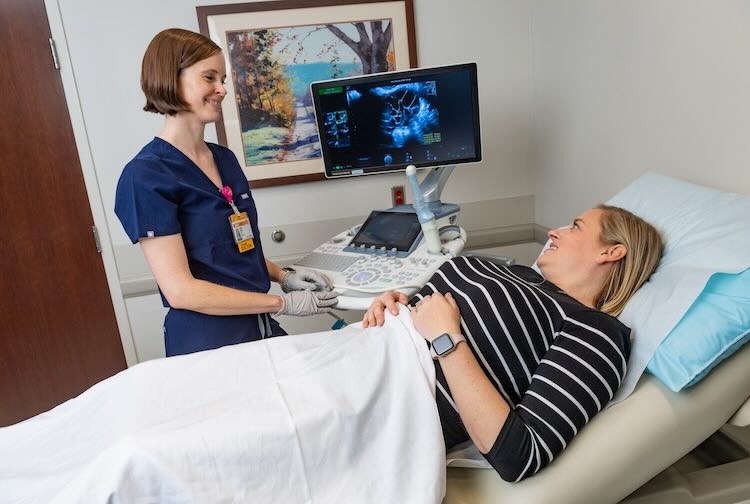 Erika New, M.D. (left), is an an OB-GYN who specializes in reproductive endocrinology and infertility at VCU Health. (Allen Jones, Enterprise Marketing and Communications)
By Sara McCloskey-Nieves
Did I wait too long? Am I healthy enough to have a baby? When should I start worrying about my fertility?
If you’re thinking about getting pregnant in your 30s, questions like these — and all of the unsolicited advice — are hard to ignore.
Wherever you are on your journey, you are not alone. In fact, the majority of American women who had children in recent years were in their 30s or older.
“Do not be afraid to ask for help and seek care. Bring up your concerns with your care team so we can guide you through the process,” said Erika New, M.D., an OB-GYN who specializes in reproductive endocrinology and infertility at VCU Health.
New’s advice and compassionate care have been trusted by hundreds of patients on their journey to start a family.
She spoke with VCU Health News about what happens to fertility during your 30s, how to improve your reproductive health and when it’s time to talk with a doctor.
How does fertility change in your 30s and what are some common misconceptions?
Although it has become more common to delay childbearing, fertility decreases in your 30s. This is due to a reduction in ovarian reserve and egg quality, as well as an increased risk of miscarriage.
What health conditions affect fertility?
For women, gynecological conditions that can affect fertility include:
- Polyendocrine Metabolic Ovarian Syndrome (PMOS)
- Uterine fibroids
- Ovarian cysts
- Endometriosis
- Adenomyosis
Cancer, cancer treatments and some autoimmune conditions can also affect fertility. General health concerns such as obesity can cause anovulation, a medical condition that causes the ovaries to fail to release an egg during a menstrual cycle.
For men, there are several conditions that can contribute to infertility that are treatable. These include:
- Injured testicles
- Trouble getting or keeping an erection
- Trouble with ejaculation
- Tumors, cysts or cancer
- Sexually transmitted diseases
What lifestyle changes can have the biggest impact on fertility?
It is a misconception that leading a healthy lifestyle will reduce the incidence of infertility or prolong the reproductive lifespan. Unfortunately, age is the most important factor in fertility potential and treatment response.
While living a healthy lifestyle — a balanced diet, moderate exercise and not smoking — can contribute to improved health overall and are very important, it cannot correct for the impact of age on fertility.
How does stress affect trying to conceive?
Trying to conceive and not being able to conceive is incredibly stressful. Extreme stress can cause poor sleep and elevated cortisol (stress hormone) levels.
While stress is not a cause of infertility, it makes it more challenging to go through fertility treatments. We commonly recommend seeing a therapist or reproductive psychologist to help support patients through this stressful time.
Are there specific foods or supplements that support fertility for both partners?
There are tons of vitamins and supplements advertised as such. However, there are no specific foods or supplements shown to improve fertility.
The standard multivitamin — for both men and women — is sufficient for most patients during preconception planning. If the women’s vitamin is not marketed as a prenatal, check the label to make sure it contains folic acid.
Many people are deficient in vitamin D, so sometimes an additional vitamin D supplement is recommended.
How long should I wait to see a fertility specialist?
If you have a known reason for difficulty conceiving, such as abnormal periods or history of cancer treatment, you should see a doctor right away. Otherwise, if you are less than 35 years old and have been trying to conceive for 1 year without success you should seek care. If you are 35 or older, you should seek care after 6 months of trying to conceive.
What fertility screenings should I consider?
For women, the easiest screening tool is evaluating the menstrual cycle. Someone who has normal menstrual cycles every 28 to 35 days with regular bleeding is likely ovulating regularly. Tracking your menstrual cycle each month to make sure it is regular is a first step in identifying ovulation issues.
In addition, there are over the counter ovulation predictor kits that can be used to track ovulation and help determine when the most fertile time of the month to have intercourse is.
For men, we also offer tests to analyze sperm count, shape and movement.
What is the range of fertility treatment options that you discuss with your patients?
For patients considering their fertility proactively, egg and embryo freezing are great options. For patients with infertility, we offer ovulation induction with oral medications, intrauterine insemination and in vitro fertilization.
Many women aren’t ready to start a family in their early 30s. What options are available for them at VCU Health?
We've seen an increase in people in their 30's freezing their eggs and embryos. It is not a guarantee of future pregnancy, but it is the best option we have to preserve fertility for the future.
No matter where you are on your journey to start a family, our experienced and caring team of fertility specialists are here for you. We'll develop a treatment plan together that's personalized to you and your goals.
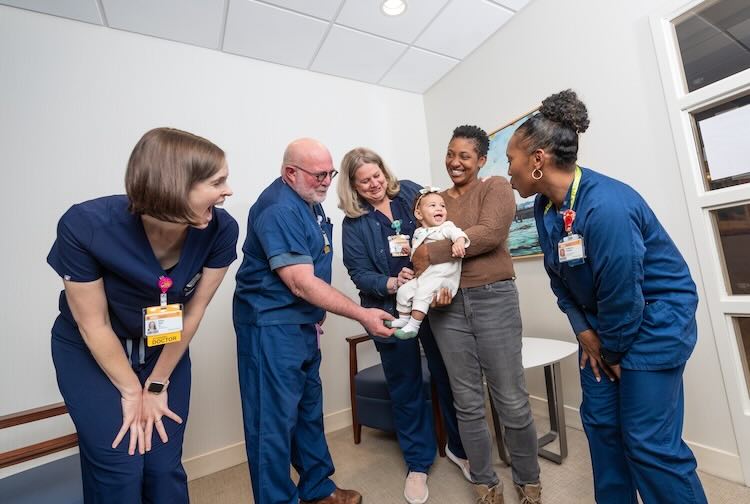 The reproductive endocrinology and infertility team at VCU Health has supported many patients on their journey to become parents. (Allen Jones, Enterprise Marketing and Communications)