New research reveals survodutide’s liver benefits may go beyond weight loss
Survodutide continues to be seen as a ‘game-changer’ for people with fatty liver disease, according to the director of VCU’s liver institute.
September 10, 2026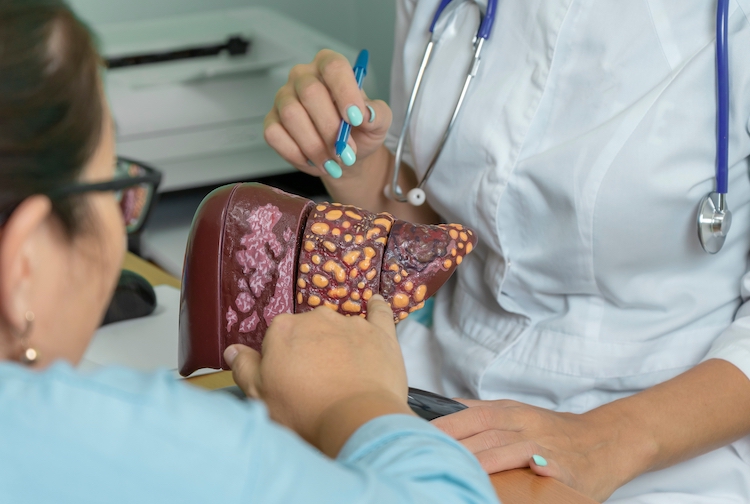 Along with liver fat reduction, the research findings show survodutide might impact liver scarring in other ways. (Shutterstock)
By A.J. Hostetler
For people with fatty liver disease, losing weight with help from a GLP-1 drug can help repair some liver damage. But a new analysis, co-authored by a Virginia Commonwealth University hepatologist, suggests that weight loss may not explain all the benefits.
An international team of researchers reviewed data from a 2024 study led by Arun Sanyal, M.D., the director of the Stravitz-Sanyal Institute for Liver Disease and Metabolic Health at VCU. In that clinical trial, people with liver disease who took survodutide not only lost weight, but they also saw major improvements to their liver. At the time, Sanyal called survodutide “a game-changer” for people with fatty liver disease.
The new study, recently published by the journal Hepatology, looked more closely at those initial findings to better understand what caused the changes in liver scarring and if those improvements were simply the result of weight loss.
The researchers’ findings suggest that survodutide’s effect on liver inflammation and scarring may partly come from something other than weight loss — the drug may affect the liver in another way.
“This work is important because it dispels a common notion that this drug only works through its weight-loss effects. Both the direct targeting of the liver and the current data indicate it has substantial weight-loss independent effects,” said Sanyal, a co-author of the new study. The paper’s first author was Mazen Noureddin, M.D., of Houston Methodist Hospital.
The analysis provides an important clue as scientists study whether drugs such as survodutide can improve liver disease through effects beyond weight loss and try to find new drugs that can combat fatty liver disease.
Liver health and GLP-1s: How this research was conducted
This research project included 170 people with metabolic dysfunction-associated steatohepatitis (MASH), a form of fatty liver disease, and liver fibrosis, also known as liver scarring. Participants received one of three doses of survodutide or a placebo.
The researchers used a statistical method to separate the drug’s effects linked to weight loss from effects that seemed to happen independently of weight loss.
That difference matters because weight loss alone can improve MASH. In the original study, people who took survodutide lost about 12% of their body weight over 48 weeks. Those who received a placebo lost about 1%.
Aside from fat reduction, the findings show that survodutide might impact liver scarring in other ways
The liver scarring changes for the clinical trial participants were striking. The researchers found:
- About 63% of people taking survodutide saw their livers return to normal, compared with 13% of those taking a placebo.
- About 72% of those individuals saw their liver disease improve, compared with 20% of the placebo group.
- Liver fibrosis improved for 53% of people taking survodutide, compared with 26% of those taking a placebo.
But when researchers looked at what caused these changes, the results were more complex.
Weight loss explained much of the improvement in liver fat. It accounted for about 58% of the treatment effect measured by MRI scans and 77% of the effect measured by FibroScan, an ultrasound test.
The researchers saw different results in blood tests and other tests that look for signs of MASH without a biopsy. In these tests, weight loss only explained less than half of the drug’s effect on the liver, 16% to 38%. This means weight loss alone did not explain most of the improvement.
The future of GLP-1s and liver disease treatments
Survodutide may affect the liver in another way because it activates two hormone receptors. The active ingredient in weight loss drug Wegovy, semaglutide, activates only the GLP-1 receptor which helps regulate digestion and satisfies hunger. Survodutide activates both the GLP-1 receptor and the glucagon receptor. Glucagon helps the body use energy and may support burning liver fat.
Fatty liver disease, also called metabolic dysfunction-associated steatotic liver disease (MASLD), affects about one-third of people worldwide and is closely linked to obesity. MASH is a more serious form of the disease that can cause liver scarring.
Currently, only two drugs, resmetirom and semaglutide, have federal approval to treat fatty liver disease, but several newer drugs, some of which are variations on the GLP-1 drugs, are in clinical trials.
This study was funded by the developer of survodutide, Boehringer Ingelheim, for which Sanyal is a consultant.