Massey receives $2.7 million National Institutes of Health grant
The five-year award will support Massey in its work to develop the next generation of cancer researchers and to help those most at risk for cancer throughout Virginia.
August 10, 2026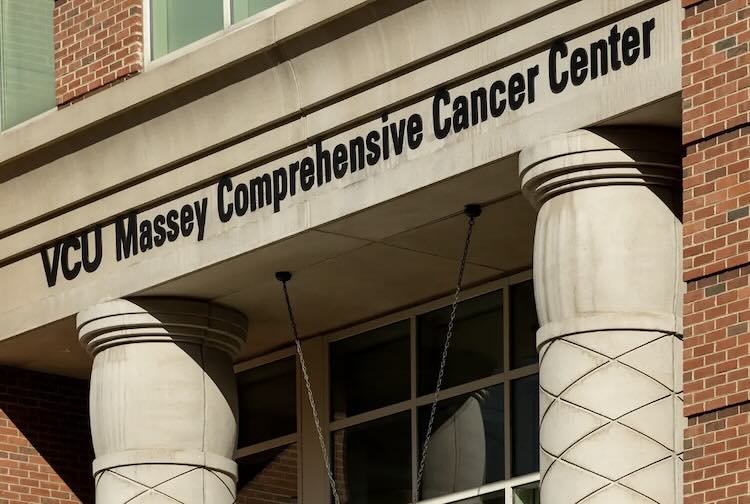 A five-year, $2.7 million NIH grant will offer an opportunity for clinician scientists to learn, train and grow at the VCU Massey Comprehensive Cancer Center to continue to provide better cancer outcomes for all Virginians. (File photo)
By Bill Potter
VCU Massey Comprehensive Cancer Center was recently awarded a $2.7 million Worta McCaskill-Stevens K12 grant from the National Institutes of Health.
The five-year grant will allow Massey to mentor promising, multidisciplinary, early-stage clinical investigators in the conception, development and implementation of innovative cancer prevention and control studies designed to optimize participation by cancer survivors and individuals most at risk for cancer throughout Virginia.
“We are proud to receive the Worta McCaskill-Stevens K12 grant,” said Oxana Palesh, Ph.D., co-leader of the Cancer Prevention and Control research program at Massey and co-principal investigator on the grant. “This grant will allow us to offer an opportunity for clinician scientists to learn, train and grow at Massey to continue to provide better cancer outcomes for all Virginians.”
The purpose of the Worta McCaskill-Stevens K12 funding opportunity is to support institutional career development awards designed to prepare newly trained clinicians who have made a commitment to independent research careers in community oncology or cancer prevention, and to facilitate their transition to more advanced support mechanisms or independent research funding.
Massey is one of only two National Cancer Institute-designated comprehensive cancer centers to have been awarded this grant. It secured the grant in part because of its strong cancer prevention and control efforts and its community outreach and engagement programs.
Why does this grant matter?
Clinical scientists work from the bench to the bedside, bridging both the laboratory and the clinic to translate basic discoveries into disease treatments, but clinicians often do not receive formal training in the design and conduct of clinical trials. This grant is designed to address that critical gap.
“Our team is developing a comprehensive curriculum to ensure that Massey clinicians are well poised to lead CPC-focused clinical trials that meet the needs of our catchment area,” said co-principal investigator Jessica LaRose, Ph.D., Cancer Prevention and Control research program member at Massey and professor and chair of the Department of Social and Behavioral Sciences in the VCU School of Public Health.
The K12 grant will help Massey recruit and train junior clinician scientists, which will be critical to attending to the needs of an aging and growing population, and it will provide training to a variety of clinician scientists (oncologists, nurses, psychologists, etc.), which builds important interdisciplinary strength within a cancer center.
“Developing the next generation of community oncology researchers is essential to improving cancer outcomes,” said co-principal investigator Patrick Nana-Sinkam, M.D., Linda Grandis Blatt Endowed Chair in Cancer Research and Cancer Prevention and Control research program member at Massey and associate vice president for clinical and translational research for VCU Health. “This new training grant will equip early career faculty with the mentorship, skills and collaborative opportunities needed to drive innovation across such areas as prevention, early detection, implementation science and population health.”
How will Massey’s program work?
During the five-year grant period, six K12 Scholars will be identified. They will participate in a variety of courses and career development experiences. Scholars will be guided by a mentoring triad – a cancer prevention and control investigator, an experienced clinical trialist and a community champion.
“I am very excited about our triad mentoring approach which elevates the lived experiences and knowledge of community members,” LaRose said. “The triad model is intentionally aligned with contemporary approaches to mentoring and underscores the importance of a team with diverse training, skills and knowledge to support the career development of our K12 Scholars.”
Each K12 Scholar will be afforded the time, effort and resources to conduct cancer prevention and control-related pilot research, write and implement an investigator-initiated intervention study, seek extramural funding to support their future investigations and/or further career development, and submit manuscripts based on their research over their two-year, grant-funded tenure in this program. Beyond the initial K12-funded period, K12 Scholars will receive two further years of salary support from Massey.
“In five years, our goal is to have more clinical scientists who are well-trained and able to perform community-focused clinical research, with a primary goal of helping patients,” Palesh said. “We want to have clinical scientists who continue to move forward with clinical research and trials.”