International experts gather for leading cardio-oncology summit in Williamsburg
VCU Health's cardio-oncology team highlights the value of research and personalized treatment plans to improve the long-term heart health of cancer survivors.
October 19, 2026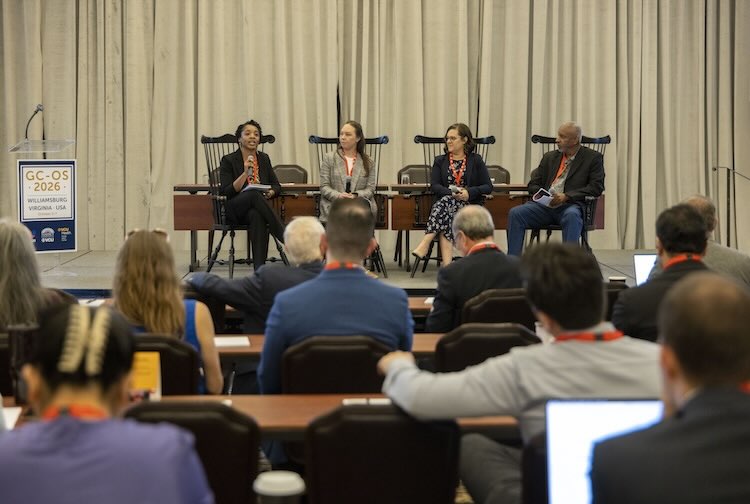 The 2026 Global Cardio-Oncology Summit was held in Williamsburg, Virginia on Oct. 5 through 7. (VCU Massey Comprehensive Cancer Center)
By Bill Potter, Blake Belden and Sara McCloskey-Nieves
More than 200 experts attended the 2026 Global Cardio-Oncology Summit in Williamsburg, Virginia. The annual gathering of the International Cardio-Oncology Society (ICOS) brings together a global audience of cardio-oncology professionals to learn and discuss the latest practices in prevention and management of cardiovascular disease among cancer survivors.
The three-day conference in October was organized in part by the VCU Massey Comprehensive Cancer Center, the VCU Health Pauley Heart Center and ICOS. The strong collaboration between both centers at the academic health system serves as worldwide models for patient care, research and innovation in the field of cardio-oncology.
“We are truly partners at VCU. We have two fabulous centers in Pauley and Massey who recognize that more and more people are surviving cancer, which is great, but also comes with a greater need to address potential gaps in survivorship and how cancer treatments affect the heart,” said Monica L. Baskin, Ph.D., FSBM, director of VCU Massey Comprehensive Cancer Center and the Jeanette and Eric Lipman Chair in Oncology.
“Addressing these challenges requires collaboration and willingness to work across traditional teams. At VCU, we are proud to host this summit in tandem with the VCU Health Pauley Heart Center and VCU Massey Comprehensive Cancer Center. The collaboration embodies the very essence of cardio-oncology. The most impactful work occurs when we work across multiple disciplines toward a shared goal,” said summit meeting co-chair Fadi N. Salloum, Ph.D., senior associate dean for research at the Virginia Commonwealth University School of Medicine, Natalie N. and John R. Congdon, Sr. Endowed Chair and cardiology professor at Pauley, and member of the Cancer Prevention and Control (CPC) research program at Massey.
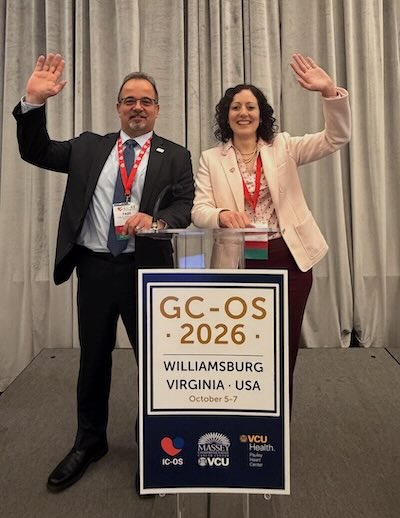 Meeting co-chairs Fadi N. Salloum, Ph.D. (left), senior associate dean for research at the Virginia Commonwealth University School of Medicine, and Wendy Bottinor, M.D., MSCI (right), the medical director of the Cardio-Oncology Program at VCU Health Pauley Heart Center and VCU Massey Comprehensive Cancer Center. (VCU Massey Comprehensive Cancer Center)
Patient perspectives on cancer survivorship and cardiovascular health
Cancer survivorship is no longer just about beating cancer. As cancer survivorship rates improve, clinicians are becoming more focused on helping patients live longer, healthier lives. Speakers at the conference highlighted the importance of cardiovascular health throughout the cancer journey, not just during treatment.
Panelist Alexandra Marshall, who was treated for Hodgkin lymphoma when she was 20, shared how the cardio-oncology programs supplemented and improved her overall cancer care.
“Just because you’ve rang the bell, doesn’t mean your cancer journey is completely over,” Marshall said. “I still felt tired, and it took years before I felt more like myself. Even 11 years out, I still need to take care of myself and my heart.”
Now a clinical research manager at Pauley in the cardio-oncology department, Marshall knows firsthand how important it is to have quality cardio-oncology care.
“It wasn’t until I got to VCU and worked with Dr. Wendy Bottinor (medical director of the Cardio-Oncology Program) and her team, and I knew that I’m in good hands and receiving the best care possible,” Marshall said. “My anxiety going into appointments is greatly reduced from where it was because I have a team that has my back.”
The future of cardio-oncology research and treatments
Because each patient’s cancer journey and heart are so unique, experts note how there is no single treatment strategy that works for every patient. Global experts agreed that successful cardio-oncology programs depend on collaboration across multidisciplinary teams to develop personalized treatment and monitoring plans for the best outcomes.
“The heart is the organ that keeps every other organ alive,” said Mohammed Quader, M.D., professor of cardiothoracic surgery and surgical director of the heart transplantation program at Pauley and the VCU Health Hume-Lee Transplant Center. “The use of a multidisciplinary cardio-oncology and heart team approach is the most prudent pathway” for holistically treating cancer patients and reducing their risk of long-term health issues related to radiation or other therapies.
The future of this field, experts said, will be driven by innovative research that can lead to earlier interventions, moving from more reactive care to proactive. Some examples of these innovations include new predictive models to determine high-risk patients and artificial intelligence (AI) tools being developed to help with diagnoses, treatment plans and risk management.
On the global level, more work needs to be done to raise awareness about this emerging field. That way, more clinical trials can become available and more healthcare workers can be recruited to care for this growing patient population.
“As cancer survivorship continues to grow, we are going to see an increasing need for cardio-oncologists,” said Khalid Matin, M.D., a medical oncologist and associate director of global oncology at Massey. “As we’re training the next generation of doctors, making them aware of both oncology and cardiology, and how these fields can be intertwined, is important, too.”
“At [the Global Cardio-Oncology Summit] 2026, we want to go beyond the fundamentals of cardio-oncology and dive into the cutting-edge research and treatments that enable us to push the boundaries of what is possible,” said Wendy Bottinor, M.D., MSCI, the medical director of the Cardio-Oncology Program at Pauley and Massey and one of the meeting co-chairs for the Global Cardio-Oncology Summit.