Creator reflects on developing FIB-4 Index for liver disease
VCU’s Richard Sterling looks back at his innovative tool to detect liver scarring –– that’s still used in doctor’s offices worldwide.
July 20, 2026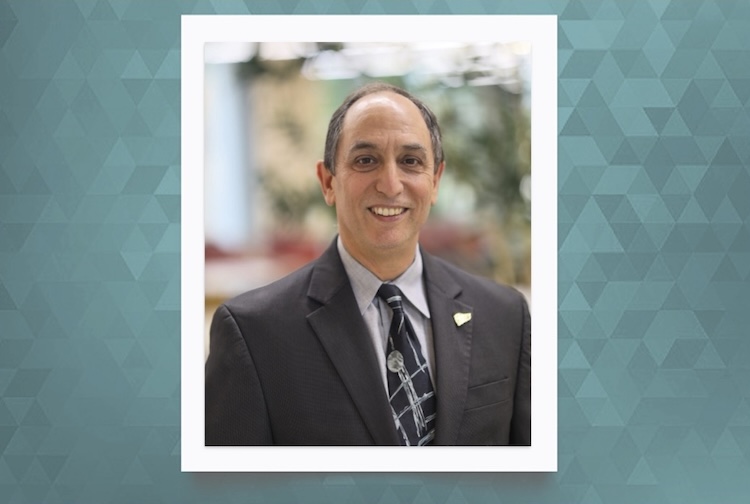 Richard Sterling, M.D., M.Sc., is the chief clinical officer of the Stravitz-Sanyal Institute for Liver Disease and Metabolic Health at VCU. (Enterprise Marketing and Communications)
By A.J. Hostetler
Twenty years ago, a liver specialist at Virginia Commonwealth University had a revolutionary idea: Find a non-invasive way to check for liver damage.
At the time, doctors were conducting biopsies to assess the scar tissue.
“We were doing approximately twenty liver biopsies a week,” said Richard Sterling, M.D., M.Sc., now the chief clinical officer of the Stravitz-Sanyal Institute for Liver Disease and Metabolic Health at VCU and a hepatologist at VCU Health. “I was thinking, ‘Who had the bright idea to stick a large needle into a very vascular organ?’”
It took another decade for Sterling, to develop Fibrosis-4 Index or FIB-4 Index, a simple calculation based on basic blood tests to assess liver damage. The FIB-4 Index is still recommended by every major gastroenterological and hepatological association in the world and can be done in a primary care physician’s office.
“Never, in my wildest dreams, did I imagine that the FIB-4 index would have such an impact and that even 20 years later, it would be used all over the world,” Sterling said. Sterling spoke with the Healthy at VCU Health podcast about the importance of liver disease testing and how he developed the FIB-4.
What does the liver do?
The liver is the largest internal organ in the body. It functions, in many ways, as a filter. Everything that you take in through your mouth and into your gut gets absorbed and has to pass through the liver before it gets to the rest of the body. It’s primarily involved with making many of the proteins that your body needs to use, and the liver is also involved in metabolism. Anything that you take in, the liver may have to metabolize it or convert it to some other substance that your body can use.
How does liver disease impact someone's health?
Liver disease can be caused by hepatitis viruses, alcohol, cancer and damage from fat that builds up in the liver. Most people with chronic liver disease may die with it, but not from it. For many, the liver disease is “silent” until it stops doing what it needs to do.
For a significant portion of patients, liver disease leads to chronic liver scarring, or fibrosis. In turn, the scarring can lead to cirrhosis, which makes someone at higher risk for developing liver decompensation, needing a liver transplant or developing liver cancer.
Who is most at risk of developing liver disease?
People who are most at risk of developing liver disease include those who have obesity, type 2 diabetes, metabolic syndrome or a family history of liver disease. Other risk factors include heavy alcohol consumption and chronic viral hepatitis (B or C).
Why might my doctor want to test me for liver disease?
Often, liver disease is discovered when your doctor gets routine liver enzymes as part of the blood work during your annual checkup. When those liver enzymes are at least 1.5 times the upper limit of normal, you should get additional testing or be referred to a specialist to figure out what's going on.
Do blood tests routinely check liver enzymes?
Not every blood test looks at your liver enzymes, but any patient can request the labs needed to calculate the FIB-4 when they get their routine blood work. Those include liver enzymes and a complete blood count, which includes the platelet count. These are routine tests and can be done by a primary care provider or any health care provider.
Then, your doctor can then put these three figures, along with your age, into a very simple formula to determine if you have liver damage and need to have a follow up appointment with a liver specialist
Prior to the FIB-4 test, how were people diagnosed with liver disease?
In the past, the best way we had to determine that was to perform a liver biopsy. This is a routine outpatient procedure, but it does involve placing a small needle into the liver to get a piece of liver tissue that we can then look at under the microscope. And until 20 years ago, liver biopsy was the primary way that we assessed liver scarring or fibrosis.
How and why did you create the FIB-4 index?
During my fellowship training, which was almost 30 years ago, I saw an opportunity to develop a non-invasive test to assess liver fibrosis.
Back in the early 2000s, we had several ways to measure liver enzymes. The main ones that we talk about with liver scarring are the aspartate aminotransferase (AST) and alanine aminotransferase(ALT). Blood platelet counts can also drop when your liver gets very scarred.
At the time, I was completing my master's degree in biostatistics and was also participating in a very large international trial looking at treating hepatitis C. Using data collected in the clinical trial, I was able to develop and test this index to separate those who had advanced fibrosis from those with lesser degrees of fibrosis.
We looked at four factors: age, because older adults who had the disease longer were more likely to have more scarring, liver enzymes AST and ALT, and platelet counts.
From those four, as well as my newfound knowledge of biostatistics, I was able to develop the Fibrosis-4 (FIB-4) index. It was published 20 years ago in 2006 in the prestigious journal, Hepatology.
Are there newer tests for liver disease that might work better?
Since 2006, there have been many other types of non-invasive assessments developed to try to assess fibrosis. Many of them work fairly well, but very few of them are as simple as the FIB-4 index. They’re always compared to the FIB-4 index and may not work that much better. The FIB-4 remains in use today. I use it many times a week.