Calming currents with deep brain stimulation
Advancements in deep brain stimulation at VCU Health are changing the way patients with Parkinson’s disease and other movement disorders live their lives.
September 18, 2026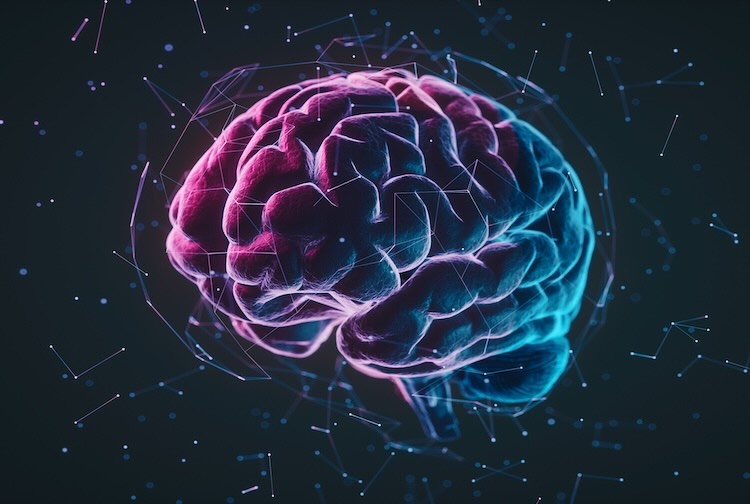 Using innovative technology and the latest research, VCU Health’s neurosurgery team is unlocking new pathways to care of patients with movement disorders. (Getty Images)
By Holly Prestidge
For people living with Parkinson’s disease, essential tremor or dystonia, uncontrollable movements can turn even the simplest tasks into daily obstacles. On the best days, the symptoms are frustrating. On the worst, they can strip away independence, limiting a person’s ability to work, eat, write or even take a walk or hold a loved one’s hand.
But the tiniest spark of electricity can give the people who are suffering from these conditions their lives back.
Through a procedure known as deep brain stimulation, a return to a more comforting and fulfilling everyday life is just a switch away.
It starts with a pulse generator – a mini circuit breaker no bigger than a Post-it note – that has been surgically implanted under the skin near the collarbone.
Lives change when a wireless controller switches on the pulse generator, sending mild electrical currents – ranging from 1 to 5 volts and typically 130 to 180 pulses per second – through wires to electrodes in the brain’s subthalamic nucleus, globus pallidus, or thalamus, areas which regulate motor skills. These pulses have a singular mission: To interrupt the faulty neurological circuitry that’s causing irregular signals.
The frequency, intensity and duration of the electrical pulses are controlled and adjusted wirelessly based on the patient’s comfort and response to treatment levels.
As the electrical pulses override the irregular synapses, the body responds. A matter of moments can change what’s often been years of living with a debilitating disease.
“It’s like turning on a light switch,” said Joseph Bell IV, M.D., Ph.D., a neurosurgeon at VCU Health and assistant professor of neurosurgery at the VCU School of Medicine. Patients experience fewer tremors. Stiff muscles relax. Walking becomes easier.
“One of the things that makes doing this work so fun is that patients love their DBS,” Bell said. “It sounds strange to have happy brain surgery customers but we’re offering a better quality of life.”
VCU Health has been advancing DBS research and technology for decades.
An estimated 42 million people in the U.S. live with some kind of movement disorder. About 1 million people live with Parkinson’s, which is associated with tremors while individuals are resting. They also experience stiff muscles and problems walking or with their balance.
One of the things that makes doing this work so fun is that patients love their DBS. It sounds strange to have happy brain surgery customers but we’re offering a better quality of life.
Joseph Bell IV, M.D., Ph.D., VCU Health neurosurgeon
Many more people are diagnosed with essential tremor – an estimated 7 to 10 million – which is marked by shaking during active moments like eating or writing.
Dystonia, the third most common movement disorder and one that affects roughly 250,000 people, causes involuntary, erratic muscle contractions in which the muscles are twisted or pulled in an abnormal way.
One common thread for all of them is that they’re related to abnormal electrical rhythms in the brain. And that is where DBS comes in.
It’s an increasingly popular therapy for people with movement disorders if other treatments, including medication, stop working to control each disorder’s motor symptoms.
The process starts with the surgery to implant the electrodes, called leads, in the brain at very specific locations. A second surgery follows weeks later to implant the pulse generator and connect the leads. After a week or two of recovery, the pulse generator is turned on.
The pulse generator’s settings are adjustable, so if the patient’s motor symptoms worsen over time, the stimulation can be recalibrated and fine-tuned to continue treating the symptoms. The device can also be turned off or removed if needed. Rechargeable batteries can last up to 15 years when maintained by patients with weekly charging, which is as simple as wrapping a soft battery pack around their shoulders, so the charging mechanism rests against the pulse generator.
When the batteries do need replacing, it’s a 30-minute outpatient surgery.
VCU Health is a pioneer in deep brain stimulation
Deep brain stimulation isn’t new. It’s been around for decades.
In fact, VCU Health’s own Kathryn Holloway, M.D., is a pioneer in the field whose early DBS studies showed its effectiveness in treating Parkinson’s disease. She helped develop techniques that reduced one of the biggest risks of surgery – infections – so that VCU Health’s rate today falls well below national averages.
She also pioneered a frameless technique that doesn’t require the patient’s head to be immobilized in the rigid, stereotactic head frames that were used for decades during DBS surgery.
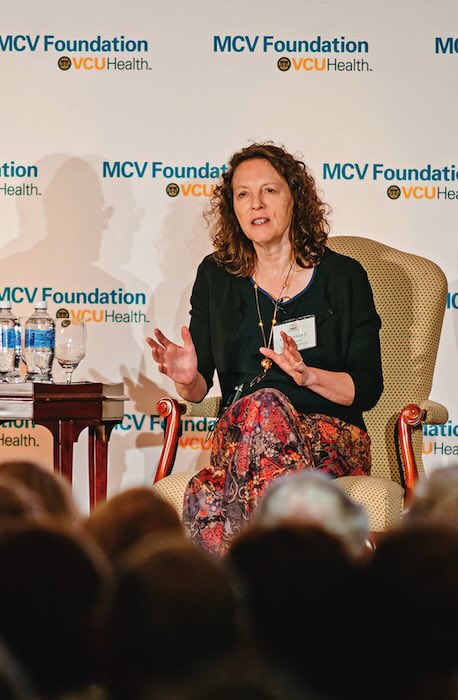 Kathryn Holloway, M.D., addresses the audience at an MCV Foundation Discovery Series event in 2017. She and her team conduct research in deep brain stimulation to treat Parkinson’s disease, essential tremor and other neurological disorders at VCU Health and the Hunter Holmes McGuire VA Medical Center. (Skip Rowland, MCV Foundation)
“VCU has a wide array of tools that many other places just don’t have,” she said. For years, the gold standard for treatment of movement disorders involved burning lesions on the brain in the area where those abnormalities were happening. But those burned areas weren’t reversible, and as the disease progressed, the burns remained but were ineffective.
“DBS was developed to solve both of those problems,” Bell said. “DBS acts like a lesion that we can turn on and off by turning the electricity on and off.”
DBS does not slow the progression of Parkinson’s but does provide for better, more consistent symptom control throughout the day.
And there’s a new application for DBS that has promising implications.
It’s called closed loop stimulation, in which the pulse generator automatically senses abnormalities in brain waves and adjusts accordingly.
Based on what it’s learning, the device automatically adjusts the patients’ settings.
Currently, the devices must be adjusted by the care team in the clinic.
Because of its advanced abilities, closed loop stimulation is fast becoming a popular upgrade, Bell said, explaining that patients who’ve had the implant for several years can get the new adaptive version as easily as upgrading their cell phone.
The upload occurs when a doctor holds a wand over the device in the patient’s body. No additional surgeries are needed.
VCU has the knowledge base to do things differently and advance the field. The rest of the world learns from us.
Kathryn Holloway, M.D., VCU Health neurosurgeon
Holloway said the technology has only become available in the last one to two years, and VCU was among the first health systems to use it.
“VCU has the knowledge base to do things differently and advance the field,” she said. “The rest of the world learns from us.”
Bell said DBS is already widely used as a treatment for epilepsy and is being studied as a treatment for disorders within the field of mental health. Researchers and doctors are exploring whether changes in brain waves can lead to treating depression and other conditions through DBS.
“There’s a big push right now to better understand the electrical networks that underlie depression and other psychiatric diseases,” Bell said. “As an academic medical center, we’re not just practitioners of DBS, we’re constantly working to make it better and expand its application to treat a wider array of conditions.”
A novel approach to care for patients with Parkinson’s disease and movement disorders
What makes VCU Health and the VCU Parkinson’s and Movement Disorder Center (PMDC) different from other centers that offer DBS, Bell said, is the multi-disciplinary approach to each patient’s case.
A care team made up of neurosurgeons like Bell and neurologists, as well as speech pathologists, physical therapists, neuropsychologists and more, collaborate at the same time. This summer, VCU Health is adding a director of device therapeutics to the team.
The PMDC was only an idea 15 years ago. Today, faculty experts, with the help of energetic philanthropic support, have shaped it into Virginia’s only Parkinson’s Foundation Center of Excellence – and one of only 40 in the U.S.
“We’re all pulling up the images, we’re looking at their test results and talking about what they want out of therapy,” he said. “Think about the benefits of having eight experts all in the same room laser-focused on your treatment.”
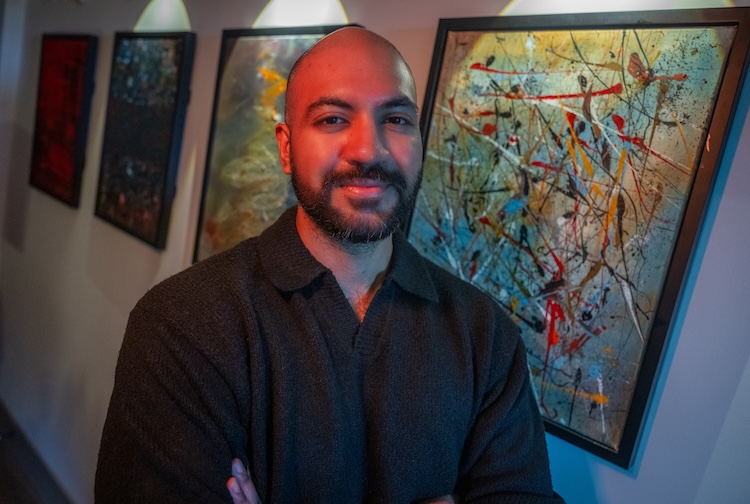
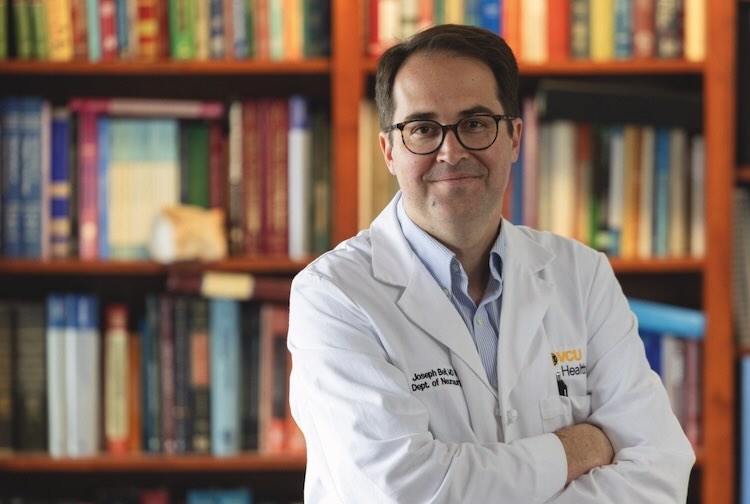 Joseph Bell IV, M.D., Ph.D., assistant professor of neurosurgery at the VCU School of Medicine, said technological advances in deep brain stimulation have dramatically improved the lives of people with neurological diseases. (Daniel Sangjib Min, MCV Foundation)
Every patient has different needs, and VCU Health shines because it tailors DBS to address those needs. A Parkinson’s patient may need stimulation around the clock.
Someone with essential tremor, however, may not be affected by tremors at night. The device can be programmed to turn off during nighttime hours. Bell cited a patient who played piano. Two programs were created for that individual, one for normal days and another for when they were playing.
Bell emphasized that patients should consider DBS when they start noticing that their medications aren’t as effective as they used to be. Many Parkinson’s patients respond well to medication early in the disease. Over time, however, as the disease progresses, the therapeutic range gets narrower and it stops working. Conversely, long-term side effects from Parkinson’s medication can lead to dyskinesia, or jerky, uncontrollable muscle movements.
“DBS is not a treatment of last resort,” Bell said. “This is a quality-of-life treatment, and when patients start to be dissatisfied with how their well their medications are working, that’s when they should reach out.”
“There’s a big period of time between early stages and advanced stages where you can choose to live with bothersome symptoms, or you can choose a tool that reduces them,” Bell said.
Compared to other treatment centers, he said, “VCU has a much bigger DBS menu, and we can use our expertise and advancements to tailor treatment to a patient’s individual needs.”
A version of this story was originally published by the MCV Foundation.